

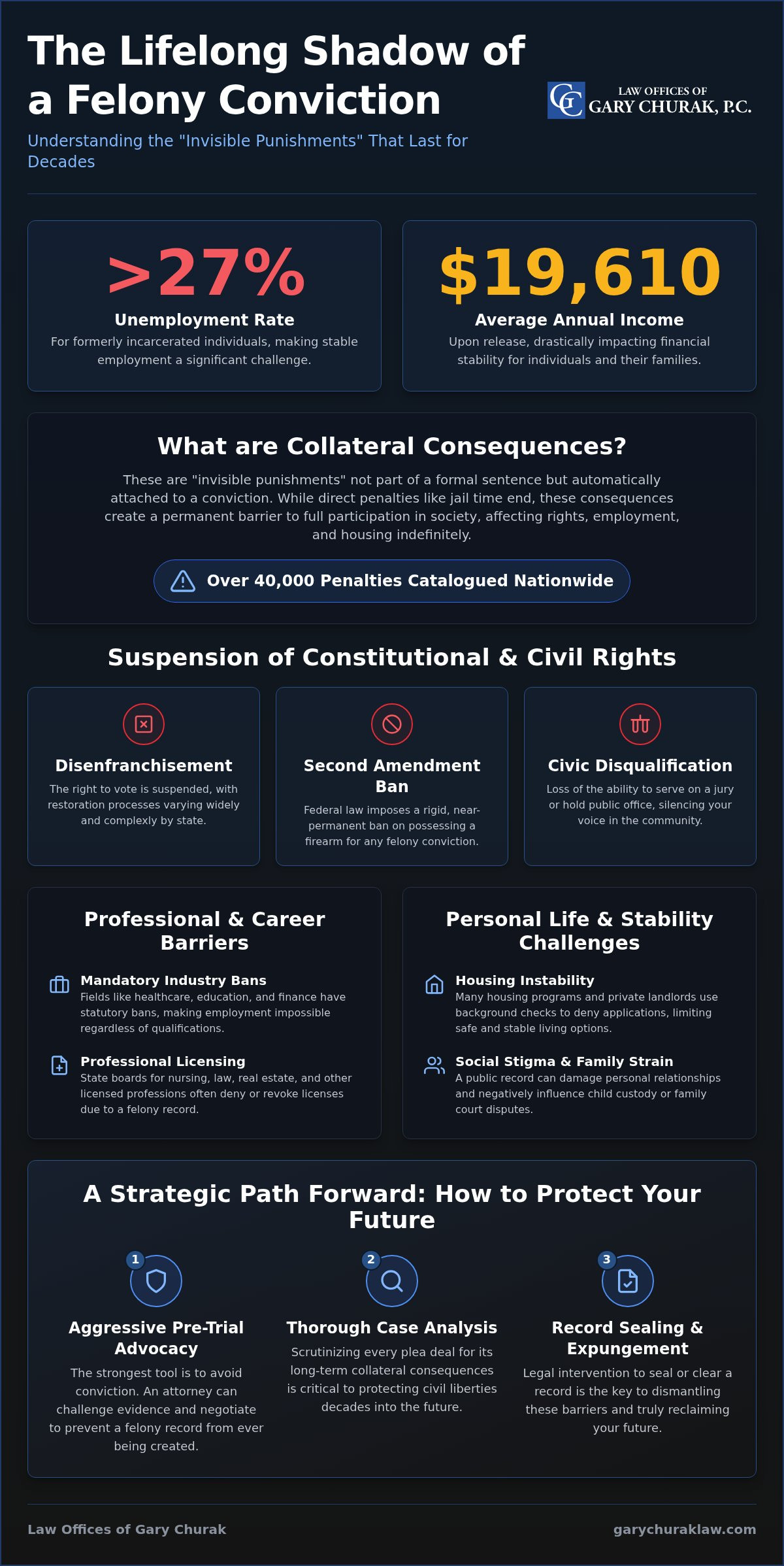
With the unemployment rate for formerly incarcerated individuals exceeding 27 percent in 2026, a felony record often feels less like a finished sentence and more like a permanent barrier to survival. You're likely facing intense anxiety over the potential loss of your constitutional rights and the persistent strain on your family. It's a heavy burden, and the fear of permanent unemployment can make the future seem unreachable.
We're here to provide a steady hand and a strategic path forward. This guide will help you understand the specific long term effects of a felony conviction while outlining the exact steps you can take to mitigate them. You deserve a clear understanding of the obstacles ahead and a professional advocate who knows how to dismantle them through thorough case analysis and advocacy.
We'll examine the 2026 legal landscape, including the finalized federal firearm restoration rules and the utility of the Federal Bonding Program for new employment. You'll also learn how record sealing and aggressive defense strategies can help you move from a state of uncertainty toward a restored sense of hope and a clean slate.
Key Takeaways
- Learn how the long term effects of a felony conviction extend far beyond court-ordered sentences to include "collateral consequences" that impact your civil rights for years to come.
- Identify the specific professional industries and housing programs that impose mandatory bans, allowing you to navigate your career and living situation with greater certainty.
- Discover how a digital footprint and public records can influence personal relationships and child custody disputes, and learn the steps to protect your family's stability.
- Understand why aggressive pre-trial advocacy and thorough case analysis remain your strongest tools for avoiding a conviction and its lifelong penalties.
- Gain a clear roadmap for record sealing and expungement to help you reclaim your future and move past the shadow of a criminal record.
What Are the Collateral Consequences of a Felony Conviction?
The long term effects of a felony conviction are often more enduring than the actual sentence handed down by a judge. While direct consequences like fines, probation, and incarceration are immediate, indirect consequences create a lifelong regulatory shadow. These legal penalties, formally known as collateral consequences of a criminal conviction, are not part of the judge's formal sentence but attach automatically upon entry of a judgment.
Legal scholars often refer to these as "invisible punishments" because they are rarely discussed during the sentencing phase; yet, they often prove more debilitating than the initial punishment. Direct consequences end when you complete your parole or pay your last fee. Indirect consequences, however, remain active indefinitely. Without specific legal intervention such as record sealing or expungement, a felony record serves as a permanent barrier to full participation in society.
Loss of Constitutional Rights and Civil Liberties
A felony conviction triggers an immediate suspension of several fundamental rights that most citizens take for granted. Understanding the long term effects of a felony conviction requires a careful look at these specific losses:
- Disenfranchisement: The right to vote is often suspended. In 2026, the process for restoring these rights remains a complex patchwork of state laws that vary significantly across the country.
- Second Amendment Restrictions: Federal law imposes a rigid ban on firearm possession for anyone convicted of a felony. While new 2026 federal rules offer a narrow path for certain non-violent offenses, the general prohibition remains a significant hurdle.
- Civic Participation: Most jurisdictions disqualify convicted individuals from serving on a jury or holding public office, effectively removing their voice from the legal and political process.
The Federal and State Regulatory Web
The National Inventory of Collateral Consequences of Conviction (NICCC) currently catalogues over 40,000 separate penalties nationwide. This regulatory web ensures that a conviction in one state can trigger restrictions in another, or even at the federal level. These rules govern everything from professional licensing to your ability to receive certain government benefits.
State laws frequently add layers of restriction beyond federal mandates, creating a confusing environment for those trying to rebuild their lives. This complexity is why a criminal defense attorney must scrutinize every potential plea deal for its long-term impact on your civil liberties. Effective advocacy requires more than just fighting for a shorter sentence; it requires a strategy that accounts for the "invisible punishments" that could haunt you for decades. Protecting your future means addressing these collateral consequences before they become permanent fixtures of your life.
Employment and Financial Barriers: The High Cost of a Record
The financial toll of a criminal record is staggering. While the court case may end, the economic long term effects of a felony conviction often persist for a lifetime. Most employers utilize sophisticated background checks that flag any criminal history, often resulting in immediate disqualification before an interview even occurs. This "check the box" hurdle is more than a formality; it's a structural barrier that keeps the unemployment rate for formerly incarcerated individuals above 27 percent in 2026. According to research on the harmful collateral effects, the average annual income for individuals upon release is just $19,610.
Certain industries impose mandatory bans that are non-negotiable. Healthcare, education, and finance sectors often have statutory requirements that bar anyone with a felony conviction from employment. Even for those who find work, the lifetime earning gap remains significant. Financial aid also remains a concern. As of 2026, specific federal aid (FAFSA) eligibility rules for drug-related felonies still require careful navigation to ensure educational goals remain attainable. These barriers don't just affect the individual; they drain the economic stability of entire families.
Professional Licensing and Certification Hurdles
Many professional paths require a state license. Licensing boards for nursing, law, real estate, and commercial driving (CDL) frequently utilize "good moral character" clauses. These standards give boards broad discretion to deny applications based on a past conviction. This is why preparing for a criminal defense consultation is a vital step for any professional facing charges. You must address how a potential conviction will specifically impact your career credentials before entering a plea.
Banking, Insurance, and Business Ownership
Entrepreneurship is often seen as a solution to employment barriers, but it carries its own set of challenges. Convicted individuals frequently face difficulties securing small business loans or SBA assistance. Insurance companies may also view a felony record as a risk factor, leading to increased premiums or the outright denial of life and liability coverage. In the corporate world, "bad actor" disqualifications can prevent you from serving on a board of directors or holding significant ownership stakes. Protecting your livelihood requires an aggressive criminal defense strategy that prioritizes your future earning potential.
Housing, Travel, and Personal Stability Challenges
Housing is a fundamental human need, yet it's often the hardest resource to secure after a conviction. Formerly incarcerated people are ten times more likely to experience homelessness than the general population. Private landlords frequently use background checks to filter applicants, creating a persistent barrier to safe and stable living conditions. For those who do secure a home, professional security screen doors installation can provide an essential layer of protection and peace of mind in their new environment. The long term effects of a felony conviction also extend to government-subsidized options, as many public housing programs and Section 8 administrators impose strict eligibility bans based on criminal history. These exclusions can force individuals into substandard housing or temporary shelters, undermining their efforts to rebuild their lives.
The Fair Credit Reporting Act (FCRA) provides some protection by limiting how far back certain consumer reporting agencies can look, but these protections have limits. Modern tenant screening algorithms often scrape public records directly, flagging felony convictions even if they are years old. To navigate this, many individuals look toward the Community-based Reentry Program for resources and advocacy. When applying for housing, transparency and a proactive explanation of your rehabilitation are often more effective than hoping a screening tool misses your record. You must be prepared to demonstrate stability through employment records and character references.
Global Mobility and Passport Issues
Your ability to see the world or conduct international business changes the moment a felony judgment is entered. Several countries maintain strict "no-felon" policies. Canada, for instance, often considers individuals with even minor felony-level offenses "criminally inadmissible" at the border. Japan and Australia also exercise rigorous scrutiny, frequently denying entry to those with criminal records. These restrictions can derail family vacations and stifle international career growth for decades.
Beyond entry into other nations, the U.S. government may restrict your travel at the source. Passports can be denied or revoked if you are convicted of international drug trafficking or are currently under supervised release. For non-citizens, the stakes are even higher. A felony conviction can trigger mandatory deportation proceedings or create a permanent bar to naturalization. Understanding the long term effects of a felony conviction requires recognizing that your world physically shrinks once your record is public. Securing aggressive defense early is the only way to protect your right to move freely across borders and maintain your personal stability.
Social Stigma and the Psychological Shadow
The weight of a conviction isn't just found in legal statutes. It lives in the "digital scarlet letter" that follows you across every screen. In 2026, online mugshots and public records ensure that your past is only a few clicks away for neighbors, romantic interests, and colleagues. This constant visibility creates a psychological shadow that can make genuine reintegration feel impossible. The long term effects of a felony conviction often include a profound loss of social standing, leading to isolation and a persistent sense of being an outsider in your own community.
This stigma has concrete consequences for your mental well-being. Data indicates that over two-thirds of individuals released from prison are rearrested within three years, a cycle often fueled by the lack of social support and the crushing weight of public judgment. You're fighting more than a legal record; you're fighting a societal label that refuses to fade. Building a narrative of accountability and rehabilitation is a strategic necessity to counter this perception and regain your place in society.
Family Law and Parental Rights
Family courts prioritize the "best interests of the child" above all else. If you're facing a conviction for violent or drug-related crimes, your parental rights are at immediate risk. Judges often use a criminal record to limit visitation or award sole custody to the other parent. Additionally, a felony record typically disqualifies you from adopting a child or becoming a foster parent in most jurisdictions. These personal losses are among the most painful long term effects of a felony conviction. It's critical to begin choosing a criminal defense attorney who understands how to mitigate these specific family court implications during your criminal proceedings.
Reputation Management in a Transparent World
Managing your reputation in 2026 requires a proactive and methodical approach. Third-party "people search" sites often archive criminal data indefinitely, even after a case is dismissed or sealed. Removing this information is notoriously difficult and requires persistent legal and digital effort. Professional circles can be unforgiving, and the loss of social capital can limit your influence and opportunities for years. You must work to project a consistent image of growth and responsibility to overcome community bias. If you're ready to protect your name and your family, contact us for a personalized criminal defense consultation today.
Strategic Mitigation: How to Protect Your Future
Protecting your future requires a proactive shift from fear to strategic action. While the long term effects of a felony conviction are daunting, they are not inevitable. The most effective way to handle these consequences is to prevent the conviction from ever occurring. This requires a battle-tested approach that prioritizes early intervention and aggressive pre-trial advocacy. By scrutinizing the technicalities of an arrest or the validity of a search warrant, a seasoned advocate can often secure a dismissal or a reduction in charges before the case ever reaches a jury.
Thorough case analysis often reveals weaknesses in the prosecution's evidence that a standard defense might overlook. Negotiating for deferred adjudication or entry into a diversion program can provide a path to a clean record, even after an arrest. These programs allow you to complete specific requirements in exchange for a dismissal, effectively bypassing the civil death that accompanies a felony judgment. Taking control of the narrative early is the only way to ensure your rights remain intact.
The Power of Aggressive Legal Defense
Early intervention changes everything. When a legal team begins work immediately after an arrest, they can often prevent the "felon" label from ever attaching to your name. This involves negotiating for lesser offenses that do not carry the same collateral weight as a felony. For instance, a skilled dwi defense attorney does more than argue facts in court; they work to protect your driving privileges and professional certifications from the start. This level of scrutiny ensures that a single mistake doesn't dictate the rest of your life.
Pursuing a Clean Slate: Expungement and Sealing
If a conviction already exists, post-conviction relief becomes the primary focus. You have two main paths to restoration: expungement and record sealing. Expungement involves the physical destruction of the record, making it as if the arrest never happened. Record sealing, or nondisclosure, hides the record from the public and most private employers while leaving it visible only to specific government agencies. Both tools are vital for mitigating the long term effects of a felony conviction and reclaiming your social standing.
Eligibility for these processes depends on the nature of the offense and the time that has passed since you completed your sentence. Because the laws governing these procedures are complex and vary by jurisdiction, consulting an expungement lawyer is a necessary step to begin the restoration process. We provide the steady hand needed to navigate these filings, ensuring you meet every requirement to secure your clean slate and restore your hope for the future.
Reclaiming Your Future Through Strategic Action
A felony record doesn't have to define your life. While the long term effects of a felony conviction are extensive, ranging from professional licensing bans to international travel restrictions, they are not insurmountable. You now understand that these "invisible punishments" require a methodical and aggressive legal response. Whether you're facing new charges or seeking to seal a past record, the decisions you make today will dictate your stability for decades to come.
The Law Offices of Gary Churak provide the steady hand and seasoned expertise necessary to navigate these high-stakes challenges. With over 40 years of criminal defense experience, we focus on protecting your future through personalized case analysis and aggressive advocacy in both state and federal courts. We don't just manage cases; we fight to preserve your freedom and your reputation against a system that often forgets the individual.
Don't leave your civil liberties to chance. Secure your future with an aggressive defense; contact the Law Offices of Gary Churak today. By taking decisive action now, you can begin the process of restoration and move forward with the confidence that your rights are being fiercely protected. There is a path back to a clean slate, and we're here to help you find it.
Frequently Asked Questions
Can I ever vote again if I have a felony conviction?
Yes, voting rights restoration depends entirely on your state of residence. Many jurisdictions automatically restore these rights once you complete your prison sentence and parole. Other states require a formal application or a specific waiting period. Because these laws change frequently, you should consult a legal professional to verify your status. Protecting your voice in the democratic process is a vital part of reclaiming your life after a conviction.
Will a felony conviction prevent me from owning a firearm forever?
Federal law generally imposes a lifetime ban on firearm possession for felons. However, a new 2026 Department of Justice rule has opened an online portal for certain non-violent offenders to apply for rights restoration. Eligibility depends on tiered waiting periods, ranging from five to ten years after completing your sentence. This is one of the most significant shifts in the long term effects of a felony conviction seen in decades.
How long does a felony stay on my criminal record?
A felony remains on your criminal record permanently. Unlike credit scores, criminal histories don't disappear after seven or ten years. It stays visible to employers, landlords, and licensing boards indefinitely unless you successfully petition for expungement or record sealing. Taking proactive legal steps is the only way to remove this digital scarlet letter and ensure the long term effects of a felony conviction don't follow you for life.
Can I get a job with a felony conviction in 2026?
Yes, many individuals find meaningful work, though the path is challenging. In 2026, the Federal Bonding Program provides employers with up to $25,000 in coverage to mitigate perceived risks of hiring formerly incarcerated staff. Additionally, recent updates to the Workforce Innovation and Opportunity Act aim to better integrate individuals into trade apprenticeships. Success often depends on your ability to present a narrative of rehabilitation and professional growth to prospective employers. For organizations looking to improve their recruitment strategies, Altum HR offers specialized employment law advice to help businesses navigate complex hiring regulations and support a diverse workforce.
Entry into Canada is generally denied to anyone with a felony record due to "criminal inadmissibility." Canadian border agents have full access to U.S. criminal databases and will flag convictions during routine checks. To enter legally, you must typically apply for Criminal Rehabilitation or a Temporary Resident Permit. These processes are rigorous and require extensive documentation. You shouldn't attempt to cross the border without first securing professional legal guidance.
What is the difference between a felony and a misdemeanor in terms of long-term effects?
Felonies trigger much more severe and permanent collateral consequences than misdemeanors. While a misdemeanor might complicate an application, a felony can result in a lifetime ban on owning firearms, loss of voting rights, and mandatory exclusion from healthcare or finance careers. Misdemeanors rarely lead to the "civil death" associated with a felony conviction. Understanding these distinctions is critical when your attorney is negotiating a plea deal to protect your future liberties.
Can a lawyer help me get my record sealed after a conviction?
An experienced attorney is essential for navigating the complex eligibility requirements of record sealing. We analyze your specific case to determine if you meet the statutory waiting periods and offense criteria. A lawyer handles the formal petition, represents you in court hearings, and ensures the final order is correctly distributed to law enforcement agencies. This professional oversight maximizes your chances of successfully hiding your past from public background checks.
Does a felony conviction affect my ability to get a passport?
Most felony convictions don't automatically disqualify you from obtaining a U.S. passport. However, specific crimes involving international drug trafficking or certain federal offenses can lead to a mandatory denial. You're also ineligible if you're currently under supervised release, on parole, or have an outstanding felony warrant. If you're planning international travel, it's vital to resolve any active legal status issues before submitting your application to the State Department.


