

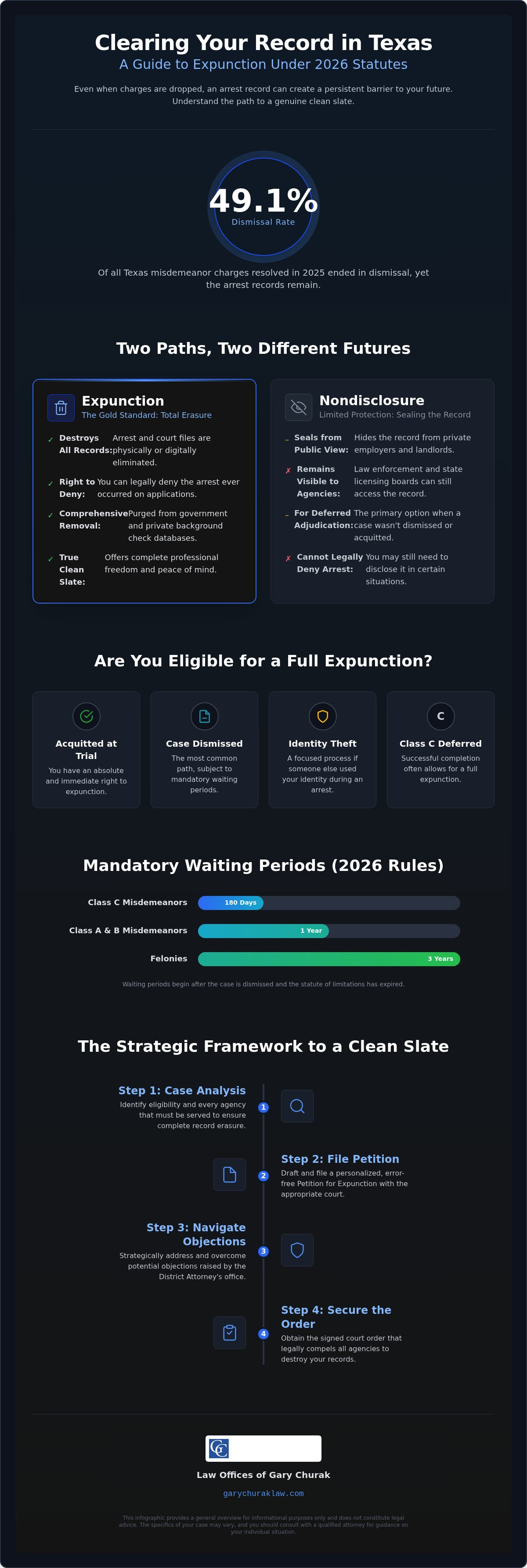
Did you know that in 2025, 49.1% of all misdemeanor charge resolutions in Texas ended in dismissal? Despite these cases being dropped, the arrest records remain visible to employers and landlords, creating a persistent barrier to your future. You likely feel the weight of these old mistakes every time a background check is run, and the confusion between sealing a record and truly erasing it only adds to the anxiety. You deserve a future that isn't defined by a past encounter with the law.
This guide clarifies exactly how to get a record expunged in texas under the new Chapter 55A statutes effective in 2026. We provide a strategic framework designed to help you permanently clear your criminal history and regain the legal right to deny an arrest occurred. You'll learn about the specific waiting periods for different offenses, the nuances of the new automatic expunction rules, and how to ensure your petition withstands aggressive scrutiny from the District Attorney. We'll move from the uncertainty of a flagged record to the confidence of a genuine clean slate through a methodical, step by step approach.
Key Takeaways
- Understand the vital distinction between an Order of Nondisclosure, which merely hides records, and a full expunction, which permanently destroys all evidence of an arrest.
- Discover the specific legal requirements for how to get a record expunged in texas under the 2026 Chapter 55A statutes, including mandatory waiting periods for misdemeanors and felonies.
- Learn how a thorough case analysis identifies every agency that must be served to ensure your record is completely erased from all government databases.
- Identify strategies to overcome prosecution objections and navigate discretionary expunctions when the District Attorney attempts to block your petition.
- Recognize why a personalized, seasoned approach is necessary to ensure your filing is error-free and legally robust enough to secure a permanent clean slate.
Understanding Texas Expunction vs. Order of Nondisclosure
Distinguishing between an expunction and an order of nondisclosure is the first step toward reclaiming your future. While many people use these terms interchangeably, the legal reality is that they offer different levels of security. An expunction represents the gold standard of legal relief because it results in the total destruction of all records related to an arrest. When you research how to get a record expunged in texas, you are looking for a way to legally deny that the arrest ever happened. This right to deny is a statutory privilege that protects you during job interviews, housing applications, and loan processes. If you want to know how to get a record expunged in texas, you must understand that this process is about total removal, not just hiding the evidence.
An order of nondisclosure is a more limited tool. It doesn't erase the record; instead, it seals it from public view. This means private employers and the general public cannot see the entry, but law enforcement and state licensing agencies still maintain access. This distinction is vital for professionals. If you seek a license in nursing, law, or medicine, a sealed record might still be visible to the board, whereas a properly expunged record is effectively gone from the system. Understanding these nuances under the 2026 Chapter 55A updates ensures you choose the right path for your specific career goals.
The 'Erasure' Effect: What Expunction Actually Achieves
Expunction provides a comprehensive erasure of your past. Once a judge signs the order, every government agency in possession of your records must physically or digitally destroy them. This includes police departments, jail facilities, and the Department of Public Safety. Beyond government files, the law requires private background check companies to purge your information from their databases. This multi-layered process prevents ghost records from appearing years later. The result is a truly clean criminal history that offers deep psychological relief and total professional freedom. With your legal worries finally behind you, you can focus on your health and explore COMFORTLINE matracok to find the right sleep solution for your new, stress-free life.
Nondisclosure: A Critical Alternative for Deferred Adjudication
Expunction isn't always available, especially if you successfully completed a period of deferred adjudication. In these instances, an order of nondisclosure acts as your primary defense. While it keeps the record visible to the state, it shields you from roughly 95% of private sector background checks. Expungement in Texas laws dictate specific waiting periods for these orders. According to current 2026 standards, expunction waiting periods range from 180 days for Class C misdemeanors to three years for felonies. Nondisclosure wait times are similarly structured. This strategic alternative ensures that one mistake doesn't permanently lock you out of the private job market.
Determining Your Eligibility for a Texas Expungement
Eligibility is the foundation of your petition. It isn't a suggestion; it's a strict legal threshold defined by the outcome of your case. If you're investigating how to get a record expunged in texas, your journey starts with a clear understanding of Chapter 55A of the Texas Code of Criminal Procedure. Individuals who were acquitted at trial possess an absolute right to an immediate expunction. This means the court must grant the order without the typical waiting periods associated with other case resolutions. In 2025, dismissal rates for misdemeanors reached 49.1%, creating a massive pool of individuals who are technically eligible but must still navigate the procedural hurdles to clear their names.
Dismissed charges and cases where no formal charges were ever filed represent the most common path to relief. However, these aren't always immediate. You must also consider specialized routes like identity theft or mistaken identity. If someone else used your name during an arrest, the law provides a focused mechanism to sever that record from your identity. Class C misdemeanors also offer a unique opportunity; unlike higher level offenses, successfully completing deferred adjudication for a Class C ticket often allows for a full expunction rather than just a sealing order. A thorough case analysis is the best way to determine which of these specific paths applies to your history.
The Role of the Statute of Limitations
The statute of limitations represents the expiration of the state's right to prosecute a specific offense. In Texas, you generally cannot file for an expunction on a dismissed case until this period has passed or a specific waiting period is met. As of 2026, these mandatory waiting periods from the date of arrest include:
- Class C Misdemeanors: 180 days.
- Class A and B Misdemeanors: 1 year.
- Felonies: 3 years.
Filing before these timelines expire often results in a summary denial unless the prosecutor agrees to waive the requirement. Knowing exactly when your clock started is essential for a successful petition.
Exceptions and Statutory Bars to Expungement
Even with a dismissal, certain "statutory bars" can block your eligibility. One common roadblock is the "related offense" rule. If your arrest involved multiple charges and you were convicted of even one of them, the court may refuse to expunge the dismissed charges from that same event. Additionally, jumping bail or fleeing the jurisdiction during your case creates a permanent bar to expunction for that arrest. Cases involving violent offenses or crimes against children face significantly higher scrutiny. The District Attorney will aggressively look for any reason to keep these records public, making a precise and strategic petition your only real defense.
The Step-by-Step Process for Filing a Petition for Expunction
Once you establish your eligibility, the focus shifts to the methodical execution of your petition. Understanding how to get a record expunged in texas requires more than just filing paperwork; it demands a strategic audit of every agency that touched your case. This process begins with a thorough case analysis to gather all arrest and court records. You aren't just looking for court files. You must identify the arresting agency, the county jail, the Department of Public Safety (DPS), and any local task forces that might hold your information. Missing even one entity can undermine the entire effort.
Precision is your greatest asset during this phase. If your petition fails to include a single agency on the mandatory service list, that entity won't receive the court's order to destroy your records. This creates a "ghost record" that can unexpectedly surface during a high-stakes background check years later. Your petition must be drafted with exact legal formatting and verified signatures to withstand the initial administrative review by the district clerk and the prosecution. When you're learning how to get a record expunged in texas, you quickly realize that the strength of your outcome depends on the thoroughness of your initial filing.
Drafting a Bulletproof Petition
A successful petition serves as a legal roadmap for the court. It must clearly outline the statutory grounds for your request while listing every entity that must be served with the final order. In Texas, even minor formatting errors or missing agency addresses can lead to a summary dismissal of your request. See how a criminal defense attorney prepares for court to ensure that every bureaucratic detail is addressed before the first filing fee is paid. This level of preparation ensures that your request is legally robust enough to move past the clerk's office and onto a judge's desk for final approval.
The Court Hearing: Advocacy in Action
The District Attorney's office will review your petition to ensure you meet all requirements under Chapter 55A. If they find a discrepancy or a statutory bar, they may file a formal objection. During the hearing, your advocate presents evidence of your eligibility and answers the judge's specific questions about the underlying case and the final disposition. Once the judge is satisfied, they sign the Order of Expunction. This order is a comprehensive mandate for record destruction. Your advocate then ensures the signed order is served to every law enforcement agency, jail, and data clearinghouse involved in your history, finalizing your clean slate.
Overcoming Roadblocks and Prosecution Objections
The path to a clean slate is rarely a straight line. Even if you meet the statutory requirements, the District Attorney's office may still file an objection to prevent your record from being erased. This is especially common in "discretionary expunctions," where the law permits the judge to grant the order but doesn't strictly mandate it. Knowing how to get a record expunged in texas requires preparing for these adversarial moments with a strategy that anticipates the prosecution's resistance. They often view arrest records as valuable tools for future investigations, and they won't relinquish them without a fight.
Prosecutors often weaponize the "related offense" rule to block your petition. If you were arrested for multiple charges at once and convicted of one while the other was dismissed, the state will argue that the entire arrest event must remain public. Overcoming this hurdle requires a sophisticated legal argument to sever the charges and prove that the dismissed offense qualifies for independent relief. Additionally, while the 2026 guidelines mandate specific waiting periods, such as one year for Class A and B misdemeanors or three years for felonies, a seasoned advocate can sometimes negotiate an early filing waiver if the prosecutor agrees to the terms. Attempting this "pro se" often leads to a permanent denial because the court rarely offers second chances to those who misinterpret these complex rules.
Strategic Negotiation with the District Attorney
Effective negotiation is the primary difference between a signed order and a denied petition. We leverage your clean post-arrest record to demonstrate to the prosecutor that you've earned the right to a clean slate. In discretionary cases, we also address potential victim impact statements to ensure the court feels confident in granting the request. It's vital to understand how strategic defense for DUI and DWI cases during the initial trial phase creates the leverage needed for these future negotiations. A case that was handled with the end goal of expungement in mind is always easier to clear.
What to Do After a Denial
A denial from the court isn't the end of the road. You possess the right to appeal a judge's decision or refile under a different statutory section of Chapter 55A if the initial eligibility was misunderstood. Many individuals who try to handle the process themselves fall into the "pro se" trap, where a simple technical error leads to a dismissal. If your petition was rejected due to procedural mistakes, we can often correct the legal formatting and refile with the precision required by the court system. You should request a personalized consultation to identify the best strategic response if your previous attempt to clear your record was unsuccessful.
Selecting an Expungement Lawyer to Protect Your Future
Living with a criminal record feels like waiting for a trap to spring. Every job application, professional licensing board review, or apartment background check carries a sense of dread that an old mistake will suddenly sabotage your hard work. When you decide to research how to get a record expunged in texas, you aren't just looking for a way to file paperwork. You're seeking a way to reclaim your reputation and your peace of mind. Choosing the right legal partner is the most critical decision in this process. You need more than a generic filing service; you need a fierce protector who understands that your livelihood is on the line.
High-volume firms often use a "template" approach that ignores the specific details of your case. This is a dangerous gamble. If a petition is filed with even a minor error, it can lead to a permanent denial or leave behind "ghost records" that haunt you for years. A seasoned advocate provides a personalized case analysis, ensuring every agency involved in your arrest is identified and served. They possess the resilience to stand up to a District Attorney's objection and the strategic wisdom to navigate discretionary cases where the judge has the final say.
Why Experience is Non-Negotiable
The Texas legal system is built on nuances that only a battle-tested attorney truly understands. Knowledge of local court procedures and specific judicial preferences can mean the difference between a signed order and a dismissed petition. Attorney Gary Churak has handled criminal matters for over four decades. This depth of experience allows for a level of scrutiny that ensures your petition is robust enough to withstand aggressive opposition from the state. Experience isn't just a number; it's a shield that protects your future from bureaucratic errors and prosecutorial resistance.
Next Steps: Your Consultation with Gary Churak
Your journey toward a clean slate begins with a clear, honest assessment of your history. During your initial meeting, we review your arrest records and court dispositions to build a strategic framework for your petition. To maximize this analysis, bring any documentation you have regarding your arrest or the final dismissal of your charges. We'll set realistic expectations regarding timelines and the specific requirements for how to get a record expunged in texas under the current 2026 statutes.
We treat your reputation as a strategic asset. Our commitment is to provide the grounded, steady hand you need to move from a state of uncertainty toward total professional freedom. A free consultation serves as the first step in this process, offering you authoritative answers without an immediate financial commitment. Don't leave your future to chance or an automated service. Secure the advocacy of a professional who is deeply committed to achieving the results you deserve.
Secure Your Future with a Permanent Clean Slate
A criminal record shouldn't be a life sentence that dictates your professional potential. By navigating the 2026 Chapter 55A updates and identifying every agency involved in your arrest, you take the first step toward a genuine clean slate. We've detailed the critical difference between sealing and erasure, and why aggressive advocacy is essential to defeat roadblocks from the prosecution. Mastering how to get a record expunged in texas requires absolute precision and a refusal to accept anything less than the total destruction of your records.
The Law Offices of Gary Churak provides the grounded, steady hand you need to navigate this complex legal landscape. With over 40 years of Texas legal experience, we offer the personalized, aggressive advocacy required to protect your reputation. Don't let a past mistake define your livelihood or create unnecessary anxiety. Schedule your free consultation with the Law Offices of Gary Churak today to receive a thorough free initial case analysis. You've worked hard to move forward; ensure your record finally reflects the person you are today.
Frequently Asked Questions
Can I get a felony expunged in Texas?
Yes, you can get a felony expunged in Texas if the case was dismissed, never formally charged, or resulted in an acquittal at trial. Convictions are generally ineligible for this process. Under the 2026 guidelines, you must observe a three year waiting period from the date of arrest before filing your petition for a dismissed felony. This ensures the statute of limitations has passed or the state no longer intends to prosecute.
How long does the expungement process take from start to finish?
The expungement process typically takes between three and six months from the initial filing to the final destruction of records. This timeline depends on the specific county's court schedule and how quickly local agencies process the judge's order. While the hearing itself is brief, the administrative work required to verify that every police department and jail has purged your data takes several weeks to finalize.
What happens if my petition for expunction is denied?
If your petition is denied, you have the right to appeal the decision or refile the request under a different statutory section. Most denials occur because of technical errors in the petition or a misunderstanding of eligibility requirements. Identifying the specific objection raised by the District Attorney is the first step in correcting the filing. We analyze these setbacks to build a more robust legal argument for your second attempt.
Do I need a lawyer to expunge my record in Texas?
You aren't legally required to hire an attorney, but the complexity of how to get a record expunged in texas makes professional guidance vital. Missing a single law enforcement agency on your service list results in a "ghost record" that remains visible on background checks. A lawyer ensures your petition is legally sound and that every relevant agency receives the order to destroy your data.
Can a DWI conviction be expunged in Texas?
No, a DWI conviction cannot be expunged in Texas. Expunction is reserved for cases that didn't result in a conviction, such as dismissals or acquittals. If you were convicted of a first-offense DWI, you might be eligible for an order of nondisclosure instead. This seals the record from the public while allowing law enforcement to maintain access, providing a significant level of protection for your reputation.
Will an expunged record still show up on a federal background check?
A properly executed expunction order requires federal agencies to purge their records of the state arrest. Once the Texas Department of Public Safety receives the court order, they notify the FBI to update their databases. This ensures that a federal background check won't reveal the erased arrest. It's the most comprehensive way to protect your history during high-level security clearances or federal job applications.
How much does it cost to file for an expunction in Texas?
Filing fees for an expunction petition vary by county but generally range between $250 and $450. In Harris County, the fee is approximately $350. Additionally, a $100 statutory fee is assessed under Chapter 55A of the Texas Code of Criminal Procedure. Agencies that cannot receive electronic notifications may also charge a $25 fee per notice. These costs are separate from any legal representation fees you may incur.
Can I expunge a charge if I completed deferred adjudication?
Expunction is only available for deferred adjudication cases involving Class C misdemeanors. For Class A and B misdemeanors or felonies, successfully completing deferred adjudication typically makes you eligible for an order of nondisclosure rather than a full expunction. Understanding how to get a record expunged in texas means recognizing these strict statutory limits. We help you determine which path provides the highest level of protection allowed by your specific case outcome.


