

A criminal charge is not just a legal hurdle; it's an organized assault on your reputation, your livelihood, and your personal liberty. You likely feel as though the weight of the entire justice system is pressing down on you, leaving you to navigate a maze of complex laws and high-stakes decisions alone. It's natural to feel anxious about the possibility of a permanent record, which is why securing a criminal defense attorney is the most critical decision you'll make. You deserve a defense that's as aggressive as the prosecution seeking to convict you.
This comprehensive guide explains how a seasoned legal professional protects your rights and challenges the system's assumptions at every turn. We'll outline the roadmap of a criminal case, showing you how professional legal advocacy navigates evolving state and federal laws to uncover procedural errors and scrutinize evidence. By understanding the strategic role of a battle-tested guide, you can move from a state of uncertainty toward a position of strength. Whether you're facing a misdemeanor or a high-stakes federal felony, learning how to protect your future is the first step toward reclaiming it.
Key Takeaways
- Understand how a seasoned advocate safeguards your constitutional rights and holds the justice system accountable to the Sixth Amendment.
- Learn why early case analysis and pre-file investigations are essential for uncovering the procedural errors that can dismantle a prosecutor's case.
- Discover the specific tactical approaches used to challenge the validity of evidence in complex DUI, drug crime, and federal felony cases.
- Identify how a criminal defense attorney with over 40 years of experience provides the strategic edge needed to navigate high-stakes legal challenges.
- Explore the legal mechanisms for expungement and record sealing to ensure a past mistake doesn't dictate your future employment or housing.
The Essential Role of a Criminal Defense Attorney
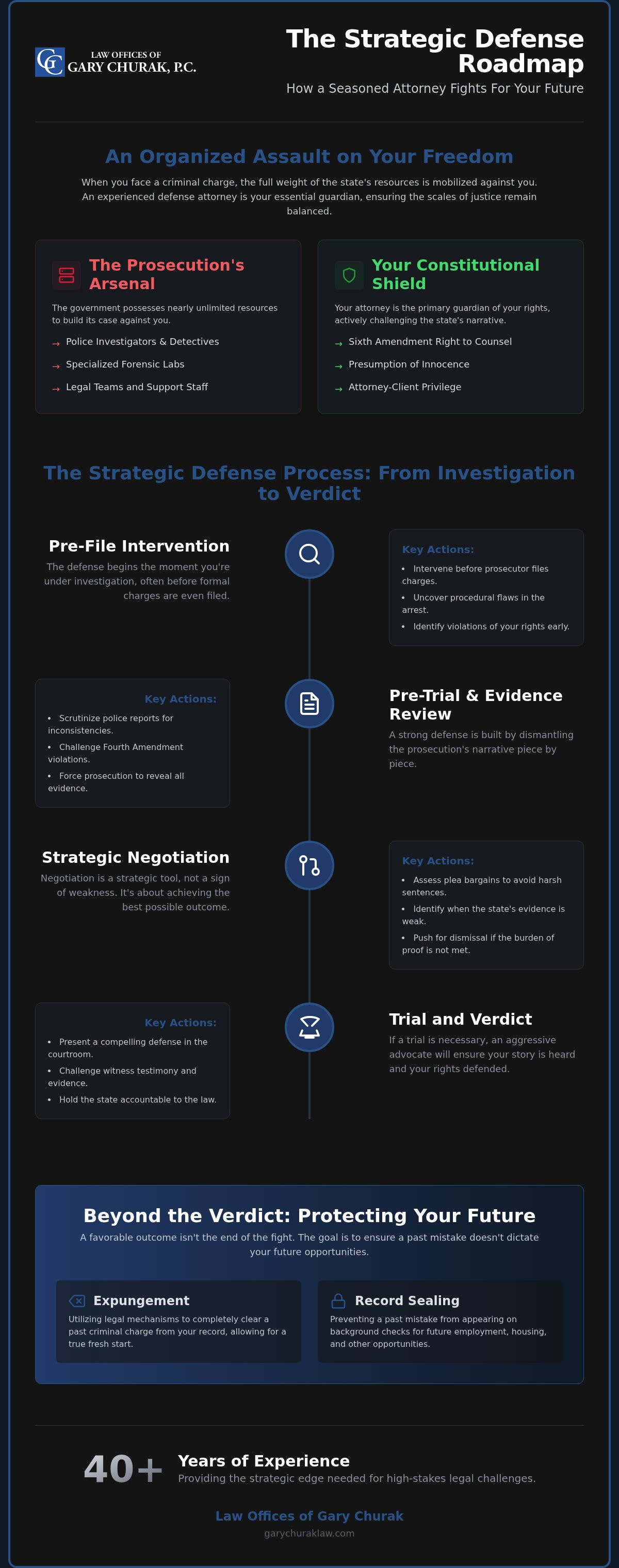
The government possesses nearly unlimited resources to build a case against you. From police investigators to specialized forensic labs, the machinery of the state is designed to secure convictions. In this environment, a criminal defense lawyer serves as more than just a legal representative; they are the primary guardian of your constitutional rights. While a standard representative might simply facilitate the process, an aggressive advocate actively challenges the state's narrative. The Sixth Amendment guarantees your right to effective legal counsel, ensuring that the scales of justice remain balanced even when the odds feel stacked against you. With over 40 years of experience, a seasoned attorney knows that the prosecution often counts on your fear to secure a quick plea deal. A true protector stands in the gap, demanding that the government proves its case beyond a reasonable doubt.
Protecting the Presumption of Innocence
The bedrock of our legal system is the presumption of innocence. However, in the court of public opinion, this principle is often ignored. An experienced criminal defense attorney acts as a shield against premature judgment from the community. They remind the court and the jury that the burden of proof lies entirely with the prosecution. This protection provides a significant psychological benefit, offering you a steady hand to hold while facing the overwhelming pressure of a criminal investigation. You aren't just a case number; you're an individual entitled to a fair process. A battle-tested guide ensures that the legal system sees the person behind the charges, not just the allegations on a police report. This focus on your humanity is what prevents the system from steamrolling your rights.
Navigating the Attorney-Client Privilege
Total transparency with your legal team is your greatest asset in building a resilient defense. Attorney-client privilege ensures that everything you share remains confidential, allowing for the honest exchange of facts necessary to identify weaknesses in the prosecution's case. This legal boundary is absolute in most circumstances, creating a safe harbor where you can speak freely without fear of self-incrimination. Trust is the foundation of any strategic defense. By disclosing all details, you empower your attorney to anticipate the prosecution's moves and prepare a counter-strategy that addresses every potential vulnerability. This level of confidentiality allows for a thorough analysis of the facts, ensuring no stone is left unturned in the pursuit of your freedom. When you know your secrets are safe, you can provide the raw information your lawyer needs to fight for your future.
The Strategic Defense Process: From Investigation to Verdict
Effective defense doesn't start in the courtroom; it begins the moment you realize you are under investigation. A battle-tested criminal defense attorney uses the pre-file phase to intervene before the prosecutor formally brings charges. This early action often uncovers procedural flaws that can stop a case in its tracks. By analyzing the initial details of your encounter with law enforcement, a lawyer can identify if your rights were violated during the first moments of the investigation. The duties of a criminal attorney include this high-level scrutiny to ensure the state follows every rule from the outset.
The Pre-Trial Phase and Evidence Review
Police reports are rarely objective accounts of an event. They are narratives constructed by the state to support a specific conclusion. Your legal team must scrutinize these documents for inconsistencies and Fourth Amendment violations, such as unlawful searches or seizures. Gathering exculpatory evidence and interviewing witnesses early ensures that the defense isn't relying solely on the government's version of the truth. The discovery process functions as a critical legal mechanism that forces the prosecution to reveal every piece of evidence they intend to use, effectively showing your attorney their entire hand before the trial begins.
Negotiation is a strategic tool, not a sign of weakness. There are instances where a plea bargain serves as the most pragmatic path to avoid harsh mandatory minimum sentences or to secure a reduced charge. However, a seasoned criminal defense attorney possesses the wisdom to recognize when the state’s evidence is insufficient to hold up under scrutiny. If the prosecution cannot meet their burden, the right move is often to push for a full dismissal rather than accepting a compromise that could leave a permanent mark on your record.
Strategic Litigation and Trial Advocacy
When a case proceeds to trial, the focus shifts to storytelling and precision. A successful defense theory must resonate with jurors by providing a logical alternative to the prosecution’s claims. In complex criminal cases, the role of expert witnesses becomes paramount; they can break down forensic data or psychological factors that a layperson might misunderstand. Cross-examination then serves as the ultimate tool for exposing reasonable doubt. By highlighting contradictions in witness testimony or questioning the reliability of forensic evidence, your advocate dismantles the state’s narrative piece by piece. This methodical approach ensures that the jury sees the gaps in the government's story, protecting your freedom through rigorous scrutiny.
Common Criminal Charges and Specialized Defense Strategies
Every criminal charge demands a unique tactical response tailored to the specific laws and evidence involved. While the duties of a criminal defense attorney always include protecting your rights, the methods used to fight a drug charge differ wildly from those used in a federal investigation. A battle-tested guide recognizes these nuances and applies over 40 years of experience to dismantle the state’s case. You aren't just facing a legal problem; you're facing a specific set of challenges that require a targeted playbook to overcome.
Defending Against DUI and Alcohol-Related Charges
DUI and DWI charges often rely on technical evidence that isn't as foolproof as the prosecution claims. Breathalyzers are machines that require meticulous calibration and regular maintenance; field sobriety tests are often administered in poor conditions or to individuals with physical limitations that affect the results. A specialized approach to DUI and DWI defense involves scrutinizing the science behind blood alcohol content (BAC) testing to find margins of error or device malfunctions. Protecting your driving privileges is a parallel battle, requiring an advocate who understands the administrative hurdles of the DMV alongside the criminal court process.
In drug crime cases, the distinction between simple possession and intent to distribute often hinges on circumstantial evidence. Prosecutors look for specific indicators like large sums of cash, packaging materials, or digital communication records. An aggressive advocate scrutinizes the legality of the initial search and seizure to suppress evidence obtained through Fourth Amendment violations. For assault or other violent crimes, establishing self-defense or identifying mitigating circumstances is paramount. We actively seek out evidence that the prosecution may have overlooked, such as independent witness statements or private surveillance footage that substantiates your account of the incident.
Federal vs. State Criminal Defense
Federal charges introduce a level of complexity that state courts rarely match. These cases often involve long-term, multi-agency investigations from organizations like the FBI or DEA, requiring a criminal defense attorney who can manage massive amounts of discovery and interpret rigid federal sentencing guidelines. The stakes are significantly higher in the federal system; mandatory minimums leave very little room for negotiation once a case reaches a certain stage. Strategic defense at this level requires identifying procedural missteps early in the investigation to prevent the government from finalizing an insurmountable narrative against you. Having a professional who understands the specific rhythms of federal court can be the difference between a long prison sentence and a favorable resolution.
Why Experience and Aggressive Advocacy are Non-Negotiable
Experience is the bridge between simply knowing the law and winning a complex case. Over 40 years in the courtroom allows a criminal defense attorney to recognize subtle patterns in how specific prosecutors and judges handle evidence. This insight is invaluable. It helps your legal team predict the opposition's next move before they even make it. While high-volume "lawyer mills" process hundreds of cases using a one-size-fits-all approach, a seasoned advocate treats your situation as a unique challenge requiring a custom-built shield. You aren't just a case file; you're an individual whose entire career and reputation are on the line.
Waiting for your court date is a strategic mistake that gives the prosecution an unnecessary head start. A proactive defense begins the moment you retain counsel, allowing your lawyer to lock in witness statements and preserve evidence that might otherwise disappear. Your attorney's reputation also plays a silent but powerful role in negotiations. Prosecutors are far more likely to offer favorable terms or consider a dismissal when they know they're facing a battle-tested guide who is fully prepared to take a case to trial. When the state knows your lawyer won't back down, the dynamic of the entire case shifts in your favor.
The Importance of Thorough Case Analysis
A deep dive into the specific facts of your arrest often uncovers hidden legal defenses that a cursory review would miss. This process might include identifying a break in the chain of custody for forensic evidence or finding a witness whose statement contradicts the police report. Aggressive advocacy is the practice of proactive litigation and the relentless pursuit of procedural errors, standing in stark contrast to mere courtroom theatrics or loud talking. It involves filing motions to suppress evidence early and forcing the state to justify every aspect of their investigation. By customizing a strategy based on the specific nuances of your charge, your advocate ensures that no potential avenue for defense is left unexplored.
Evaluating Your Potential Defense Team
Choosing the right protector requires careful scrutiny. During your initial consultation, you should ask about the attorney's specific track record with your type of charge and their direct involvement in your case. Be wary of red flags like guarantees of a specific outcome or a lack of direct communication from the lead attorney. You need a professional who projects confidence through depth of knowledge rather than empty promises. If you're ready to take the first step toward protecting your freedom, schedule a free consultation with the Law Offices of Gary Churak today.
Beyond the Verdict: Expungements and Protecting Your Future
A conviction or even an arrest record often carries a shadow that persists long after you've left the courtroom. These collateral consequences can disrupt your ability to secure housing, obtain loans, or pass a background check for a new career opportunity. A dedicated criminal defense attorney understands that a successful outcome isn't just about the immediate verdict; it's about ensuring your life can return to normal. Post-conviction recovery is a critical phase where legal advocacy shifts toward clearing your name and removing the barriers that a criminal record creates. You shouldn't have to pay for a past mistake for the rest of your life.
The distinction between expungement and record sealing is vital for your long-term planning. Expungement typically involves the physical destruction of the record or its removal from the public index, effectively treating the incident as if it never occurred. Record sealing, on the other hand, hides the information from the general public and most employers while keeping it accessible to law enforcement and certain government agencies. A battle-tested guide helps you navigate these options to determine which path provides the most comprehensive protection for your specific situation. This methodical approach ensures you aren't blindsided by a record you thought was behind you.
The Path to a Clean Slate
Determining your eligibility for The Path to a Clean Slate: Expungement and Record Sealing requires a methodical review of state statutes and the specifics of your case. The legal process for petitioning the court is rigorous, involving formal applications, hearings, and coordination with various law enforcement agencies to ensure the records are properly updated. Your attorney manages this administrative burden, ensuring every filing is precise and every deadline is met. This proactive approach minimizes the risk of a petition being denied due to technical errors. It allows you to move forward with confidence.
The Value of a Comprehensive Defense
The most effective legal strategy always starts with the end goal in mind. Protecting professional licenses for healthcare workers, educators, or commercial drivers requires a defense that anticipates how a plea or a verdict will impact specific regulatory boards. A seasoned criminal defense attorney doesn't just fight the charges; they fight to preserve your entire career path. By prioritizing the long-term health of your reputation, your legal team ensures that a single mistake or a false accusation doesn't become a permanent obstacle to your success. Protect your future-contact us for a strategic defense.
Secure Your Rights and Reclaim Your Future
A criminal charge is a pivotal moment that requires immediate, decisive action. We have explored how a professional defense involves more than just courtroom representation; it is a comprehensive strategy that starts with early case analysis and extends to protecting your reputation through expungements. Securing legal counsel with over 40 years of experience ensures that every procedural error is identified and every constitutional protection is enforced. Whether you are facing a state DUI or a high-stakes federal felony, aggressive advocacy remains the only way to balance the scales against the government's vast resources.
You don't have to face the complexities of the justice system without a battle-tested guide. Our firm provides a steady hand and a results-oriented approach to both state and federal defense. Protect your rights and your future; request a free consultation with an experienced criminal defense attorney today. Taking this first step allows you to move from a state of fear toward a clear, actionable roadmap for your defense. Your freedom is worth the fight, and the right legal team is ready to stand by your side.
Frequently Asked Questions
What is the first thing I should do if I am arrested?
Exercise your right to remain silent and request an attorney immediately. Anything you say can be used against you, even if you believe you're explaining your innocence. Refrain from discussing the case with police, cellmates, or over recorded jail phones. A criminal defense attorney should be present before you answer any questions to ensure your constitutional rights remain protected from the very start of the investigation.
How is a criminal defense attorney different from a public defender?
A private attorney offers personalized attention and a lower caseload compared to public defenders, who often manage hundreds of files simultaneously. While public defenders are skilled, they frequently lack the time for the deep case analysis required for complex defenses. Hiring a private firm allows for a proactive approach, including independent investigations and more frequent communication, which are vital for safeguarding your career and reputation during high-stakes litigation. To ensure these communications are managed efficiently and securely, it is helpful to discover Bodo and its capacity to centralize client interactions in a GDPR-compliant environment.
Can a lawyer get my charges dismissed before the trial starts?
Yes, many cases are resolved through dismissals during the pre-trial phase if your lawyer uncovers procedural errors or constitutional violations. If a search was unlawful or evidence was mishandled, your attorney can file a motion to suppress that evidence. When the prosecution's key evidence is excluded, they often lack the necessary proof to move forward, leading to a full dismissal of the charges before a jury is ever seated.
What happens during a free legal consultation?
You'll meet with an advocate to discuss the specific facts of your case and identify potential legal defenses. This session serves as a strategic roadmap where you can ask questions about the process and understand the possible outcomes. It's an opportunity to evaluate the attorney's experience and determine if their aggressive advocacy matches your needs. You'll leave with a clearer understanding of the next steps required to protect your freedom.
How much does it cost to hire a criminal defense attorney?
Legal fees vary based on the complexity of the charges, the attorney's experience, and whether the case goes to trial. Some cases involve flat fees for specific services, while others are billed hourly. While cost is a factor, you should view legal representation as an investment in your future. Rates reflect the depth of analysis and the level of protection provided. You can discuss specific fee structures during your initial consultation.
Do I really need a lawyer for a first-time misdemeanor?
Yes, because even a first-time misdemeanor conviction creates a permanent criminal record that can impact employment and housing for years. Minor charges often carry hidden penalties, such as driver's license suspensions or professional licensing issues. A lawyer can often negotiate for a diversion program or a reduced charge that keeps your record clean. Protecting your future starts with taking every charge seriously, regardless of how minor it may seem.
Will a criminal charge stay on my record forever?
A charge remains on your record unless you successfully petition the court for an expungement or record sealing. The eligibility for these processes depends on the nature of the charge and the final disposition of the case. While some records are permanent, a seasoned attorney can guide you through the legal requirements to clear your name. This post-conviction recovery is essential for reclaiming your reputation and opening doors to future opportunities.
How long does a typical criminal defense case take to resolve?
The timeline ranges from a few months to over a year depending on the complexity of the evidence and the court's schedule. Simple misdemeanors might resolve quickly through negotiations, while federal felonies involving extensive discovery take much longer. Your attorney will provide a realistic timeline based on the specific rhythms of the local or federal court system. Consistent communication ensures you stay informed about every milestone as the case moves toward a resolution.


