

A plea offer is a decision to examine, not an outcome you should accept automatically. Understanding the plea bargain process starts with knowing what the agreement asks you to admit, which rights you may give up, and what consequences could follow. A guilty plea can waive the right to a trial, to confront witnesses, and to remain silent, so the terms deserve careful scrutiny.
If you’re unsure what the prosecutor is offering or how strong the evidence may be, that uncertainty is understandable. The prosecutor proposes terms, defense counsel evaluates the evidence and advises you, and the judge reviews the plea under the rules that apply to the case. Each has a different responsibility, and an offer doesn’t guarantee a particular result.
This guide explains the usual stages of plea negotiations, what an agreement may change, and the questions to resolve before deciding. You’ll also learn how defense counsel can assess the evidence, explain the practical consequences of proposed terms, and negotiate while preparing to litigate when appropriate. The goal is to help you make an informed decision with a clear view of your options.
Key Takeaways
- Understanding the plea bargain process means tracking how case review, negotiation, your decision, and court consideration fit together. The sequence can vary.
- A proposed agreement may affect charges, sentencing recommendations, or other terms. Identify exactly what it requires before deciding.
- Compare the known terms of a plea offer with the uncertainties of continued negotiation or trial, without assuming a particular outcome.
- Ask counsel to explain the evidence, possible defenses, unresolved facts, and every written term in plain language.
- Defense counsel can assess the offer and negotiate while preparing to litigate when appropriate, helping you make a more informed choice.
Understanding the Plea Bargain Process: What an Agreement Means
A plea agreement is a negotiated resolution in which a defendant agrees to enter a plea under terms discussed with the prosecution. The plea may be guilty or, where permitted, no contest. In exchange, the prosecution may agree to terms such as amending or dismissing a charge, or recommending a particular sentencing outcome. An agreement may address one of these issues, several, or other case-specific terms. Arrangements differ, so understanding the plea bargain process means reading the actual proposal rather than assuming every deal follows the same pattern.
A sentencing recommendation is not necessarily a guaranteed sentence. The judge reviews the plea under the rules that apply and may have authority to accept or reject an agreement, or may not be bound by a recommendation, depending on the type of agreement and applicable procedure. The What is a Plea Bargain? overview provides background on common forms and the role of plea bargaining in the U.S. justice system. The terms and court rules in your own case control.
What does a plea bargain typically involve?
The prosecution proposes or negotiates terms on behalf of the government. Charge-related terms may involve changing a charge or agreeing to dismiss one. Sentencing-related terms may instead involve a recommendation to the court. Not every agreement includes both, and the precise wording matters.
Review the written agreement and the court record, not just an informal explanation of what the offer “means.” Look for the plea required, the charges covered, what each side has agreed to do, and whether any stated sentencing position binds the judge. If a term is unclear, ask defense counsel to explain it in plain language before you decide.
Who participates in the plea bargain process?
You make the decision. The defendant decides whether to enter a plea after discussing the offer and its consequences with defense counsel. The prosecution can present and negotiate terms, but it cannot make the decision for you.
Defense counsel assesses the case, reviews available evidence and potential legal issues, explains how proposed terms could affect you, and communicates with the prosecution. Counsel can also continue preparing to litigate while negotiations proceed. That preparation supports an informed choice, but it doesn’t promise a particular offer or result.
The judge’s role is different. The court considers the plea under applicable rules and procedures, which vary between state and federal courts and may also depend on the agreement’s terms. A negotiated proposal is therefore not automatically the final court outcome. Before entering a plea, make sure you understand what you’re agreeing to and what remains subject to the judge’s decision.
How Plea Bargain Negotiations Move From Offer to Court Review
Plea negotiations don’t follow one fixed schedule. Some cases involve a written offer early in the proceedings; others involve continued discussions as the evidence is reviewed, or no offer at all. A prosecutor’s proposal is only one step. It does not become a court decision unless the defendant enters a plea and the court considers it under the applicable rules.
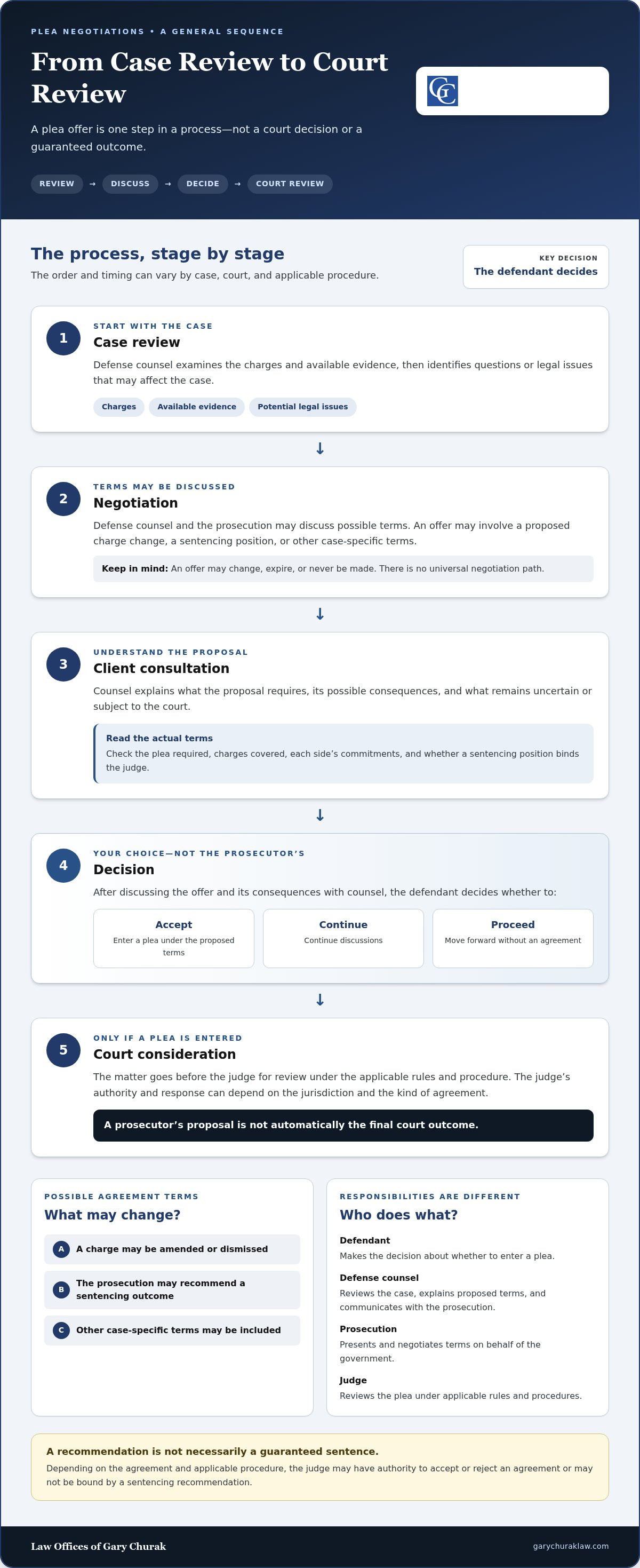
A useful general sequence is:
- Case review: Defense counsel examines the charges and available evidence, then identifies questions or legal issues that may affect the case.
- Negotiation: Counsel and the prosecution may discuss possible terms. Depending on the case, these may involve a proposed change to charges, a sentencing position, or other terms.
- Client consultation: Counsel explains the proposal and its possible consequences, including what remains uncertain or subject to the court.
- Decision: The defendant decides whether to accept the offer, continue discussions, or proceed without an agreement. Each choice depends on the case and the available options.
- Court consideration: If the defendant chooses to enter a plea, the matter goes before the court for review under applicable procedure.
This sequence can help with understanding the plea bargain process, but it isn’t a timetable or a guarantee that each step will occur in this order. The case, court, and governing procedure can affect both timing and sequence.
How does a plea offer get discussed?
Negotiations may begin after defense counsel reviews the available evidence and the charge. Counsel can communicate with the prosecution, assess proposed terms, and explain what the offer would require in practical terms. For example, a proposal involving a charge change raises different questions from one focused on a sentencing recommendation. The exact language matters.
An offer may change, expire, or never be made. There’s no universal deadline or standard negotiation path. Ask counsel what the proposal requires, which parts may be negotiable, and whether a stated recommendation would bind the judge. A careful review of the case can help clarify the choices without promising a particular result.
What happens when a plea reaches court?
The judge’s review is separate from the prosecutor’s offer. The court generally addresses the defendant’s plea and understanding of the agreement according to the applicable rules. The judge’s authority and response can depend on the jurisdiction and the kind of agreement involved, including whether a sentencing recommendation is binding. Don’t treat a negotiated term as a final ruling until you understand what the court must consider and what discretion it retains.
Because procedure differs between state and federal courts, individualized criminal defense case analysis can help explain how the steps apply to your situation.
Plea Agreement or Trial: Compare the Consequences, Not Just the Promise
A plea offer can look clear on paper, while the alternatives feel uncertain. Compare what the agreement actually requires with what remains unresolved if negotiations continue or the case proceeds toward trial. Neither accepting a plea nor choosing trial is automatically the safer or better path. The right assessment depends on the evidence, possible defenses, applicable law, and consequences that matter in your circumstances.
| Option | What may be known | What remains uncertain |
|---|---|---|
| Proposed plea | The written plea, charges covered, and any agreed terms or sentencing recommendation. | How the court will respond to terms that are not binding, and the full practical effect of a conviction in your circumstances. |
| Continued negotiation | The issues counsel is discussing with the prosecution and the terms currently proposed, if any. | Whether the offer may change, remain available, or lead to an agreement. |
| Proceeding toward trial | The charges and legal issues in the case, along with the evidence that can be evaluated. | How the evidence will be presented and assessed, and what outcome may follow. |
What should you compare before accepting an offer?
Start with the precise language. Identify the charge you’d plead to, whether the agreement includes a sentencing recommendation, and which terms are commitments rather than requests to the court. Then consider potential consequences beyond the immediate sentence. Depending on the case and applicable law, a conviction may affect liberty, finances, a driver’s license, employment, or professional opportunities.
Ask defense counsel to explain how the available evidence supports the charge, what weaknesses or unanswered factual questions may exist, and whether potential defenses could change the assessment. Understanding the plea bargain process means weighing the actual terms against a case-specific evaluation, not relying on a promise or a general assumption about what usually happens.
What are the risks of rejecting a plea offer?
Trial carries uncertainty. The evidence must be presented and evaluated, and no one can guarantee the result. An offer may no longer be available after rejection, but what happens next depends on the circumstances. Don’t assume the same terms will return or that a particular alternative will follow.
Likewise, accepting an offer isn’t automatically protective. A plea can have lasting legal and personal effects, while trial may preserve the opportunity to contest the allegations but exposes you to an uncertain decision. The facts, law, court, and terms of any later resolution all matter. A careful comparison helps replace pressure with informed judgment.
Questions to Resolve Before You Enter a Guilty or No-Contest Plea
Before entering a plea, make sure you can explain what the agreement requires and what it leaves undecided. Legal language can hide important distinctions. Ask counsel to translate each written term into plain language, and don’t treat an informal summary as a substitute for reviewing the agreement itself.
What should you ask about the agreement's terms?
Clarify the exact plea required and which charges the agreement addresses. If it includes a sentencing recommendation, ask whether that recommendation binds the court or simply states a position the prosecution will take. Confirm which terms are agreed, which remain subject to court approval, and what the judge may still decide.
Also discuss possible consequences beyond the immediate sentence. Depending on the charge and applicable law, a conviction may affect matters such as driving privileges, employment, or other aspects of daily life. Ask counsel which consequences apply to your circumstances and whether the written agreement addresses any additional obligations. Don’t rely on assumptions about how a term works.
What should you understand about your rights and choices?
A guilty plea generally involves giving up important trial rights, which can include the right to a jury trial, to confront witnesses, and against self-incrimination. The precise consequences depend on the plea and applicable procedure. Ask counsel to explain what rights you would waive, what a no-contest plea means in your case, and what alternatives remain before you decide.
Discuss the evidence, possible defenses, and factual issues that haven’t been resolved. For example, ask what evidence supports the charge, whether any evidence may be challenged, and how disputed facts could affect the prosecution’s case. Understanding the plea bargain process means understanding both the offer and the case-specific reasons to accept, reject, or continue discussing it.
Bring these questions to a confidential consultation:
- What exact plea and charges does the written agreement cover?
- Which terms are binding, recommended, or subject to the judge’s decision?
- What rights would I give up, and what does a no-contest plea mean here?
- What evidence, possible defenses, or unresolved facts should I consider?
- What additional consequences or obligations may apply under the relevant law?
- What options do I have if I don’t accept this proposal?
Preparing questions in advance can make the conversation more focused. See this criminal defense consultation guide for help organizing information before speaking with counsel. For case-specific analysis of a proposed plea, discuss your criminal defense options with defense counsel before making a decision.
How Criminal Defense Counsel Can Help You Assess a Plea Offer
A plea offer can’t be evaluated in isolation. Its meaning depends on the evidence, the charge, possible defenses, and what the agreement would require in your specific case. Defense counsel can examine those pieces together, explain the practical consequences, and help you identify what remains uncertain before you decide.
The Law Offices of Gary Churak provides criminal defense representation and emphasizes thorough case analysis and personalized consultations for people facing criminal charges. Attorney Gary Churak has over four decades of experience. Careful review can help you make an informed choice, but it can’t guarantee a particular offer, sentence, or result.
How can a defense attorney evaluate a proposed agreement?
Counsel can review the available evidence and identify questions that may affect the prosecution’s case, such as disputed facts, gaps in the evidence, or legal issues that need closer examination. Counsel can explain potential defenses in accessible language and connect the proposed plea terms to possible consequences under the law that applies to your case.
That analysis can also inform the strategy. Further negotiation may make sense in some circumstances; in others, preparing for court may be an important part of protecting your options. Negotiation and trial preparation can proceed as elements of a defense strategy, not promises about what the prosecutor or court will do. Understanding the plea bargain process means evaluating the offer against the specific facts, not relying on assumptions about typical outcomes.
What is a useful next step if you have received an offer?
Keep copies of the written offer, charging documents, and related court paperwork. Bring them to a discussion with counsel, and note any terms or phrases you don’t understand. Avoid deciding based only on an informal summary or pressure from someone who hasn’t reviewed the case. Ask for a clear explanation of what the agreement requires, what the court may decide, and what options remain.
- Identify the plea and charges named in the offer.
- Mark any recommendation or condition you want explained.
- Write down questions about the evidence, possible defenses, and consequences.
Personalized legal analysis can help you weigh those issues with greater clarity. If you’ve received an offer, discuss your criminal defense options with the Law Offices of Gary Churak before deciding. A focused review can clarify the choices in front of you without promising a particular outcome.
Make Your Next Decision With Clarity
Understanding the plea bargain process means looking beyond the offer itself. Review the exact written terms, understand which decisions remain with the court, and weigh the proposal against the evidence, possible defenses, and consequences that matter in your life. A plea and a trial each carry uncertainties, so neither should be treated as the automatic right choice.
Careful, individualized analysis can help you see what the agreement requires and what options may remain. The Law Offices of Gary Churak provides criminal defense representation and personalized consultations. Attorney Gary Churak brings more than four decades of experience to that work, and the firm does not promise a particular outcome.
If you’re facing an offer, you don’t have to assess it alone or rely on informal explanations. Discuss your case and understand your options before deciding. Clear information and thoughtful guidance can help you take the next step with greater confidence.
Frequently Asked Questions
What is the plea bargain process?
The plea bargain process is a negotiation in which a defendant agrees to enter a plea under specified terms. It often involves reviewing the case, discussing possible terms with the prosecution, consulting defense counsel, and presenting a plea to the court for review. The steps and legal effects vary by jurisdiction, case, and agreement. A prosecutor’s offer is not itself a guaranteed sentence or court outcome.
Is a judge required to accept a plea bargain?
No, a judge isn’t necessarily required to accept a plea bargain. The court reviews the plea under the rules that apply, and the judge’s authority may depend on the jurisdiction and type of agreement. An agreement with the prosecution doesn’t automatically decide what the court will do. Before entering a plea, ask defense counsel which terms are binding, which are recommendations, and what decisions remain with the judge.
Can you reject a plea bargain after receiving an offer?
Generally, a defendant can choose whether to accept an offer, but its terms or availability may change. Court events or deadlines may also affect the choices ahead, so don’t assume the same offer will remain available after rejection. Before responding, discuss the evidence, possible defenses, and potential consequences with defense counsel. General information can explain the process, but it can’t determine the best decision in a particular case.
What happens if you accept a plea bargain?
If you accept a plea bargain, the plea and agreement are generally presented to the court for review. Subject to applicable rules, the court may ask whether you understand the terms and are entering the plea voluntarily. The legal consequences depend on the plea, written agreement, and court’s action. Read every term and ask counsel to explain possible consequences before entering a plea; acceptance alone doesn’t guarantee a particular court outcome.
Do you have to go to trial if you reject a plea deal?
No. Rejecting an offer doesn’t necessarily mean the case will go straight to trial. Proceedings may continue, negotiations may resume, or the case may reach another resolution, depending on its circumstances and applicable procedure. No later result is guaranteed, and available options can change. Ask defense counsel what steps may follow in your case, what decisions you might face, and how the evidence and potential defenses affect those options.
Can a plea bargain be withdrawn after it is accepted?
Whether a plea can be withdrawn depends on the applicable court rules, timing, and circumstances. A change of mind alone may not be enough, so don’t assume withdrawal is available. If you’re concerned about a plea you’ve entered, promptly discuss the issue with a defense attorney. Counsel can review the court record, relevant deadlines, and applicable law to explain what options may exist in your specific situation.
Should I accept a plea bargain or take my case to trial?
There’s no single answer that fits every case. Understanding the plea bargain process means examining the agreement’s exact terms, the evidence, possible defenses, legal consequences, and uncertainties associated with trial. Defense counsel can review those factors and help you assess your options, but can’t guarantee an outcome. Make sure your questions are answered and you understand what the plea requires and what remains uncertain before making a decision.


