

Imagine the moment you realize a single lapse in judgment could derail your child's entire future. It's a heavy burden, and the fear of a permanent criminal record is enough to keep any parent awake at night. When your family faces these high stakes, securing a juvenile defense lawyer San Antonio who understands the nuances of the local system is the first step toward reclaiming control. You deserve a seasoned advocate who views your child as a person with potential, not just a case number on a docket.
It's natural to feel overwhelmed by the differences between juvenile and adult courts or anxious about potential detention and high-stakes penalties. We understand that your primary goal is to protect your child's academic and career prospects from being tarnished by a mistake. This article outlines how a strategic juvenile offenses defense protects your child's rights, prioritizes rehabilitation, and safeguards their long-term future. We'll explore the legal roadmap ahead, including the path toward dismissal of charges or alternative sentencing, ensuring you have the clarity and confidence needed to manage this complex process.
Key Takeaways
- Understand why the juvenile justice system prioritizes rehabilitation over punishment and how this focus creates opportunities for alternative sentencing.
- Identify the critical procedural differences between juvenile and adult courts, including the absence of a jury and the civil nature of the proceedings.
- Learn how a strategic juvenile defense lawyer San Antonio conducts a thorough case analysis to identify rights violations and protect your child's future.
- Discover why juvenile records aren't automatically erased at age 18 and what legal steps are required to secure an expungement or record sealing.
Understanding Juvenile Offenses Defense and the Justice System
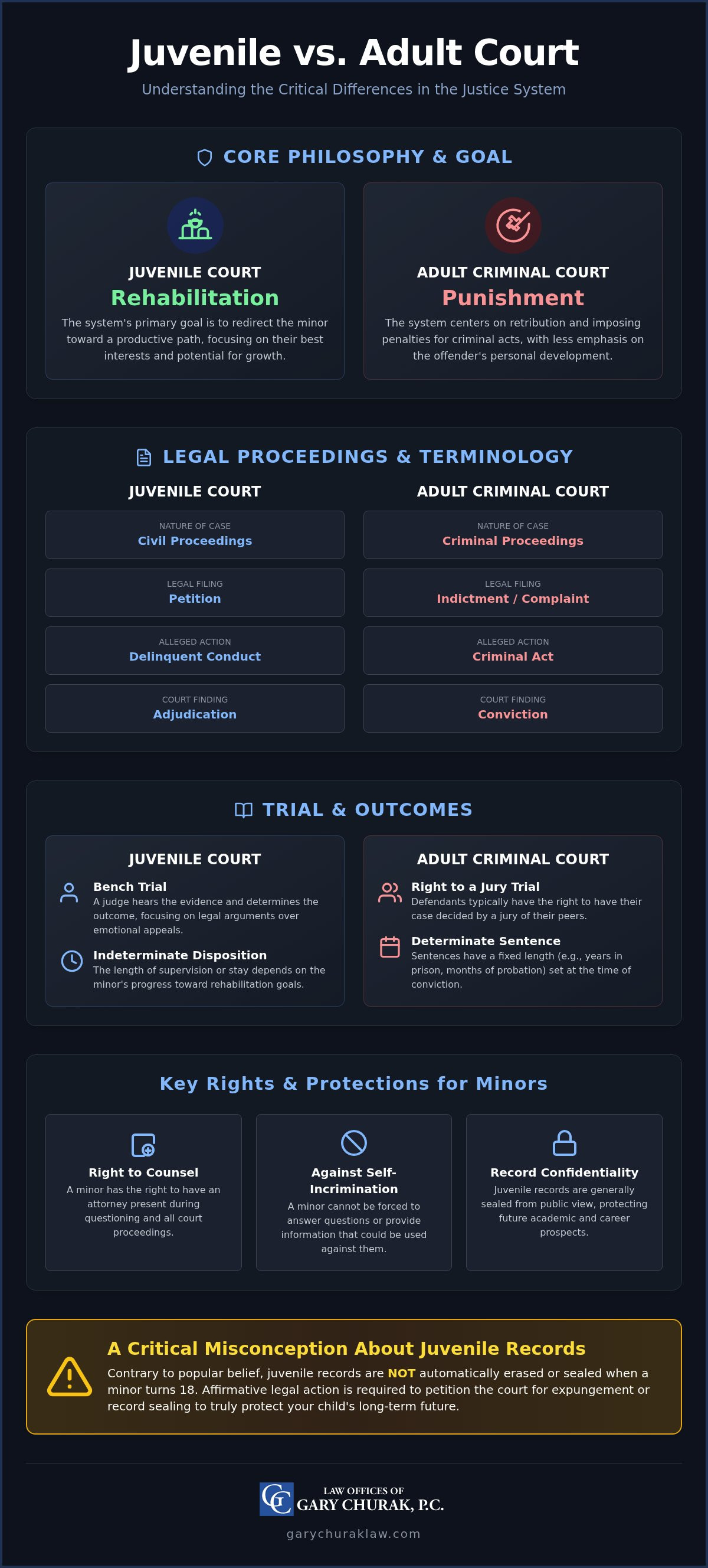
Juvenile defense is a specialized legal field that focuses on protecting minors who haven't yet reached the age of majority. Unlike the adult system, which often centers on retribution, the Juvenile court system operates under a distinct mandate. In this framework, the law treats these cases as civil rather than purely criminal. This distinction changes everything from the language used in the courtroom to the ultimate goals of the proceedings. For example, instead of a criminal act, the court evaluates delinquent conduct. A conviction is replaced by an adjudication.
Securing a juvenile defense lawyer San Antonio early in the process is vital. Decisions made during the initial intake or detention hearing can set the tone for the entire case. Waiting too long to involve an advocate limits your ability to influence these early, high-stakes determinations. Early intervention allows your attorney to scrutinize the evidence before the prosecution's narrative hardens. It provides the necessary time to build a defense that accounts for the child's unique circumstances.
The Philosophy of Rehabilitation Over Punishment
The primary legal standard in juvenile law is rehabilitation. The state's goal is to redirect a minor toward a productive path rather than simply imposing a penalty. Judges and prosecutors look at the best interests of the child when deciding how to proceed. A seasoned attorney uses this philosophy as a strategic tool. By presenting a comprehensive plan for education, counseling, or community service, your lawyer can often negotiate for outcomes that prioritize growth over confinement. This approach seeks to resolve the immediate legal challenge while ensuring the minor's development isn't permanently stunted by a single mistake.
Why Juvenile Charges Require a Specialized Defense Strategy
A standard criminal defense approach often fails in juvenile court because the rules of engagement are different. Procedures regarding evidence, discovery, and witness testimony follow specific codes that don't apply to adults. Additionally, the minor's family and social history play a massive role in the defense process. A juvenile defense lawyer San Antonio must analyze school records, psychological evaluations, and home environments to build a persuasive narrative. Effective advocacy requires more than just debating facts; it demands a deep understanding of how a minor's background influences the court's perception of their future and their potential for success.
Comparing Juvenile Proceedings vs. Adult Criminal Courts
The structural differences between these two systems are profound. In the adult world, defendants often have a right to a jury trial. However, within the Texas Juvenile Justice System, most cases are decided through bench trials. This means a judge hears the evidence and determines the outcome. This shift changes the strategy for a juvenile defense lawyer San Antonio. The focus moves from broad emotional appeals to precise legal arguments that address the judge's specific concerns.
Terminology also reflects the civil nature of these proceedings. Prosecutors don't file an indictment; they file a petition. If the court finds the minor committed the act, it issues an adjudication rather than a conviction. Sentencing follows a different logic as well. Adult sentences are typically determinate, meaning they have a fixed length. Juvenile dispositions are often indeterminate. The length of the stay or supervision depends on the minor's progress toward rehabilitation goals.
Rights and Protections for Minors in Court
Minors possess specific constitutional protections that mirror adult rights but include extra layers of security. Every child has the right to counsel and the privilege against self-incrimination. You don't have to answer questions without an attorney present. Confidentiality serves as a significant shield, as juvenile records are generally kept from public view. Parents also play a vital role, as they're legally required to participate in the process. If you feel lost in these requirements, consulting a juvenile offenses defense specialist can help your family understand the road ahead.
When a Minor is Certified to Stand Trial as an Adult
For the most serious offenses, the state may attempt to transfer the case to adult criminal court. This process is known as certification or transfer. It typically occurs when the offense is severe or if the minor has an extensive history of delinquent conduct. A prosecutor must prove that the juvenile system cannot adequately protect the public or rehabilitate the individual. This is a high-stakes turning point. A juvenile defense lawyer San Antonio works to prevent this transfer, ensuring the case stays in a system designed for growth rather than long-term incarceration.
Common Juvenile Offenses and Strategic Defense Approaches
School environments often trigger legal action through zero-tolerance policies. A minor might face serious consequences for possessing a small amount of a controlled substance or even a prescription medication that isn't their own. Property crimes like shoplifting, vandalism, and burglary are also frequent. While these might seem like youthful indiscretions, they can lead to an adjudication that follows a child for years. Status offenses, such as truancy or curfew violations, are unique because they only apply to minors. However, they still require a strategic response to prevent them from escalating into more restrictive court involvement.
Violent offenses, including assault or battery, are handled with extreme gravity in the juvenile system. These cases often stem from peer-related conflicts or school-based altercations. A juvenile defense lawyer San Antonio must look beyond the police report to find the context of the incident. We examine whether the minor was provoked or acting in self-defense. By humanizing the child and explaining the social dynamics at play, we can often shift the focus toward conflict resolution rather than detention.
Defending Against Drug and Alcohol Charges
Drug and alcohol charges often provide opportunities for diversion programs. These programs allow a minor to complete specific requirements, like community service or drug education, in exchange for a dismissal. A juvenile defense lawyer San Antonio will also scrutinize the methods used by law enforcement or school officials to obtain evidence. If a search of a locker or backpack violated constitutional protections, that evidence might be suppressed. For cases involving underage drinking or operating a vehicle, the nuances of a DWI defense attorney strategy become critical to protecting a young person's driving privileges and future record.
Assault and Domestic Violence Allegations in Juvenile Court
When a minor is accused of assault or domestic violence, the court looks closely at the minor's history and potential for future issues. Self-defense is a frequent and valid argument in school-related fights where a child was protecting themselves from a threat. In family settings, charges might involve Texas domestic violence penalties, which carry significant weight even for juveniles. We focus on counseling and family therapy to show the court that the minor is taking proactive steps toward rehabilitation. Utilizing National juvenile justice resources helps us stay informed on the most effective evidence-based intervention strategies that judges respect during disposition hearings.
Protecting the Future: Adjudication and Record Sealing
The path from a minor's arrest to a final court decision follows a strict timeline. Once a petition is filed, the court schedules a series of hearings that determine the child's future. A juvenile defense lawyer San Antonio ensures that these deadlines are met and that the child's rights aren't overlooked during the transition from detention to the courtroom. This period is often the most stressful for families, as the uncertainty of what comes next can feel paralyzing. Professional advocacy during this window is the best way to steer the case toward a favorable disposition.
A finding of delinquency can have long-lasting consequences that extend far beyond the courtroom. It can impact college admissions, military enlistment, and future employment opportunities. Many people don't realize that these records can be accessed by various agencies long after the case is closed. Taking the necessary steps to manage the legal aftermath is just as important as the initial defense strategy.
The Adjudication and Disposition Process
The adjudication hearing serves as the fact-finding stage of the case. It's essentially a trial where the judge determines if the allegations in the petition are true. If the judge makes a finding of delinquency, the case moves to a disposition hearing. At this stage, the court decides on a rehabilitation plan tailored to the minor's needs. This might include probation, community-based programs, or, in more serious cases, placement in a specialized facility. The goal is always to find the least restrictive environment that still meets the child's requirements for growth and accountability.
Record Sealing: Securing a Clean Slate
Many parents mistakenly believe that a child's record is automatically erased when they turn 18. This is a dangerous myth. In reality, a finding of delinquency can remain accessible to law enforcement and certain employers indefinitely unless you take legal action. Protecting your child's career and academic prospects requires a proactive approach to record sealing. Eligibility for sealing typically depends on the nature of the offense and the time passed since the case was closed.
Once a record is sealed, it's no longer public, allowing a young adult to truthfully state they have no criminal history. For those looking to clear their path completely, understanding how to get a record expunged in Texas provides the necessary roadmap for a permanent clean slate. If you're ready to secure your family's future, a juvenile defense lawyer San Antonio can guide you through the petition process to ensure no mistakes from the past hinder your child's potential.
Strategic Advocacy: Why Your Choice of Attorney Matters
When your child's future hangs in the balance, you need more than just legal advice; you need a battle-tested guide who understands the weight of the situation. A juvenile defense lawyer San Antonio with deep local knowledge can navigate the specific pressures and expectations of the court system. With over four decades of criminal defense experience, the Law Offices of Gary Churak provides the steady hand and professional confidence families require during a crisis. We perform a rigorous case analysis to uncover procedural errors or rights violations that less experienced eyes might miss. This level of scrutiny forms the foundation of a resilient defense, ensuring that every piece of evidence is challenged and every protection is upheld.
Our firm acts as a fierce protector of your family's future. We understand that the stakes involve more than just a court date; they involve your child's ability to attend college, find a career, and live without the shadow of a record. By projecting strength and preparedness from the first day, we aim to alleviate your anxiety and replace it with a clear, logical path forward. You deserve an advocate who is both strategic and pragmatic, possessing the wisdom to know when to negotiate and the strength to take a forceful stance when necessary.
The Role of Aggressive Advocacy in Negotiation
Effective negotiation in the juvenile system isn't about asking for favors. It's about demonstrating why a specific rehabilitation path is the most appropriate outcome for the minor and the community. We use our deep understanding of the court's inner workings to negotiate for reduced charges or alternative sentencing that avoids detention. This proactive approach is a hallmark of a seasoned criminal defense attorney who knows how to safeguard a client's freedom. We don't simply accept the prosecution's narrative; we challenge it with a well-researched, assertive defense strategy designed to achieve the best possible resolution.
Personalized Strategy for Every Minor
Every child's situation is unique, and a one-size-fits-all approach inevitably fails in juvenile court. Judges and probation officers look for a personalized plan that addresses the minor's specific needs and circumstances. We're committed to listening to your family's story and incorporating school records, home life, and social history into our advocacy. This personalized focus ensures the court sees your child as a person with potential rather than just another case file. If you're ready to build a custom defense and protect your child's long-term prospects, we invite you to schedule a free initial meeting to discuss the next steps in your legal roadmap.
Securing a Brighter Path for Your Child
The juvenile justice system's emphasis on rehabilitation offers a vital opportunity to redirect a minor's life before a single mistake defines their future. Protecting your child's academic and professional trajectory requires a deep understanding of the unique procedures used in these courts, from the initial petition to final record sealing. A seasoned juvenile defense lawyer San Antonio acts as a fierce protector, ensuring that the focus remains on your child's potential rather than just the allegations at hand. By combining aggressive advocacy with a personalized case analysis, we work to dismantle the obstacles that threaten your family's stability.
With over 40 years of defense experience, the Law Offices of Gary Churak provides the steady hand and strategic wisdom needed to navigate these high-stakes situations. We offer free initial consultations to help you understand the legal roadmap ahead and develop a plan tailored to your child's specific needs. Secure your child's future with a free consultation at the Law Offices of Gary Churak. You don't have to face this weight alone; professional guidance can turn a period of crisis into a narrative of resilience and growth.
Frequently Asked Questions
Will my child's juvenile record be automatically erased when they turn 18?
No, your child's record isn't automatically erased upon their eighteenth birthday. While the juvenile system is more private than the adult one, a finding of delinquency remains accessible to law enforcement and certain licensing agencies indefinitely. You must proactively petition the court for record sealing or expungement once the eligibility requirements are met. A juvenile defense lawyer San Antonio can review the specific offense and your child's history to determine the exact timeline for securing a clean slate.
Can a juvenile be charged as an adult for serious offenses?
Yes, a minor can be certified to stand trial as an adult for particularly severe offenses through a process called a transfer or certification hearing. This typically involves violent crimes or a significant history of prior adjudications. Prosecutors must convince a judge that the juvenile system's resources aren't sufficient for rehabilitation. We focus our defense on preventing this transfer to ensure your child remains in a system designed for growth rather than purely long-term punishment.
What is the difference between adjudication and a criminal conviction?
Adjudication is a formal finding by a juvenile court that a minor committed the act alleged in the petition. Unlike a criminal conviction in adult court, an adjudication is technically a civil matter focused on rehabilitation rather than retribution. While it doesn't carry the same immediate legal label as a conviction, it still results in a record that can impact future opportunities. A strategic defense aims to avoid adjudication altogether through dismissals or alternative diversion programs.
Can a minor be held in detention before their court date?
Yes, a minor can be held in a juvenile detention facility prior to their court date if a judge determines it's necessary during a detention hearing. Common reasons for pre-trial detention include a risk the minor will flee, a lack of parental supervision, or a belief that the child is a danger to themselves or the community. These hearings occur shortly after the initial referral, making it vital to have an advocate present to argue for the child's release.
How does a juvenile offenses defense lawyer help if my child is innocent?
If your child is innocent, a juvenile defense lawyer San Antonio acts as a shield against wrongful adjudication. We conduct a rigorous investigation, interview witnesses, and scrutinize law enforcement's evidence for inconsistencies. Our firm identifies procedural errors or constitutional violations, such as illegal searches or coerced statements, that can lead to a dismissal. We build a comprehensive narrative to prove the allegations are unfounded, ensuring your child's rights and reputation remain protected throughout the entire legal process.
Will a juvenile charge affect my child's ability to get into college?
It can, although many colleges focus more on adult criminal history than juvenile records. Certain high-level adjudications or unsealed records might appear during background checks or be required disclosures on specific applications. This is why we prioritize alternatives to adjudication and aggressive record sealing. By resolving the case strategically, we minimize the risk that a youthful mistake prevents your child from accessing higher education or professional licensing in the years to come.
Do I need a lawyer for a first-time juvenile shoplifting charge?
Yes, even a first-time shoplifting charge warrants professional legal representation. What seems like a minor mistake can lead to a permanent record if handled incorrectly by the court. A seasoned attorney can often negotiate for a diversion program or a deferred prosecution, which allows the charge to be dismissed upon completion of certain conditions. This proactive approach ensures that a single lapse in judgment doesn't create a paper trail that follows your child into adulthood.
What is a 'disposition' in a juvenile case?
A disposition is the juvenile court's equivalent of a sentencing hearing. After a minor is adjudicated delinquent, the judge holds a disposition hearing to determine the most appropriate rehabilitation plan. This plan might include formal probation, community service, counseling, or placement in a residential facility. We use this stage to present a compelling argument for the least restrictive environment possible, emphasizing your child's potential for success and the strength of their existing family support system.


