

A DWI consultation isn't just a preliminary meeting; it's the first tactical strike in your defense strategy. When you're facing the weight of a potential conviction, you likely feel the suffocating pressure of losing your license or spending time in jail. It's natural to feel overwhelmed by the complex legal procedures and terminology that seem designed to keep you in the dark. Understanding exactly what to expect in a DWI consultation can transform that anxiety into a focused plan of action. This meeting serves as your opportunity to scrutinize the evidence and determine if your rights were violated during the initial stop.
You deserve a clear understanding of where you stand and a roadmap that leads toward the best possible outcome. This guide breaks down the mechanics of the consultation process, from the initial case analysis to the development of a powerhouse defense. We'll explore how a seasoned, battle-tested guide evaluates your situation to protect your future. By the end of this article, you'll have the confidence to choose the right representation and the knowledge to leverage this strategic evaluation to your advantage. We'll examine the specific steps involved in building a resilient defense in 2026, ensuring you're prepared for every challenge the prosecution presents.
Key Takeaways
- Learn how to shift from a state of panic to a position of strength by viewing the initial meeting as a confidential, strategic assessment of your legal standing.
- Discover the specific evidence scrutinized during your case review, including police reports and field sobriety test protocols, to identify potential constitutional violations.
- Gain a comprehensive understanding of what to expect in a DWI consultation, from the initial case analysis to the development of a tailored defense roadmap.
- Prepare effectively for your meeting by gathering essential court documentation and creating a detailed timeline of events while your memory remains fresh.
- Identify the immediate actions required to protect your driving privileges, such as filing for administrative hearings to prevent automatic license suspension.
The Strategic Purpose of a DWI Consultation
A DWI consultation is far more than a simple introductory meeting; it's a confidential, strategic assessment of your entire legal situation. When you face an arrest, the immediate aftermath is often defined by a sense of powerlessness. This meeting serves as the moment you regain control. It functions as a tactical evaluation where a seasoned expert scrutinizes the facts to build a protective barrier between you and the prosecution. Understanding what to expect in a DWI consultation allows you to approach the meeting with focus rather than fear. It's the first step in dismantling the prosecution's case before it even reaches the courtroom.
One of the most critical aspects of this initial encounter is the immediate application of attorney-client privilege. Even if you don't ultimately sign a retainer agreement, the details you share remain legally protected. This confidentiality creates a safe environment for total transparency, which is the only way to build a resilient defense. This meeting is also a high-value opportunity to observe a defender's analytical skills in real time. You aren't just looking for a lawyer; you're vetting a battle-tested guide who can navigate the complexities found in a Driving Under the Influence overview of modern statutes. Use this time to gauge their focus and preparedness before your future is in their hands.
Establishing the Protective Shield
Early legal intervention is the most effective way to prevent common mistakes that jeopardize cases. Without a professional advocate, many individuals inadvertently provide evidence to the prosecution through ill-advised statements or missed deadlines. A seasoned expert evaluates your risks immediately, providing a grounded, steady hand to navigate the high stakes. This presence offers a profound psychological benefit, shifting the defense burden from your shoulders to a professional who knows how to fight back. Transparency with your counsel is the foundation of any successful advocacy strategy.
Setting Realistic Expectations for Your Case
Pragmatism is the hallmark of high-quality legal representation. Knowing what to expect in a DWI consultation ensures you walk into the room ready for a hard-hitting, honest appraisal of your situation. Your attorney will differentiate between best-case and worst-case scenarios based on the available evidence. They won't offer empty reassurances but will instead provide a result-oriented outlook that prepares you for the road ahead. The consultation functions as a tactical baseline for all future legal maneuvers, providing the order and control necessary to face the opposition with unwavering resolve.
Analyzing the Arrest: What Evidence Will Be Scrutunized?
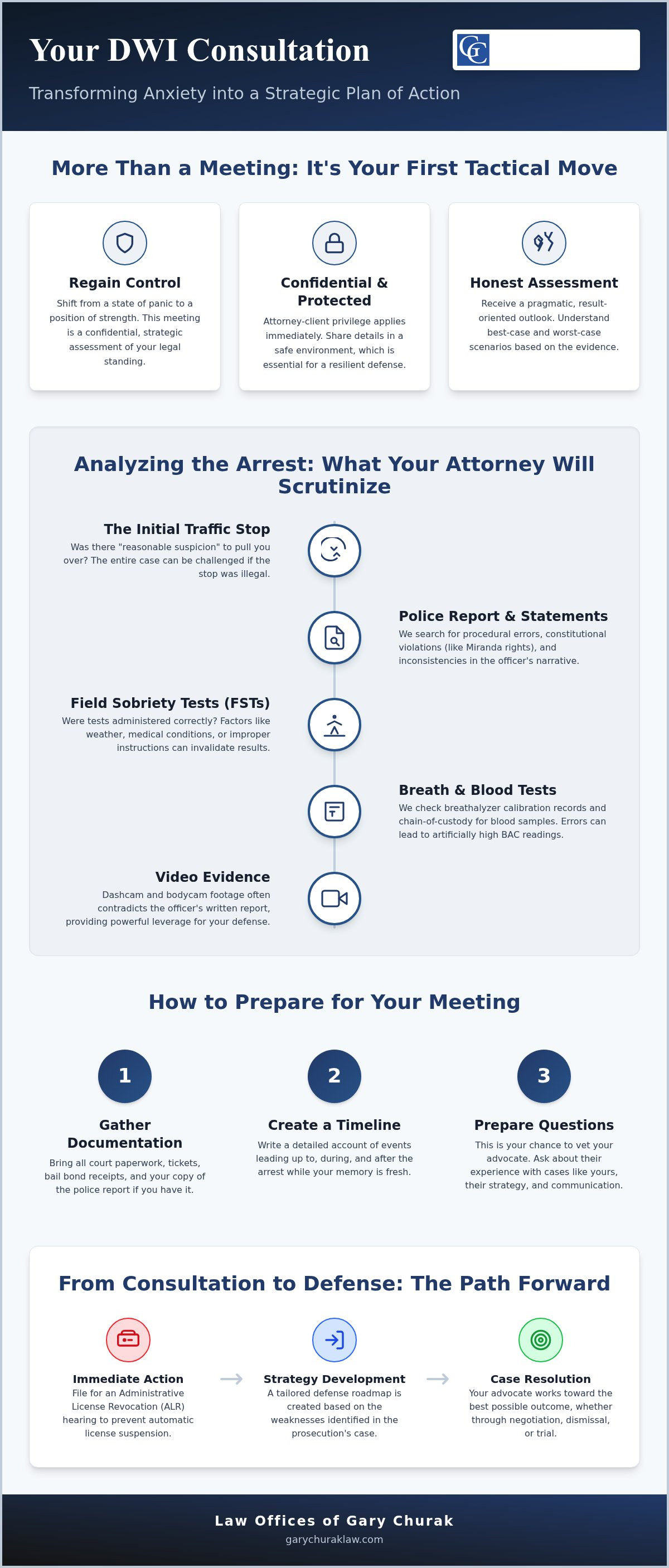
During the strategic evaluation, your attorney functions as a forensic investigator. You should realize that what to expect in a DWI consultation includes a deep dive into the technicalities of your arrest. The police report is the first document under the microscope. We look for procedural errors that violate your constitutional rights, such as an officer failing to read Miranda warnings or conducting an illegal search of your vehicle. Every sentence in that report is a potential point of contention that we can use to weaken the prosecution's narrative and protect your future.
Field sobriety tests (FSTs) are also scrutinized for strict adherence to standard protocols. If an officer modified the instructions or failed to account for environmental factors, the results lose their legal credibility. We also examine breathalyzer and blood test data for calibration issues or chain-of-custody gaps. If a blood sample sat in an unrefrigerated locker for too long, the fermentation process could artificially inflate the BAC reading. Knowing what to expect in a DWI consultation helps you realize that the most powerful evidence is often what's missing. Dashcam or bodycam footage often contradicts the officer's written testimony, providing the leverage needed to challenge the state's claims. If you're ready to see how these details apply to your situation, you can request a strategic case review to begin your defense.
Challenging the Probable Cause
The legality of the initial traffic stop is your first line of defense. Officers must have reasonable suspicion to pull you over; they can't simply act on a hunch or a vague feeling. If an officer lacked a valid reason for the stop, such as a clear traffic violation, we may file a motion to suppress all resulting evidence. Common errors in officer observations, such as misidentifying a minor swerve within a lane as impairment, often lead to successful challenges of the probable cause. Without a valid stop, the entire case against you may crumble before it ever reaches a jury.
The Science of Sobriety Testing
Biological factors and environmental conditions can produce false positives that look like intoxication to an untrained eye. Medical issues like GERD, diabetes, or even certain low-carb diets can skew chemical test results significantly. The attorney's role is to question the scientific validity of the specific tests used against you and the equipment's maintenance history. This scrutiny is a core part of the role of thorough case analysis in creating a powerhouse defense. We look for every scientific flaw to ensure your rights remain protected against unreliable data and aggressive prosecution tactics.
Vetting Your Advocate: Critical Questions to Ask
Vetting your advocate is the most consequential decision you'll make following an arrest. Part of understanding what to expect in a DWI consultation involves realizing that this meeting is a high-stakes interview where you are the employer. You aren't just looking for a legal representative; you're seeking a fierce protector who will stand between you and the state's aggressive tactics. A professional consultation should provide you with a clear sense of the attorney's depth of knowledge and their commitment to your specific case. Use this time to move beyond surface-level pleasantries and demand concrete answers about their history and methodology.
Experience dictates outcomes in complex litigation. You must ask: "How many cases similar to mine have you taken to trial?" With over 40 years of experience, a seasoned attorney understands that a lawyer who only settles is a lawyer the prosecution doesn't fear. You also need to assess their immediate strategic priorities. Ask what their specific plan is to protect your driver's license, as administrative deadlines for license hearings often expire within days of an arrest. Finally, establish communication protocols early. You deserve to know who your primary point of contact will be and how often you'll receive updates. Clarity on fee transparency is equally vital; ensure you understand whether the firm utilizes flat fees for certainty or hourly rates that can fluctuate as the case progresses.
Evaluating Trial Experience vs. Plea Bargaining
You need an attorney who is not afraid to take a case to a jury. A reputation for aggressive advocacy directly influences the prosecution's willingness to negotiate. When the state knows your counsel is trial-ready, they are often more inclined to offer favorable terms to avoid a courtroom battle. Identifying the traits of a reliable lawyer who prioritizes your long-term freedom over a quick settlement is essential. This mindset ensures every decision made is designed to weaken the state's position rather than simply managing your surrender.
Red Flags to Watch For
Trustworthy attorneys never promise a specific outcome or "guarantee" results. The legal system is inherently unpredictable; any lawyer claiming a 100% success rate is likely prioritizing a retainer over the truth. Another significant red flag is the "mill" firm, where you may never speak to the lead attorney after the initial meeting. Pay close attention to the attorney's level of engagement during your time together. If they are distracted by other calls or seem unfamiliar with the basic facts you've provided, they lack the focus required for a powerhouse defense. Knowing what to expect in a DWI consultation means recognizing that you deserve undivided attention and a pragmatic, result-oriented outlook from the very first minute.
Preparing for the Meeting: Documentation and Details
Preparation transforms a standard meeting into a high-level strategic evaluation. Knowing what to expect in a DWI consultation involves understanding that your attorney requires raw data to identify the prosecution's weaknesses. You shouldn't arrive empty-handed. By organizing your information beforehand, you allow your advocate to move immediately into the tactical phase of your defense. This proactive approach establishes a foundation of resilience and preparedness from the very first minute of your meeting.
- Step 1: Gather all paperwork provided by the police and the court. This includes your citation, bail documents, and any property receipts issued during the booking process.
- Step 2: Create a detailed, written timeline of the events leading up to and during the arrest. Write this while your memory is fresh, covering everything from your last meal to the moment of your release.
- Step 3: Compile a list of potential witnesses. Include names and contact details for individuals who were with you prior to the stop or who observed the officer's conduct during the arrest.
- Step 4: Prepare a list of your medical history. Document conditions like GERD, diabetes, or inner ear issues that can produce false positives on breathalyzers or affect your balance during physical tests.
The Paperwork Trail
The "Notice of Suspension" is the most time-sensitive document you possess. It often serves as your temporary driving permit while simultaneously triggering a strict countdown for your right to an administrative hearing. Missing this window usually results in an automatic license suspension, regardless of the eventual court outcome. Court appearance notices are equally vital as they dictate the initial timeline of your defense. Understanding how a lawyer can help with bail can also clarify your current legal status and any conditions tied to your pre-trial release.
Your Personal Account: The Silent Witness
Your memory is a silent witness that begins to fade the moment you leave custody. Note specific environmental factors like weather, road construction, or poor lighting that might have hindered your performance on field sobriety tests. Record the officer's specific demeanor and every word you remember saying to the police. Did they ask for consent? Did they read your rights? This account must remain strictly between you and your attorney to maintain privilege. To ensure your documentation is leveraged into a powerhouse defense, schedule your strategic evaluation today.
From Consultation to Defense Strategy: The Next Steps
Once the initial evaluation concludes, the shift from assessment to active advocacy happens instantly. Formalizing the representation involves signing a retainer agreement, which officially establishes your attorney as your fierce protector. This transition is a core part of what to expect in a DWI consultation; you move from a state of uncertainty to a structured, aggressive plan of action. The prosecution is now on notice that every piece of evidence they possess will face intense scrutiny from a battle-tested guide.
Formal discovery begins the moment the attorney-client relationship is solidified. We don't wait for the state to volunteer information; we demand it. This process involves obtaining all evidence held by the state, including laboratory maintenance logs, officer training records, and unedited surveillance footage. Your attorney will also set the schedule for future hearings and identify windows for pre-trial negotiations. Every step is methodical, deliberate, and designed to maintain the momentum established during your first meeting.
The First 15 Days: A Critical Window
The two weeks following a DWI arrest are the most important for your defense. In many jurisdictions, you have a strictly limited window to request an administrative hearing to prevent the automatic suspension of your driving privileges. Immediate action is required to save your license while the criminal case proceeds. Our dwi defense attorney services pivot to high-gear advocacy immediately to meet these deadlines. We file the necessary motions to ensure you don't lose your mobility while we fight the underlying charges.
Building the Narrative of Innocence
This phase transforms the raw data gathered during your consultation into a formal defense theory. We use the timeline and witness list you provided to begin a comprehensive investigation. This often includes interviewing witnesses and visiting the site of the arrest to document environmental factors the police ignored. Finalizing the decision to fight the charges requires a seasoned expert who knows when to negotiate and when to take a forceful stance in court. By the time the first pre-trial hearing arrives, your defense is not just a reaction to the arrest; it's a proactive strike against the state's narrative.
Take Command of Your Defense Strategy
A DWI arrest doesn't have to define your future. By understanding exactly what to expect in a DWI consultation, you've already taken the first step toward reclaiming control. You now know that this meeting is a tactical baseline; it's where evidence is scrutinized for constitutional violations and a roadmap for your freedom is established. We've explored how thorough case analysis and aggressive advocacy serve as your protective shield. Success in the courtroom begins with preparation. It requires a battle-tested guide who prioritizes your resilience and knows how to challenge the state's narrative.
With over 40 years of experience, the Law Offices of Gary Churak provide the sophisticated defense you need to navigate these high stakes. We specialize in personalized, thorough case analysis that exposes the flaws in the prosecution's evidence. Don't let a critical window of opportunity close while your driving privileges and freedom are at risk. Secure your future with a free, strategic DWI consultation today. You have the power to fight back, and we have the strength to lead the way.
Frequently Asked Questions
Is a DWI consultation really confidential if I don't hire the lawyer?
Yes, the consultation is confidential because attorney-client privilege begins the moment you seek legal advice. This protection remains in place even if you decide not to formalize the representation. You can speak freely about the events of your arrest without fear that the information will be shared. This transparency is vital for a thorough case analysis and establishing a protective shield against the prosecution's tactics.
How much does a typical DWI consultation cost?
The Law Offices of Gary Churak often provides a free initial meeting to conduct a strategic evaluation of your case. This meeting allows you to understand your legal standing without an immediate financial commitment. During this time, you can discuss fee structures, such as flat fees or hourly rates, to ensure full transparency. Understanding what to expect in a DWI consultation includes getting clear answers about the costs of a powerhouse defense.
What happens if I don't have my police report yet before the meeting?
You can still proceed with the meeting if you don't have the police report yet. While having documentation is helpful, your personal account is a critical starting point for the investigation. An attorney with over 40 years of experience will eventually obtain the official report and available dashcam footage through the formal discovery process. Your immediate priority is establishing a defense timeline while your memory is still fresh and accurate.
Can a lawyer tell me if my case will be dismissed during the first meeting?
A trustworthy attorney will never guarantee a dismissal during the first meeting. While they can identify potential constitutional violations or procedural errors, the legal process is unpredictable. A battle-tested guide provides a pragmatic, result-oriented outlook rather than empty promises. The consultation serves to identify the best-case and worst-case scenarios, giving you a realistic roadmap for your defense strategy rather than a guaranteed outcome.
Should I bring a family member or friend to the consultation for support?
Bringing a friend or family member is generally discouraged because their presence can waive attorney-client privilege. If a third party is in the room, the prosecution could potentially subpoena them to testify about what you said. To keep your communications strictly confidential and protected, it's best to meet with your advocate alone. This ensures that every detail you share remains a secure part of your defense narrative.
How long does a standard legal consultation for a DWI last?
A standard legal consultation for a DWI typically lasts between 30 and 60 minutes. This timeframe provides enough room for a thorough case analysis without becoming bogged down in minor details. The meeting is methodical and deliberate, focusing on the legality of the traffic stop and the results of sobriety testing. It's designed to be a punchy, high-value session that moves you from a state of panic toward strategic preparation.
What is the difference between a DUI and a DWI consultation?
There is no functional difference in what to expect in a DWI consultation versus a DUI consultation. The primary difference lies in state-specific terminology and the specific blood alcohol concentration thresholds defined by local law. Regardless of the acronym used, the strategic purpose remains the same: a confidential assessment of the evidence. Your advocate will scrutinize the arrest details using the same rigorous standards for both types of charges.
Will the lawyer help me get my car back from the impound lot during the consultation?
While an attorney can provide guidance on the impound process, they typically don't physically help you retrieve your vehicle during the initial meeting. Their primary focus is on the time-sensitive legal deadlines, such as requesting administrative hearings to protect your driver's license. They can explain the local procedures for vehicle release, but the consultation is a tactical session dedicated to your criminal defense and long-term freedom.


