

What if the most damaging evidence in your file isn't a "smoking gun," but a piece of information the prosecution hasn't even told you exists? You likely feel the legal system is a secretive machine designed to keep you in the dark, and that anxiety is valid. The discovery process in a criminal case is specifically designed to end that secrecy. It's your constitutional right to see exactly what the government plans to use against you. This isn't just a routine exchange of paperwork; it's the moment we begin to dismantle the prosecution's narrative by forcing them to reveal every police report, witness statement, and digital record they possess.
I've spent over 40 years as a fierce protector for my clients, and I know that information is the ultimate leverage. In this guide, you'll learn how a strategic defense uses discovery to identify "Brady material" that could prove your innocence. We'll also break down the critical 2026 updates to federal rules that dictate when and how evidence must be disclosed. You'll gain a clear understanding of the timeline for your case and learn how aggressive scrutiny of the prosecution's file can protect your future. We're going to move from a state of uncertainty toward a position of strength and preparedness.
Key Takeaways
- Understand your constitutional right to transparency, ensuring the prosecution cannot hide the evidence they intend to use to build their case.
- Learn how the discovery process in a criminal case forces the government to turn over police reports, witness statements, and forensic data for aggressive scrutiny.
- Identify "Brady material" and other exculpatory evidence that can prove your innocence or dismantle the credibility of the state’s witnesses.
- Gain a clear understanding of the legal timeline for evidence disclosure to ensure your defense is prepared for every stage of the proceedings.
- Discover how to use a Motion to Compel to force prosecution compliance and protect your future when the government attempts to withhold information.
The Purpose of Discovery: Upholding Constitutional Transparency
The criminal justice system often feels like an uneven battlefield where the government holds all the cards. However, the discovery (law) process serves as a vital safeguard to level that field. At its core, the discovery process in a criminal case is the formal procedure where the prosecution and defense exchange information and evidence. It isn't a courtesy; it's a mandatory requirement that forces the state to lay its cards on the table. This transparency ensures your defense isn't guessing at what the police found or what witnesses might say. By stripping away the secrecy of the state, we can begin to build a strategy based on facts rather than fear.
The Legal Basis for Evidence Disclosure
Your right to see the prosecution's file is firmly rooted in the Sixth Amendment of the U.S. Constitution. This amendment guarantees every defendant the right to be informed of the nature and cause of the accusation. You can't effectively defend yourself against a charge if you don't know the specific facts or evidence supporting it. While the prosecution has the vast resources of law enforcement and state labs, discovery creates an "equality of arms." It compels the state to share its investigative findings, ensuring the individual isn't crushed by the weight of a secretive government machine. Recent updates, including those to Federal Rule of Criminal Procedure 16, have further strengthened these requirements by establishing clearer deadlines for expert witness disclosures, ensuring the defense has time to scrutinize complex forensic data before trial.
Why Transparency is Essential for a Fair Trial
Before modern discovery rules, "trial by ambush" was a common and dangerous tactic. Prosecutors could surprise the defense with a last-minute witness or a hidden forensic report, leaving no time for a meaningful response. Today, the discovery process in a criminal case prevents these tactical surprises. By requiring disclosure early in the legal timeline, the court promotes judicial efficiency and protects the integrity of the verdict. When both sides see the strength or weakness of the evidence, it often leads to more just outcomes. Whether that results in a dismissal of charges or a strategic negotiation, the decision is based on the full picture. A fair trial is impossible if the defense is kept in the dark. Discovery is the light that ensures the process remains honest, accountable to the law, and focused on the truth.
The Categories of Evidence: What the Prosecution Must Disclose
The prosecution's case is built on a foundation of specific evidence types. To mount a successful defense, we must scrutinize every document and object the state intends to use. Under the Federal Rules of Criminal Procedure, the government is required to disclose materials that are material to preparing the defense or that they intend to use in their case-in-chief. This isn't a suggestion; it's a mandate. We use these rules to force the government to reveal the building blocks of their accusations.
- Police and investigative reports: These provide the initial narrative of the arrest and investigation, often revealing inconsistencies in the officer's memory.
- Physical evidence: This includes everything from seized property and weapons to forensic samples like DNA, hair, or fingerprints.
- Witness information: We're entitled to see recorded interviews, written statements, and the prior criminal records of anyone the state plans to call to the stand.
The Modern Digital Footprint in Discovery
In 2026, the discovery process in a criminal case has evolved far beyond paper files. Most interactions now leave a digital trail that can either support or dismantle the prosecution's theory. We aggressively pursue body camera footage, which often tells a different story than the written police report. We also examine GPS data from vehicles and mobile devices, as well as electronic communications from social media or messaging apps. These digital assets are frequently the most objective evidence available. If you're concerned about what the police found on your devices, it's vital to have an experienced defense attorney review the legality of how that data was obtained.
Expert Witness Disclosures and Scientific Reports
When the state uses "science" to prove a crime, they must show their work. This includes lab reports for drug analysis, toxicology results, and ballistics data. Following recent procedural amendments, prosecutors must provide specific summaries of any expert testimony they intend to use. This disclosure must include the witness's opinions, the bases and reasons for those opinions, and the witness's qualifications. We don't take these reports at face value. We scrutinize the methodology to ensure the "science" isn't actually just a flawed theory dressed up as fact. Our goal is to find the cracks in their technical evidence before it ever reaches a jury.
Brady Material and Strategic Analysis: Finding Weaknesses
Receiving the prosecution's file is just the beginning of a high-stakes investigation. The real work starts with a meticulous audit of every page and digital file provided by the state. In the discovery process in a criminal case, we don't just look for what the prosecution has; we look for what they're trying to ignore. This proactive scrutiny is how we identify the vulnerabilities that can lead to a case being dismissed or charges being significantly reduced. We treat the discovery file as a map of the prosecution’s weaknesses, and our job is to exploit every single one of them.
The Power of Exculpatory Evidence
Under the landmark Brady v. Maryland ruling, the government is constitutionally required to disclose any evidence favorable to the accused. This is known as "Brady material." It includes any information that could potentially negate your guilt or reduce your punishment. We aren't looking for a needle in a haystack; we're looking for the evidence the state didn't want to find. This might be a witness statement that contradicts the lead officer's account or a forensic report that doesn't quite match the theory of the crime. Finding this material requires a battle-tested eye that knows how to read between the lines of a dense investigative file. If the prosecution fails to hand this over, it isn't just a mistake; it's a violation of your constitutional rights.
Impeaching Witness Credibility Through Discovery
A case often stands or falls on the word of a single person. This is where Giglio material becomes a powerful weapon. Named after Giglio v. United States, this rule requires the prosecution to hand over any information that could impeach the credibility of their witnesses. This includes prior criminal records, a history of untruthfulness, or "deals" made in exchange for testimony. We use this information to show the jury that the state's star witness has a motive to lie or a history that makes them unreliable. When we expose a witness's bias or past dishonesty, the prosecution's entire narrative begins to crumble.
A seasoned criminal defense attorney uses this data to conduct a thorough case analysis. We cross-reference the written police reports against the recorded body camera footage we discussed earlier. It's common to find that an officer's "recollection" in a report is quite different from what the video actually shows. These inconsistencies are the foundation of a strategic defense. By exposing these gaps, we demonstrate that the prosecution's narrative is flawed and unreliable. We don't wait for the state to be honest; we use the discovery process in a criminal case to force the truth into the open and protect your future.
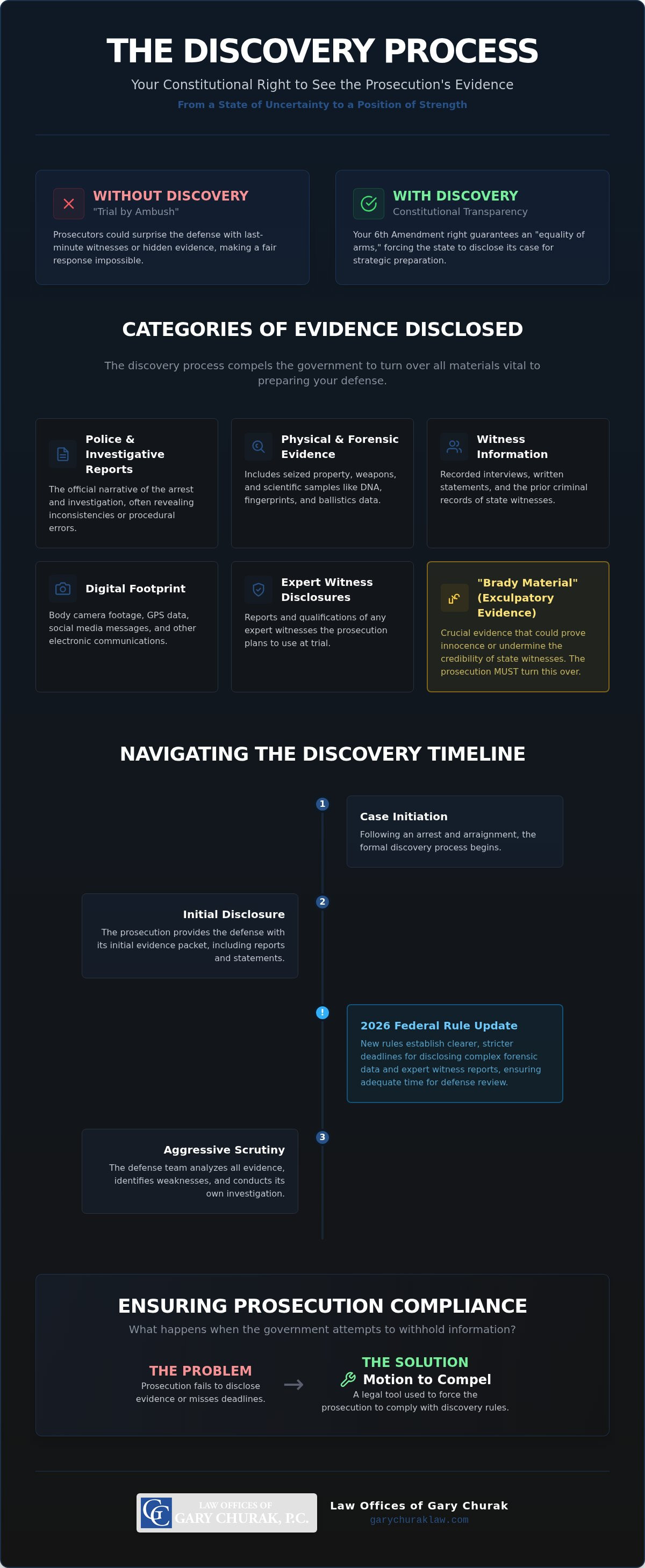
The Procedural Timeline: Navigating the Discovery Phase
The discovery process in a criminal case operates on a strict procedural clock. It doesn't happen by accident; it requires deliberate, timely actions from your defense team to be effective. Once you've been arraigned, the window for evidence collection opens. This phase is critical because it sets the stage for every motion, hearing, and trial strategy that follows. We don't wait for the prosecution to offer information. We demand it. By adhering to a methodical timeline, we ensure that no piece of evidence is overlooked or suppressed by the state’s bureaucracy.
Initiating the Evidence Exchange
The timeline begins almost immediately after your initial court appearance. We file a formal Request for Discovery to put the state on notice. This document is a comprehensive demand for all police reports, forensic results, and digital files the government holds. In federal cases, Rule 16 provides the framework for this exchange, while state courts follow their own specific codes of procedure. By initiating this exchange early, we ensure there's enough time to analyze complex data before any critical deadlines pass. If you're facing charges, you need an aggressive criminal defense attorney who will immediately move to secure this evidence before it's lost or destroyed.
Managing the Ongoing Flow of Information
One of the most misunderstood aspects of the discovery process in a criminal case is its duration. Discovery isn't a single package delivered in the mail. It's an ongoing obligation. As the prosecution's investigation continues, they have a constant duty to disclose newly discovered evidence to the defense. If a lab result comes back months after your arrest, the state must provide it. This continuous flow requires constant vigilance to ensure that late-breaking information doesn't derail our strategy.
However, discovery is also a two-way street known as reciprocal discovery. While the defense has significant protections, there are specific items we may be required to share with the prosecution, such as notice of certain defenses or expert witness reports we intend to use at trial. We manage this flow carefully to protect your rights while remaining in full compliance with court orders. Everything culminates as we approach pre-trial motions. Before we can argue to suppress evidence or dismiss charges, we must ensure the evidence file is complete. This finalization period is when we verify that the prosecution has met all their disclosure obligations. This methodical approach ensures that when we walk into a hearing, we're armed with every available fact to protect your future.
Ensuring Compliance: When the Prosecution Withholds Evidence
The discovery process in a criminal case is only as effective as the enforcement behind it. While the law mandates transparency, some prosecutors may be slow to disclose files or outright resistant to sharing sensitive investigative data. We don't accept delays or excuses. Aggressive advocacy means holding the government to the letter of the law. If the state attempts to hide behind procedural hurdles, we use the court’s authority to break those barriers down. Our goal is to ensure that every piece of evidence is brought into the light where it can be scrutinized.
Tactical Use of the Motion to Compel
When a prosecutor fails to provide specific items, we file a Motion to Compel. This is a formal request for the judge to order the state to produce the missing evidence by a set deadline. It's a powerful tool that forces the government to justify their withholding of information. We use this tactic when we identify gaps in the police reports or when digital evidence, like body camera footage, is conspicuously absent. By preparing for a criminal defense consultation with your own detailed account of the arrest, you help us pinpoint exactly what should be in that file. Your insights allow us to spot what's missing, making our Motion to Compel even more targeted and effective.
Consequences of Prosecutorial Misconduct
The court has several ways to punish a failure to follow the rules. If a judge finds that the prosecution intentionally withheld evidence, the sanctions can be severe. These consequences range from the exclusion of specific evidence at trial to the complete dismissal of charges. In 2026, courts are increasingly less tolerant of "accidental" delays in electronic discovery. If the state fails in its ongoing duty to disclose, we move to suppress the tainted evidence. This protection ensures that the discovery process in a criminal case remains a shield for the defendant rather than a game for the prosecution. We remain unwavering in our commitment to hold the government accountable, ensuring that your rights are never sacrificed for the state’s convenience. A successful defense requires a lawyer who isn't afraid to challenge the prosecution’s integrity when they fail to meet their constitutional obligations.
Secure Your Future Through Strategic Disclosure
The discovery process in a criminal case is the most powerful tool you have to level the playing field against the state. It's the mechanism that brings police reports, digital evidence, and witness inconsistencies into the light for aggressive scrutiny. By identifying exculpatory Brady material and holding the prosecution accountable to strict 2026 procedural timelines, we ensure your defense is built on facts rather than government assumptions. Success in the courtroom begins with a deep understanding of what the prosecution knows and, more importantly, what they're trying to hide.
I've spent over 40 years acting as a fierce protector for my clients, providing the personalized consultations and thorough case analysis required to win. You deserve a dedicated defense that understands how to leverage every piece of disclosed information to your advantage while protecting your constitutional rights. Scrutinize the government’s case with a battle-tested defense; contact the Law Offices of Gary Churak today. You have the right to see the evidence against you, and you have the right to a defense that knows how to use it. Stay resilient; we're ready to protect your future.
Frequently Asked Questions
How long does the discovery process usually take in a criminal case?
The timeline for the discovery process in a criminal case varies based on the complexity of the charges. While it typically begins immediately after the arraignment, the exchange can take anywhere from a few weeks for a misdemeanor to several months for complex federal felonies. It's important to remember that discovery is an ongoing obligation. As new evidence surfaces during the investigation, the prosecution must continue to disclose those findings to your defense team until the case concludes.
Can the prosecution refuse to show me certain evidence?
Prosecutors cannot legally hide evidence that is material to your guilt or punishment. While they may protect "work product," such as their personal legal theories or internal notes, they must disclose all police reports, forensic data, and witness statements. If we suspect the government is withholding information, we aggressively file a Motion to Compel. This forces a judge to review the prosecution's files and order the immediate release of any suppressed evidence to protect your rights.
Do I have to give my evidence to the prosecutor as well?
Discovery is often a two-way street known as reciprocal discovery. While you have a constitutional right against self-incrimination, the law requires the defense to share specific items, such as a list of expert witnesses or notice of certain defenses like an alibi. However, you are never required to turn over your own private communications with your attorney. We manage this exchange strategically to ensure full legal compliance without ever compromising your position or weakening your defense.
What is the "Brady Rule" and why is it important for my defense?
The Brady Rule is a constitutional safeguard requiring the prosecution to disclose any evidence favorable to your case. This includes information that could prove your innocence or lead to a lighter sentence. This rule is a cornerstone of a fair trial because it prevents the state from cherry-picking only the facts that make you look guilty. We scrutinize every file to ensure the government hasn't buried "Brady material" that could dismantle their entire narrative against you.
What happens if the police "lose" or destroy evidence?
When the state loses or destroys evidence, it is referred to as "spoliation." If the evidence was critical to your defense and destroyed in bad faith, the consequences for the prosecution are severe. A judge may instruct the jury to assume the missing evidence would have helped you, or they may even dismiss the charges entirely. We hold law enforcement to a high standard of preservation, ensuring that their negligence or misconduct doesn't result in an unfair trial.
Can discovery lead to my charges being dropped before trial?
A thorough review of the discovery process in a criminal case frequently leads to dropped or reduced charges. If the disclosed evidence reveals that the police violated your rights during a search or that their witnesses are unreliable, we move to suppress that evidence. When the prosecution realizes their case is built on a flawed foundation, they are often forced to dismiss the charges before the trial even begins. Information is your best leverage for a dismissal.
Is discovery different in federal cases compared to state cases?
Federal and state courts operate under different sets of rules. Federal cases are governed by Rule 16 of the Federal Rules of Criminal Procedure, which has specific requirements for expert witness summaries and electronic data. State rules can sometimes be even more permissive, allowing the defense to see a broader range of investigative files. Regardless of the jurisdiction, our 40 years of experience ensures we navigate these procedural nuances to extract every possible piece of evidence.
Do I get to see the discovery materials myself, or only my lawyer?
You have a fundamental right to know the evidence against you, and we encourage you to review the discovery materials with us. While your lawyer manages the formal exchange and legal analysis, your input is vital for spotting factual errors in police reports. In some cases, a judge may issue a protective order to redact sensitive information like witness addresses, but you will always be fully informed of the substance of the government's case to prepare your defense.


