

What if the most important part of a juvenile case isn’t just what happens in court, but how it may shape your child’s future? A charge can leave parents worrying about a permanent record and the effects on college or employment. Juvenile offenses defense gives families a way to respond strategically, but the process differs from adult court, and rules vary by state.
Your concerns are real. Decisions made early in a case can affect the options available later, including whether charges may be reduced or dismissed, whether detention can be avoided, and whether a record may eventually be sealed or expunged. No outcome is guaranteed, but a careful defense can help protect your child’s interests at every stage.
This article explains how juvenile court works, which rights and options may matter, and how a focused legal strategy can help safeguard your child’s long-term opportunities. Attorney Gary Churak brings over 40 years of legal experience to personalized defense, thorough case analysis, and evidence review. You’ll learn what to consider early, how to assess possible paths forward, and why preparation matters when your child’s future is at stake.
Key Takeaways
- Learn how delinquent acts differ from status offenses, and why the distinction can shape a juvenile case.
- Understand key juvenile court terms, including adjudication and disposition, so you can better follow what happens next.
- Explore how juvenile offenses defense may address drug-related, theft, burglary, and property charges, including whether diversion could be an option.
- Know how to protect your child’s rights after an arrest, including seeking legal counsel before questioning.
- See how careful evidence and procedure reviews may uncover weaknesses and help protect your child’s future.
Understanding Juvenile Offenses and the Long-Term Stakes
A juvenile offense generally refers to conduct attributed to someone below the legal age of majority, although age limits and procedures vary by jurisdiction. The term can cover conduct that would also be a crime for an adult, as well as behavior handled by the juvenile system because of the young person’s age. Juvenile delinquency offers a broad overview of these categories, but local law determines how a particular allegation is treated.
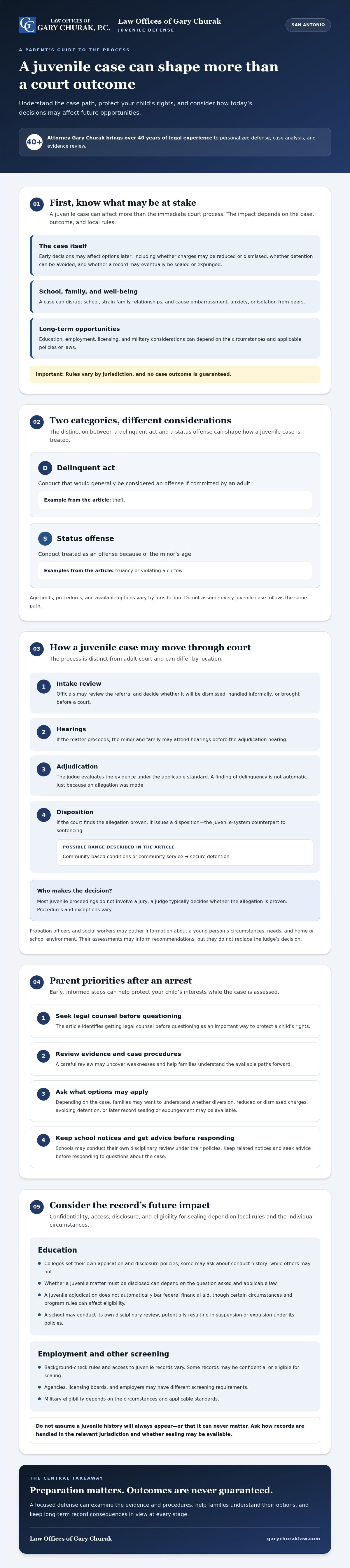
That distinction matters. A delinquent act is generally conduct that would be considered an offense if committed by an adult, such as theft. A status offense is conduct treated as an offense because of the minor’s age, such as truancy or violating a curfew. The legal response and available options can differ, so parents shouldn’t assume every juvenile case follows the same path.
The stakes extend beyond the immediate court outcome. An arrest or court case can disrupt school, strain family relationships, and cause a young person embarrassment, anxiety, or isolation from peers. Record confidentiality, access, and eligibility for sealing also depend on local rules and the case’s outcome. Early juvenile offenses defense can help families understand those rules and consider options that protect a child’s future, without assuming that every case will affect opportunities in the same way.
The Threat to Future Educational Opportunities
Colleges set their own application and disclosure policies. Some may ask about conduct history, while others may not. Whether a juvenile matter must be disclosed can depend on the question asked and applicable law. A juvenile adjudication doesn’t automatically bar a student from federal financial aid, but certain circumstances and program rules can affect eligibility. A school may also conduct its own disciplinary review under its policies, potentially leading to consequences such as suspension or expulsion. Keep school notices and seek advice before responding to questions about the case.
Career and Employment Consequences of a Juvenile Record
Background-check rules and access to juvenile records vary. Some records may be confidential or eligible for sealing, while particular agencies, licensing boards, or employers may have different screening requirements. Military eligibility also depends on the circumstances and applicable standards. Don’t assume a juvenile history will always appear, or that it can never matter. Ask how records are handled in the relevant jurisdiction and whether sealing may be available. A defense focused on the evidence, case procedures, and long-term record consequences can help parents make informed decisions. Attorney Gary Churak brings over 40 years of legal experience to personalized juvenile defense and thorough case analysis.
The Juvenile Justice System: A Distinct Legal Framework
Juvenile court generally centers on accountability, rehabilitation, and the young person’s needs, rather than simply imposing punishment. That purpose shapes how a case is handled, although laws and procedures differ by jurisdiction. Youth.gov outlines the goals of the juvenile justice system, including approaches intended to support rehabilitation and reduce future involvement with the system.
The language matters. A juvenile court usually makes a finding of delinquency, not a criminal conviction. If the court finds the allegation proven, it issues a disposition, the juvenile-system counterpart to sentencing. Most juvenile proceedings don’t involve a jury; a judge typically decides whether the allegation is proven. Procedures and exceptions vary, so parents should confirm what applies where the case is being heard.
Probation officers and social workers may gather information about a young person’s circumstances, needs, and home or school environment. Their assessments can inform recommendations to the court, but they don’t replace the judge’s decision. A careful juvenile offenses defense considers both the evidence behind the allegation and the information that may shape the court’s response.
The Process of Adjudication and Disposition
A case may begin with intake, where officials review the referral and determine whether it will be dismissed, handled informally, or brought before a court. If it proceeds, the minor and family may attend hearings before an adjudication hearing, where the judge evaluates the evidence under the applicable standard. A finding of delinquency isn’t automatic just because an allegation was made. If the court makes a finding, possible dispositions can range from community-based conditions or community service to secure detention, depending on the law and circumstances.
When Minors Are Treated as Adults
In some cases, the law allows a matter to be transferred, or waived, to adult criminal court. The process and eligibility depend on the jurisdiction. Factors may include the alleged offense’s seriousness, the young person’s age, and other case-specific circumstances. Transfer can expose a minor to a different court process and potentially more severe consequences. Early, strategic advocacy can address the evidence and the reasons the case should remain in juvenile court when the law permits. For guidance on the process, explore juvenile offenses defense information from the Law Offices of Gary Churak.
Common Juvenile Charges and Juvenile Offenses Defense Strategies
Juvenile allegations can arise from impulsive decisions, peer pressure, or misunderstandings. That context doesn’t erase legal consequences, but it can matter when the court considers an appropriate response. Because the goals of the juvenile justice system include rehabilitation, a defense may examine whether diversion or another community-based option is available, alongside challenging the evidence. Eligibility and outcomes depend on local law and the facts of the case.
Drug allegations require close attention to what officers found, where they found it, and what evidence connects it to the young person. A defense may examine the circumstances of a school or vehicle search, whether the minor possessed or controlled the substance, and whether the evidence supports an allegation of intent to distribute rather than simple possession. Search rules vary, so the details and applicable law matter.
Theft, burglary, and other property allegations also call for a fact-specific review. In a shoplifting case, for example, video, witness accounts, and the circumstances of the incident may affect what can be proven. A “joyriding” allegation may raise questions about whether the youth intended to permanently deprive the owner of a vehicle. Trespassing cases may turn on permission, notice, or mistaken beliefs. Restitution may be discussed as part of a resolution where appropriate, but it doesn’t automatically prevent formal court action.
Vandalism or “tagging” can bring a young person into the system over property damage, even if the act began as a dare or an attempt to impress friends. School altercations also need careful assessment. Investigators should consider who was involved, what happened before the conflict, whether accounts differ, and whether school or video records support the allegation. A fight isn’t automatically treated as self-defense or as an assault. The facts and governing law determine how it’s evaluated.
Defending Against Drug and Alcohol Charges
A strategic review tests each link in the allegation: the legality of the search, the reliability of any statements, and whether the evidence establishes possession or intent. Parents can also ask whether a diversion or rehabilitation program may be available. In some jurisdictions, successful completion may lead to dismissal or another favorable resolution, but eligibility and consequences differ. Don’t assume an offer is the best option without understanding its terms and record implications.
Property Crimes and Restitution Strategies
Restitution can be one consideration in resolving a property case, but families should first understand what damage is alleged and how the amount was calculated. A thorough juvenile offenses defense also examines intent, identification evidence, and the child’s individual circumstances, including any prior history. Attorney Gary Churak brings over 40 years of legal experience and a focus on detailed case analysis to juvenile defense.
Actionable Steps for Parents Following a Juvenile Arrest
A juvenile arrest can leave a family scrambling for answers. Focus first on protecting your child’s rights and preserving accurate information. Procedures and deadlines vary by jurisdiction, so don’t assume the same steps or timelines apply everywhere.
- Tell your child to remain calm and ask for an attorney. A minor generally has rights to remain silent and to legal counsel, but how those rights are asserted and protected depends on local law. Don’t encourage your child to answer questions just to appear cooperative.
- Write down what happened. Record the time and location of the arrest, who was present, what was said, and how officers handled the interaction. Keep messages, relevant documents, and potential video evidence, and note names and contact information for witnesses.
- Prepare for an initial detention hearing. Gather court paperwork and information about your child’s school, home circumstances, and support system. Ask the attorney what the hearing will address and which documents may be useful.
Managing Communication with Law Enforcement
“Just tell the truth” may sound like good advice, but a young person under stress can misunderstand a question, guess at details, or make a statement that’s later interpreted differently. Avoid coaching your child on what to say or discussing the facts in front of others. A parent can calmly say, “We want to cooperate, but our child won’t answer questions until we’ve spoken with an attorney.” Whether a parent may be present during questioning depends on applicable law and circumstances. Ask for counsel, and don’t assume a parent’s presence replaces legal advice.
Be cautious with calls from a detention facility. Calls may be recorded or monitored, depending on facility rules. Until you know the applicable policy, avoid discussing the alleged incident, possible defenses, or what witnesses may say. Keep conversations supportive and focused on practical needs.
The Importance of Early Legal Intervention
The first hours can bring urgent decisions, even though “the first 48 hours” isn’t a universal legal deadline. Early legal advice can help a family understand local procedures, prepare for a detention hearing, and avoid preventable missteps. Depending on the facts and local process, counsel may be able to present information to decision-makers before a formal petition is filed or advocate for an alternative resolution. Neither step is guaranteed.
Before speaking with counsel, organize notices, a timeline, and questions about the arrest and next hearing. This guide to preparing for a criminal defense consultation can help you plan that conversation. For information about juvenile offenses defense, visit the Law Offices of Gary Churak website.
Securing a Future: The Role of Strategic Advocacy
A juvenile case should be handled with more than the next hearing in mind. The long-term goal is to address the immediate consequences and understand what steps may help keep the matter from affecting a young person into adulthood. No attorney can promise a particular result, but a thorough juvenile offenses defense can test the allegation, identify weaknesses, and pursue an outcome that protects the child’s interests.
That work may include examining whether officials followed required procedures, whether statements or other evidence are reliable, and whether the available proof supports the allegation. Depending on the jurisdiction and case, an attorney may also seek an informal or non-judicial adjustment, such as diversion, rather than a formal court finding. Eligibility and terms vary. Parents should understand what participation requires and how successful completion may affect the case and future record options.
Record Sealing and Expungement Strategies
Record rules differ significantly by location. Generally, sealing limits who can access a record, while expungement may involve removing or destroying it under applicable law. These terms aren’t interchangeable everywhere, and neither process necessarily erases every copy or consequence. Ask what records exist, who may see them, whether the case outcome affects eligibility, and when an application can be made. Planning from the start means preserving court orders and completion records and avoiding assumptions about automatic relief. For more on long-term legal protection, read how a criminal defense attorney protects your future.
Choosing the Right Juvenile Defense Attorney
Look for counsel who understands juvenile procedures and can explain the options, risks, and possible record consequences in plain language. Ask how the attorney reviews evidence, approaches informal resolutions, and plans for sealing or expungement if the law allows. A protective approach should take the child’s circumstances seriously while preparing to challenge the case where appropriate. This guide to choosing a criminal defense attorney offers questions to consider.
Attorney Gary Churak brings over 40 years of legal experience and focuses on personalized juvenile defense, thorough case analysis, and evidence review. An experienced guide can help parents make informed choices at each stage, including decisions that may affect a child’s path toward a clean slate.
Protect the Next Chapter of Your Child’s Life
A juvenile case can raise questions that reach well beyond the courtroom. The right response depends on the facts, local law, and your child’s circumstances, but early, informed decisions can help preserve options. A focused juvenile offenses defense can challenge weak evidence, explore appropriate alternatives, and account for possible record-sealing options from the outset.
Parents don’t have to make every decision alone. The Law Offices of Gary Churak represents people facing criminal charges and brings over 40 years of experience to defense work. Attorney Gary Churak takes a thorough approach to case analysis and offers personalized attention to help parents understand the choices ahead. No outcome is guaranteed, but a clear strategy can help your family move forward with greater confidence.
A difficult moment doesn’t have to define your child’s future. With preparation and steady advocacy, your family can focus on protecting the opportunities still ahead. Contact the Law Offices of Gary Churak to discuss your child’s situation and possible next steps.
Frequently Asked Questions
What is the difference between a juvenile and an adult criminal charge?
A juvenile charge is generally handled under a separate court process for people below the jurisdiction’s age of majority, while an adult criminal charge proceeds through the adult court system. Juvenile courts often use terms such as “adjudication” and “disposition” instead of “conviction” and “sentence.” Procedures, confidentiality rules, and possible outcomes vary by jurisdiction, so the specific court handling the case matters.
Can a juvenile record be sealed or expunged in the future?
Yes, a juvenile record may be eligible for sealing or expungement, but eligibility and procedures depend on local law, the case outcome, and other circumstances. Sealing generally restricts access, while expungement may involve removing or destroying a record, though the terms and effects vary. Ask early which records exist, who may access them, and whether the case’s resolution affects future eligibility. Relief isn’t always automatic.
Will my child have to go to a detention center if adjudicated delinquent?
No, adjudication doesn’t automatically mean detention. A judge may consider options such as community-based conditions, supervision, or other services, while secure detention may be ordered in some cases. Available dispositions depend on local law and the details of the matter, including the allegation and the young person’s circumstances. An attorney can explain what options may be available and help prepare the family for the hearing.
Does a juvenile offense affect college applications or financial aid eligibility?
It can, but the effect isn’t automatic. Colleges set their own application and disclosure policies, and whether a student must report a juvenile matter depends on the wording of the application and applicable law. A juvenile adjudication doesn’t by itself establish that federal student aid is unavailable; eligibility depends on the relevant aid program and circumstances. Families should review application questions carefully and get legal guidance before disclosing case details.
Can a minor be tried as an adult for serious crimes?
Yes, some jurisdictions allow certain juvenile cases to be transferred or waived to adult criminal court. The rules differ, and the seriousness of the alleged offense may be one factor, along with the minor’s age and other case-specific considerations. Adult prosecution can bring a different process and potential consequences. A defense attorney can assess the transfer rules, challenge the basis for transfer where appropriate, and advocate for the case to remain in juvenile court.
What should I do if the police want to question my child without a lawyer?
Calmly state that your child won’t answer questions until you’ve consulted an attorney, then seek legal advice promptly. Don’t coach your child to explain the incident or guess at answers. A minor generally has rights to remain silent and to legal counsel, but how those rights apply can depend on local law and circumstances. Whether a parent may attend questioning also varies, so ask counsel what protections apply.
How long does a juvenile offense stay on a person’s record?
There isn’t one nationwide timeline. How long a juvenile matter remains on record, who can access it, and whether it can be sealed or expunged depend on jurisdiction, case outcome, offense, and other conditions. Some relief may require an application rather than happening automatically. Keep court paperwork and records showing completion of any conditions, then ask an attorney to identify the rules and deadlines that apply to your child’s case.
Does a juvenile adjudication count as a “conviction” on job applications?
Often, juvenile adjudication is legally distinct from an adult conviction, but the correct answer depends on the application’s wording, local law, and whether the record has been sealed or expunged. Don’t assume every employer can access juvenile records, or that every question can be answered the same way. Before responding, review what the form asks and seek legal advice about disclosure duties and the record’s status.


