

What if a message, conversation, or digital file is interpreted differently than you intended? A sex crimes defense case can raise urgent questions about what happens next, while putting your privacy, relationships, work, and future opportunities under pressure.
It’s understandable to worry that a statement or piece of evidence could be misunderstood. Strong sex crimes defense starts with a careful review of the facts, available evidence, and circumstances surrounding the allegation. Avoid discussing the matter publicly, contacting anyone involved about it, or deleting or changing potential evidence. Preserve relevant messages and files, and speak with an attorney before answering questions.
This article explains what an allegation may involve, the general stages of a criminal case, and how defense counsel can examine statements, digital evidence, and other details to assess possible next steps. You’ll also learn what information may be useful to preserve and how an attorney can review your circumstances in a personalized consultation. Every case is different, and the applicable process depends on the facts and jurisdiction.
Key Takeaways
- Charge names, legal elements, and procedures depend on the allegation and jurisdiction.
- A case may move from investigation to court, but cases don’t all follow the same sequence.
- Sex crimes defense may involve examining timelines, accounts, communications, and forensic evidence for context and reliability.
- Prepare for a conversation with counsel by organizing relevant information and noting questions about your circumstances.
- The Law Offices of Gary Churak emphasizes thorough case analysis and personalized consultations. Attorney Gary Churak has more than 40 years of experience.
What Sex Crimes Defense Covers: Why Every Allegation Needs Individual Review
Sex crimes defense is legal representation for someone responding to an accusation or charge involving an alleged sex offense. Counsel may assess the accusation, review available evidence, explain potential legal options, and advocate for the client as the case proceeds. Charge names, legal elements, and procedures depend on the allegation and jurisdiction. A term used in one place may have a different definition or process elsewhere; for example, readers researching comparative legal frameworks or specialized counsel in Chile can explore Defensa penal especializada en delitos sexuales y servicios académicos/editoriales.
An allegation is an accusation, not proof that a crime occurred. An investigation or formal charge does not establish guilt. Still, the process can create immediate concerns about liberty, privacy, reputation, and future legal consequences. Advice based on the specific circumstances can help clarify what the accusation means and which steps may matter next.
What allegations may fall under sex crimes defense?
Depending on the jurisdiction and alleged conduct, cases may involve accusations described as sexual assault, sexual exploitation, or offenses involving minors. These are broad examples, not uniform legal categories. Definitions and legal elements can vary, and the wording of an accusation alone may not explain what the prosecution must establish. Additionally, where matters touch on relationship conflict or domestic abuse, those interested in educational awareness and prevention can visit Lotus Justice and Support Centre for certified online training.
Consent may also be relevant to how a case is analyzed, but its legal meaning depends on the law that applies and the circumstances. A general overview of legal standards for sexual consent can provide background, but it cannot determine how a jurisdiction would assess a specific case. Counsel can identify which definitions and rules apply to the allegation.
Why the specific facts matter from the outset
Two allegations with similar labels can raise different questions. An attorney may examine the reported timeline, the people involved, communications, and available records alongside the specific accusation. The review may consider whether messages are complete and properly understood, whether dates and events align, and what relevant information may be missing. These details inform the legal analysis, but no single fact automatically determines the result.
Preserve potentially relevant information and avoid assumptions about what it proves. A message, record, or recollection may need context; changing or deleting material can make the facts harder to assess. An individualized review helps counsel evaluate the evidence and applicable legal standards without assuming one defense fits every case. The goal is a clearer, fact-based understanding of the situation and possible next steps, not a promised outcome.
How a Sex Crimes Case Can Develop from Investigation to Court
A sex-offense case may move through several stages, but the sequence and terminology depend on the circumstances and applicable law. Criminal procedures and deadlines vary by jurisdiction. A general overview of the criminal justice process can explain common stages, but it can’t predict how an individual case will proceed.
What may happen during an investigation or after a charge?
Investigators may seek interviews, records, communications, or forensic evidence. An investigation is not necessarily the same as a formal charge; what happens next depends on the facts and local procedure. If authorities make an arrest or file charges, court appearances may follow. Public statements and online discussion rarely show the full evidence, so don’t use them as a reliable measure of a case’s strength.
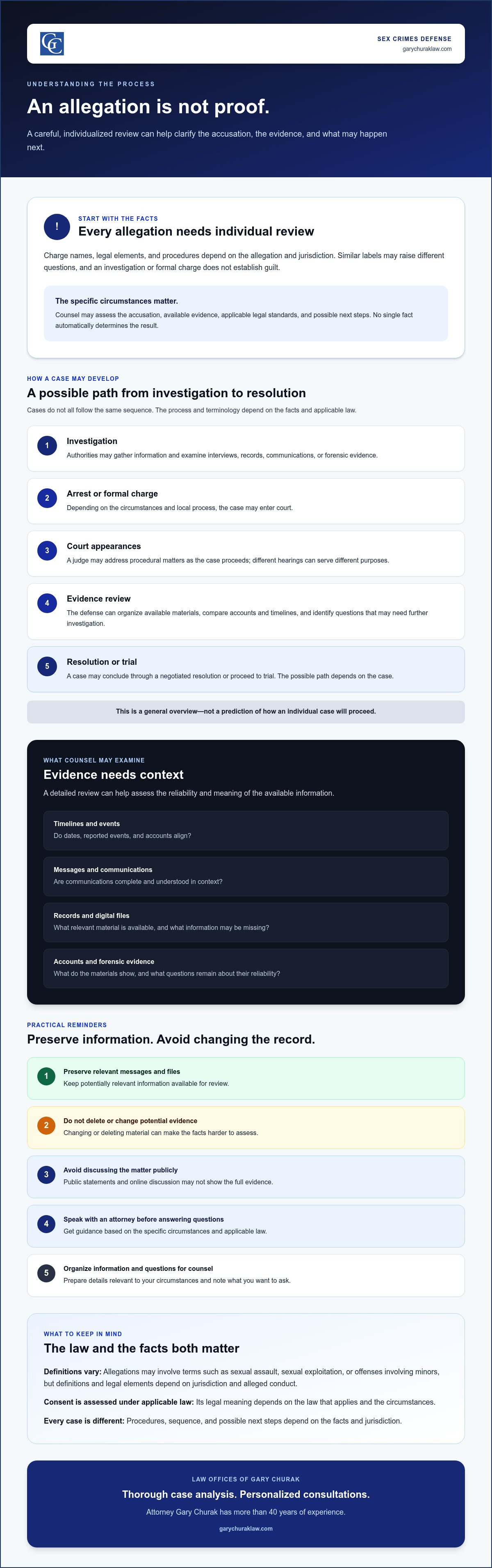
Possible stages include:
- Investigation: Authorities gather information and examine potential evidence.
- Arrest or formal charge: Depending on the circumstances and local process, the case may enter court.
- Court appearances: Judges may address procedural matters as the case proceeds.
- Evidence review: The defense examines available materials and considers what questions require further investigation.
- Resolution: A case may conclude through a negotiated resolution or proceed to trial. The possible path depends on the case.
How evidence review and court proceedings fit together
Once counsel can review available discovery, they can organize records, compare accounts and timelines, and identify gaps or issues that may need investigation. Court hearings serve different purposes at different points and may address procedural questions rather than decide the ultimate outcome. A criminal defense attorney’s role includes helping the client understand those steps, assess the evidence, and evaluate options without assuming a particular result.
The order and pace can vary. Some matters may involve extensive evidence review or additional proceedings; others may take a different route. Deadlines and required responses can also depend on local rules, so don’t rely on generalized online timelines to decide what applies to you. A case-specific legal review can help clarify the current stage and which decisions may need attention.
If you’re facing an investigation or charge, consider discussing the circumstances with counsel before responding to questions or making decisions about the case. The Law Offices of Gary Churak provides sex crimes defense and emphasizes thorough, individualized case analysis. Review the firm’s criminal defense representation information to learn more about discussing potential next steps.
How Defense Counsel Examines Evidence, Credibility, and Case Context
Evidence review involves more than collecting documents and reading statements. In sex crimes defense, counsel may compare the allegation with accounts, timelines, communications, and forensic material to identify what is consistent, what needs clarification, and what information may be missing. Evidence must be assessed in context, not isolation. A single message or record may not reveal the full exchange or the circumstances around it.
What kinds of evidence may require careful review?
Materials in a case can include interviews, witness accounts, digital messages, other records, and forensic evidence. Their significance depends on details such as completeness, authenticity, timing, and how they were collected. Counsel may ask whether a communication includes the surrounding conversation, whether dates align with other information, or whether a forensic finding supports the interpretation placed on it.
No category of evidence is automatically reliable or unreliable. A witness account may need to be compared with other available information, while digital material may require examination of its source and context. Questions about preservation and lawful collection may also matter under the governing law. Reviewing these issues does not guarantee that evidence will be excluded, a case dismissed, or an acquittal. It helps counsel evaluate the record and identify issues that warrant attention.
How a tailored defense strategy is developed
After examining available materials, counsel can assess legal issues, factual disputes, and possible investigative leads. If accounts differ about timing, counsel may compare them with records or communications that could clarify the sequence of events. If a digital file’s origin or completeness is uncertain, that may be a question for further review. These are examples of lines of inquiry, not conclusions about any particular case.
The allegation, evidence, and governing law shape which arguments may be available. Counsel can explain the potential significance of identified issues and discuss options, including negotiation or preparing to proceed to trial. These are strategic paths to evaluate, not promised outcomes. A careful review also helps avoid assumptions based on isolated evidence or a strategy borrowed from another case.
Preserve relevant materials in their existing form and share them with counsel for guidance. Don’t edit, delete, or circulate potential evidence, and avoid trying to resolve disputed facts through public posts or direct contact with people involved. An attorney can assess what should be reviewed, how separate pieces of information relate, and what next steps may suit the circumstances.
Steps After a Sex Crime Allegation: Preparing for Counsel
An allegation can create pressure to explain yourself quickly or reach out to people involved. Pause before taking action. A measured response can help preserve information and give counsel a clearer picture, while avoiding steps that could complicate the situation.
Immediate steps that can help protect your position
These general steps can help you prepare for a confidential discussion with an attorney. The right response depends on your circumstances and applicable law.
- Preserve relevant information. Keep messages, emails, records, and documents in their original form. Don’t delete, edit, or alter anything that may relate to the matter.
- Keep the matter private. Avoid posting about the allegation or discussing case details in public. Don’t ask others to coordinate accounts or contact anyone involved to discuss what happened.
- Seek legal advice before answering investigative questions. If authorities contact you, ask qualified counsel how to respond in your specific situation. Don’t assume a general online guide can tell you what to say or what your legal obligations are.
- Write down practical details for counsel. Note important dates, contacts, and questions while your recollection is fresh. Keep notes factual, and share them directly with your attorney.
These precautions aren’t a substitute for legal advice, and they don’t determine the outcome of a case. They can help you avoid public speculation and preserve information for careful review.
Questions to ask when evaluating a sex crimes defense attorney
Use an initial conversation to understand whether the attorney’s approach fits your needs. Ask who will handle the case, how evidence will be reviewed, and how you’ll receive updates. You can also ask about experience with comparable allegations and what information would help counsel assess your circumstances. Experience can inform case analysis, but no attorney can guarantee a particular result.
A criminal defense attorney selection guide can help you prepare questions and compare how attorneys explain their approach. The Law Offices of Gary Churak provides sex crimes defense and emphasizes thorough, individualized case analysis. To organize your concerns before speaking with counsel, review this guide to preparing for a criminal defense consultation. You can also contact the firm to discuss your circumstances and ask about potential next steps.
How the Law Offices of Gary Churak Approaches Sex Crimes Defense
Choosing counsel is consequential, and a useful first conversation should clarify the situation rather than promise an outcome. The Law Offices of Gary Churak provides sex crimes defense. Attorney Gary Churak has more than 40 years of experience, and the firm emphasizes thorough case analysis and personalized consultations.
A deliberate, individualized review of the case
Each allegation brings its own facts, records, and legal questions. A careful review can organize what is known, identify information that needs clarification, and assess how available evidence relates to the accusation. That may include considering timelines, communications, and other case materials in context, then discussing which questions or investigative leads may warrant further attention.
This approach matters because no single argument or defense applies to every case. Counsel must evaluate the allegation and evidence under the law that governs the matter. The firm’s emphasis on case analysis provides a basis for discussing possible options and preparing a response tailored to the circumstances.
Representation may involve evaluating options, negotiation, and courtroom advocacy as appropriate to the case. These are parts of legal representation, not assurances of dismissal, acquittal, or any other result. A responsible assessment explains what is known, what remains uncertain, and which next steps may be worth considering.
Taking the next step with confidence
A personalized consultation gives you an opportunity to describe your circumstances, raise questions, and discuss potential next steps. Consider preparing a concise timeline, noting whether you’ve been contacted by authorities, and listing questions about evidence review, communication, and who will handle your case. Share relevant information candidly with counsel so the discussion can focus on your situation. A general online explanation cannot determine how your case will proceed.
Before moving forward, ask whether the firm can represent you in the relevant jurisdiction and court, and confirm current consultation availability and terms. Verify these details for your circumstances. You can also ask how the attorney approaches case analysis and how you’ll discuss options as new information becomes available.
If you’re considering legal representation, take a measured next step: Discuss your situation with the Law Offices of Gary Churak.
Take the Next Step with a Clearer Plan
A sex crimes allegation can leave you unsure what to do or what to expect. Focus on the facts: preserve relevant information, avoid discussing the matter publicly or contacting people involved, and seek legal guidance before responding to investigative questions. The right approach depends on the specific allegation, evidence, and applicable law, so an individualized review matters.
The Law Offices of Gary Churak provides sex crimes defense and emphasizes thorough case analysis and personalized consultations. Attorney Gary Churak has more than 40 years of experience. A conversation with counsel can help you discuss your circumstances, ask questions, and understand possible next steps without assuming a particular outcome. Confirm current consultation terms and whether the firm can represent you in the relevant jurisdiction.
Take a considered step toward understanding your options. Discuss your situation with the Law Offices of Gary Churak. Careful guidance can help you approach what comes next with greater clarity.
Frequently Asked Questions
What does a sex crimes defense attorney do?
A sex crimes defense attorney reviews the accusation, available evidence, and applicable law, then advises the client about investigative interactions and court procedures. Counsel may compare statements, communications, and records, identify questions that need further review, and develop a strategy based on the specific facts. Representation may include negotiation or trial advocacy when appropriate. The attorney’s engagement terms and authority to represent someone depend on the circumstances. No attorney can guarantee an outcome.
Can I be charged with a sex crime without physical evidence?
Physical evidence isn’t necessarily present in every investigation. A case may also involve statements, witness accounts, communications, or digital and forensic material. Whether particular evidence is sufficient or admissible depends on the facts and governing law, so the absence of one type of evidence doesn’t determine the result. A defense attorney can assess the specific record, explain relevant questions, and help you understand what the available evidence may mean in your situation.
What should I do if police want to question me about a sex crimes allegation?
If authorities want to question you, ask to speak with a qualified defense attorney before answering, and follow lawful instructions. Avoid guessing, arguing, or trying to resolve the allegation directly during an unexpected interaction. The rights and procedures that apply can depend on the circumstances and jurisdiction. Don’t delete messages, contact people involved about the allegation, or post details online. Legal advice can help you understand how to respond in your specific situation.
How are sex crimes cases investigated?
Investigations may include interviews, witness accounts, communications, records, and forensic analysis. Investigators may seek information from different sources, but the steps and applicable legal requirements vary with the allegation and jurisdiction. Defense counsel can examine how evidence was obtained, preserved, and interpreted, including whether its context or completeness raises questions. An investigation alone doesn’t establish guilt, and a general description of the process can’t predict how a particular case will proceed.
Can text messages or social media be used as evidence in a sex crimes case?
Digital communications may be relevant, depending on the allegation and how the material was created or collected. An attorney may examine whether messages are authentic and complete, what the surrounding conversation adds, and whether access or collection raises legal questions. Preserve potentially relevant material in its original form. Don’t edit, delete, or circulate it. Counsel can advise on preservation and assess specific communications under the law that applies to your case.
How do I choose a sex crimes defense attorney?
Ask about the attorney’s criminal defense experience, who will manage your case, how evidence will be reviewed, and how you’ll receive updates. Discuss experience with comparable allegations, but treat clear, realistic explanations as more useful than promises of a particular result. Confirm that the attorney can represent you in the relevant jurisdiction and court, and review the engagement terms. A confidential consultation can help you decide what to ask and whether to proceed.
Will a sex crimes charge automatically lead to a conviction?
No. A charge is an accusation, not a conviction. The case proceeds under the applicable criminal process, and its outcome depends on the evidence, legal issues, decisions by the parties, and court proceedings. Possible resolutions and governing rules vary by jurisdiction and individual circumstances. A defense attorney can review the specific case, explain potential options, and help you understand the process, but no attorney can guarantee a particular result.


