

The safest response after an arrest is usually calm, deliberate action, not a rushed explanation. If you’re wondering what to do if you are arrested, focus first on staying safe and protecting your rights, even when the situation feels confusing or urgent.
It’s natural to worry that one wrong answer or movement could make things worse. You can remain respectful without volunteering information or resisting officers. Clearly say that you want to remain silent and speak with a lawyer, then follow lawful instructions. The details of arrest, questioning, searches, booking, and release can vary by jurisdiction, so avoid assuming that one person’s experience will match yours.
This guide walks you through practical next steps, from the initial encounter and police questioning to booking, first appearance, and possible release. You’ll learn what to say, what to avoid, and how to preserve useful information once you’re free. It also explains when to seek case-specific legal advice, so you can make informed decisions instead of facing the process alone.
Key Takeaways
- Knowing what to do if you are arrested starts with staying calm, avoiding physical interference, and following officers’ lawful instructions.
- Clearly state that you want to remain silent and speak with a lawyer; simply saying nothing may not communicate that you’re invoking your rights.
- Booking and release procedures vary, so pay close attention to the instructions and conditions you receive.
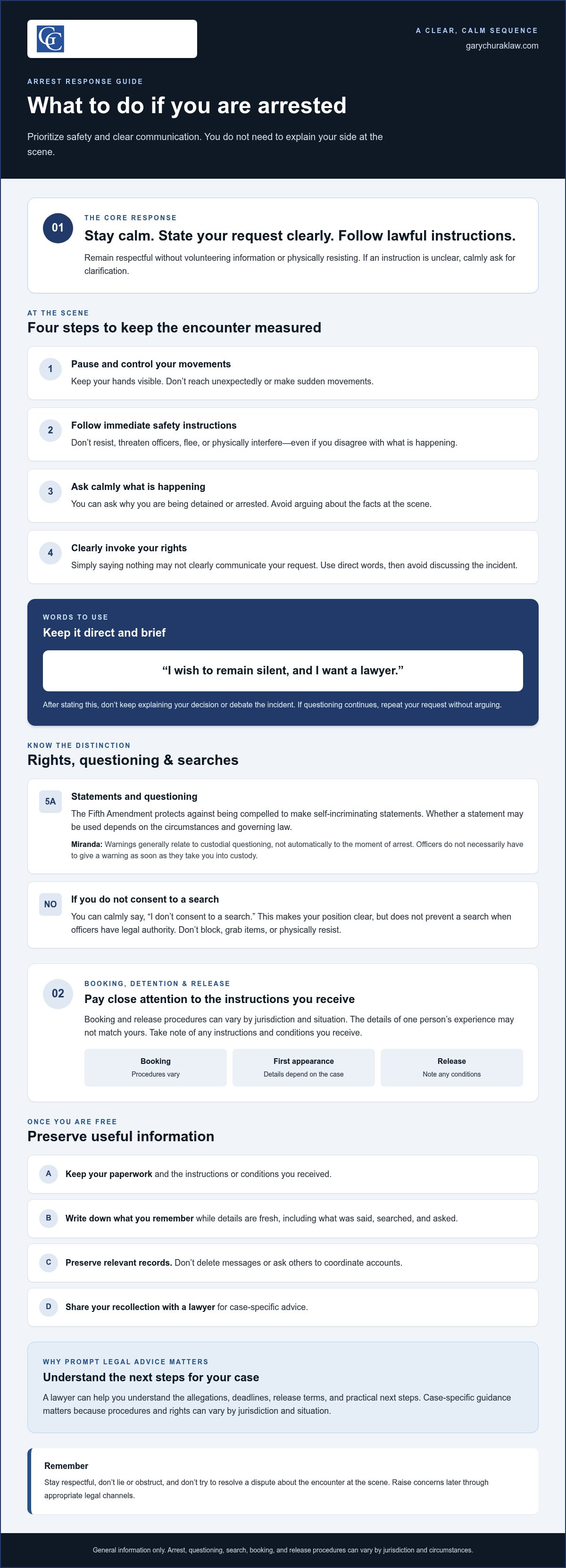
- After release, keep your paperwork, write down what you remember, and don’t delete messages or ask others to coordinate accounts.
- Prompt legal advice can help you understand the allegations, deadlines, release terms, and practical next steps for your case.
What to Do Immediately If You Are Arrested
If you’re trying to decide what to do if you are arrested, prioritize safety and clear communication over explaining your side. In the first moments, focus on these steps:
- Pause and keep your movements controlled. Keep your hands visible and don’t reach unexpectedly.
- Follow immediate safety instructions. Don’t resist, threaten officers, flee, or physically interfere, even if you disagree with what’s happening.
- Ask calmly what is happening. You can ask why you’re being detained or arrested, but avoid arguing about the facts at the scene.
- Be clear about questioning. State that you wish to remain silent and want to speak with a lawyer.
An officer’s actions may amount to a brief detention or an arrest, and the distinction can depend on the circumstances. For a general overview of what an arrest is, see this introductory reference. The procedures and specific rights that apply can vary by jurisdiction and situation, so don’t rely on a general guide to resolve a dispute during the encounter.
How to stay safe and avoid escalating the encounter
Stay composed as best you can. Don’t lie, show false documents, threaten anyone, or obstruct an investigation. If an instruction is unclear, say so and calmly ask for clarification instead of making a sudden move or physically resisting. You can disagree or raise concerns later through appropriate legal channels. In the moment, measured words and controlled movements help keep the encounter from escalating.
What to say when officers ask questions
Use direct language: “I wish to remain silent, and I want a lawyer.” Then avoid debating, guessing, or volunteering details. Don’t assume casual conversation is off the record or legally protected just because questioning feels informal. Staying silent without clearly communicating that you’re invoking your rights may create uncertainty about your request. Once you’ve stated it, don’t keep explaining your decision or discuss the incident before getting legal advice.
Even a sincere attempt to clear up a misunderstanding can lead to statements that are incomplete, mistaken, or taken out of context. You don’t need to solve the case on the roadside or answer every question to show cooperation. Remain respectful, follow safety instructions, and repeat your request for a lawyer if questioning continues. Avoid physical resistance; raise concerns about the encounter with counsel when you can speak privately.
Your Rights During Arrest, Questioning, and Searches
The Fifth Amendment protects you from being compelled to make self-incriminating statements. That protection doesn’t mean every question must stop as soon as you’re arrested, or that every statement you make will automatically be excluded from a case. The circumstances, including whether you’re in custody and being interrogated, can matter. Rules and procedures also vary by jurisdiction.
Miranda warnings generally relate to custodial questioning, not the moment of arrest itself. Officers don’t necessarily have to give a warning as soon as they take you into custody. Whether a statement may be used if no warning was given depends on the circumstances and governing law. For general guidance on police encounters and rights, the ACLU’s Know Your Rights resource offers additional information.
When to request a lawyer and remain silent
Communicate your choice clearly: “I’m invoking my right to remain silent, and I want a lawyer.” Then avoid discussing the alleged offense, including in casual conversation. Simply staying quiet may not clearly communicate that you’re invoking your rights. A request or silence also isn’t a guaranteed way to end all questioning; how it applies can depend on context and governing law. If officers continue asking questions, don’t argue. Repeat your request and seek legal advice as soon as you can.
Searches, statements, and evidence
You can calmly say, “I don’t consent to a search,” without interfering. That statement makes your position clear, but it doesn’t prevent officers from searching when they have legal authority to do so. Don’t block them, grab items, or physically resist, even if you believe the search is unlawful. A challenge to the search can be assessed later based on the facts and applicable law.
After the encounter, write down what you remember while the details are fresh. Note what officers said, what areas or belongings they searched, whether you voiced an objection, and what questions you answered. Preserve any relevant records, and share your recollection with a lawyer. These details may help counsel evaluate the search and statements; they don’t determine by themselves whether evidence can be used.
For guidance tailored to your circumstances, consider speaking with a criminal defense lawyer. The Law Offices of Gary Churak provides case analysis and criminal defense representation; learn about criminal defense guidance and the firm’s approach.
What Happens During Booking, Detention, and Release
After an arrest, officers may take you to a detention facility for booking. The process can include confirming your identity, recording information about the arrest, taking photographs and fingerprints, and documenting or securing personal property. What happens, how long it takes, and the order of steps depend on the arrest, local procedures, and the facility. Ask calmly if you don’t understand an instruction, and keep copies of any paperwork you receive.
Booking is an administrative step, not a final decision about the case. The next stage may include an initial court appearance, where charges or release issues can be addressed. Timing and procedure vary, so don’t rely on a general estimate to plan your next steps. The ACLU’s Know Your Rights When Stopped by Police resource provides related information about police encounters, but a lawyer can explain what applies to your specific situation.
Booking and the first court appearance
During booking, facility staff may collect identifying and case-related information and handle your belongings according to facility procedures. Keep track of documents you’re given, including notices with hearing information. At an initial court appearance, a judge may address the charges and whether you’ll be released or remain in custody. Ask counsel to clarify the deadlines, required appearances, and steps that apply to your case.
Release conditions and what to confirm
Release isn’t automatic. Depending on the case and applicable rules, you may be released with conditions, required to meet financial terms, or held in custody while the matter proceeds. A lawyer can help explain the available options and what the decision means; see this guide on how a lawyer can help with bail.
Before leaving, make sure you understand the release terms and have them in writing. Confirm each court date, where you need to appear, and any restrictions or other requirements. If something is unclear, ask your lawyer or the appropriate court contact to explain it rather than guessing. Missing a required appearance or violating release conditions can create additional legal problems.
For anyone weighing what to do if you are arrested, treat the paperwork and conditions as urgent instructions, not routine forms. Keep copies in a safe place, record important dates, and share the documents with your lawyer promptly. The details can shape what you need to do next, and case-specific guidance can help you avoid preventable mistakes.
What to Do After Release to Protect Your Case
Release gives you room to prepare, but your choices afterward can affect how your case is handled. Work through the immediate tasks methodically: secure your paperwork, record what you remember, follow every release condition, and arrange legal advice. If you’re still asking what to do if you are arrested, don’t treat release as the end of the process. It’s the point to protect records and make sure you understand what comes next.
Preserve information and follow release conditions
Keep charging documents, booking records, bond paperwork, court notices, and written release terms together in a secure place. Make copies or take clear photographs for your records, and note every court date somewhere you’ll check regularly. If you don’t understand a condition, ask your lawyer before taking a step that could violate it.
While your memory is fresh, write a private timeline of what happened. Separate what you directly saw or heard from what you assume or learned later. Include the sequence of events, people present, questions asked, and any searches or statements you recall. Don’t polish the account to make it sound better; accurate details are more useful to counsel than guesses.
For a practical next step, review this guide to preparing for a criminal defense consultation. Bringing organized paperwork and a clear timeline can help a lawyer understand the situation and identify questions that need follow-up.
Avoid actions that can complicate the case
Keep the case off social media. A post meant to explain your side can be misunderstood, shared beyond its intended audience, or become part of the case record. Avoid discussing evidence or coordinating accounts with potential witnesses. If a release condition prohibits contact with an alleged victim or witness, follow it strictly. Even if contact isn’t expressly prohibited, get legal advice before reaching out.
- Don’t delete or alter anything. Preserve messages, photographs, call records, and other potentially relevant material, even if you think it could look unfavorable.
- Don’t ask others to change their accounts. Let each person describe their own recollection without prompting or agreement.
- Don’t ignore a condition or deadline. If you’re unsure what an instruction means, promptly ask counsel for clarification.
Careful case review can help you understand which details matter and how to preserve them. For personalized guidance about a criminal charge, contact the Law Offices of Gary Churak to discuss your situation and possible next steps.
When to Contact a Criminal Defense Lawyer After an Arrest
Contact a criminal defense lawyer as soon as you can safely do so. Early advice can help you understand the allegations, upcoming deadlines, release terms, and what to expect next. An arrest can leave important questions unanswered, but you don’t have to guess your way through them. A lawyer can review the available records, assess evidence and the circumstances of the arrest, communicate with prosecutors, and represent you as the case proceeds. No lawyer can guarantee a particular outcome, but case-specific guidance can help you make informed decisions.
For a broader look at counsel’s role, read this guide to how a criminal defense attorney protects your future. The right next steps depend on the facts, the charges, and the rules that apply to your case.
What to share during an initial legal consultation
Bring what you have, even if your paperwork is incomplete. Arrest and booking documents, release terms, court notices, and a factual timeline can help counsel assess immediate priorities. Be candid about what happened, including details that concern you. Your lawyer needs an accurate picture to evaluate the case.
- Describe any statements you made, searches that occurred, and witnesses who may have relevant information.
- Identify possible recordings, messages, photographs, or other records, and mention any contact from investigators.
- Ask about upcoming deadlines, what the representation covers, how communication will work, and how legal fees are handled before making decisions.
If you’re unsure whether a detail matters, raise it rather than leaving it out. The lawyer can determine what needs follow-up and explain what information may be useful.
How counsel can assess the next steps
Counsel can examine the arrest circumstances and available records, identify questions that may require further investigation, and explain how the evidence may affect the defense strategy. A lawyer may also help you understand release conditions, prepare for court appearances, and communicate with prosecutors on your behalf. Each case requires an individual assessment; early advice is not a promise of any specific result.
If you’re deciding what to do if you are arrested, getting clear answers from a lawyer can help you move from uncertainty to a practical plan. The Law Offices of Gary Churak represents people facing criminal charges and provides case analysis, negotiation, and courtroom advocacy. Request a personalized criminal defense consultation to discuss your circumstances and possible next steps.
Take Your Next Step With Care
Knowing what to do if you are arrested means making steady, informed choices at each stage. Stay calm and avoid escalating the encounter. Clearly assert your wish to remain silent and speak with a lawyer, while recognizing that the rules can depend on the circumstances and jurisdiction. After release, keep your paperwork, follow every condition, preserve relevant records, and avoid discussing the case publicly or with potential witnesses.
Prompt legal guidance can help you understand the charges, deadlines, release terms, and available next steps. The Law Offices of Gary Churak provides personalized criminal defense case analysis and representation, including review of the facts and guidance tailored to your situation. No lawyer can promise a particular outcome, but you can take a constructive step by discussing your circumstances with counsel.
Request a personalized criminal defense consultation to learn more about your options. You don’t have to navigate the process without guidance.
Frequently Asked Questions
What should I say if I am arrested?
Stay calm, follow immediate safety instructions, and avoid discussing the alleged offense. Clearly say, “I wish to remain silent, and I want a lawyer,” then don’t volunteer explanations or guess at details. Don’t physically resist, even if you disagree with what’s happening. The legal effect of a statement or request can depend on the circumstances and jurisdiction. Speak with a criminal defense lawyer as soon as you can to discuss your situation.
Do police have to read you your rights when they arrest you?
Not necessarily at the moment of arrest. Miranda warnings are generally associated with custodial interrogation, and whether they’re required depends on the circumstances. Their absence doesn’t automatically invalidate an arrest or mean a case will be dismissed. Avoid discussing the allegation and clearly ask for a lawyer. Counsel can review the circumstances of questioning and any statements you made, then explain how applicable law may affect your case.
Can I refuse a search if I am arrested?
You can calmly say, “I don’t consent to a search,” but don’t physically resist or interfere. Officers may assert legal authority to search in some circumstances, and whether a search was lawful depends on the facts and applicable law. A verbal objection doesn’t necessarily stop a search. Remember what happened, including what was searched and what officers said, and tell your lawyer afterward so they can assess the situation.
What happens after you are booked into jail?
Booking may include identity checks, photographs, fingerprints, and recording information about the arrest, though procedures vary by facility and jurisdiction. After booking, you may remain detained or be considered for release. A court appearance may address charges or release issues, but timing and requirements differ. Keep any paperwork you receive, follow instructions, and ask a lawyer to clarify your specific deadlines, required appearances, and next steps.
Should I talk to police if I know I am innocent?
Not without first getting legal advice. Even an innocent person can give an incomplete, mistaken, or misunderstood statement that complicates a case. Stay respectful, don’t lie, and clearly request a lawyer before discussing the allegation. Avoid trying to persuade investigators through an informal explanation. A defense lawyer can review the circumstances and help you decide how to respond based on the facts and the law that applies to your situation.
What should I do after being released from custody?
Secure your paperwork, confirm your next court date, and follow every release condition. Write a private, factual timeline while your memory is fresh, and preserve relevant messages and records without editing or deleting them. Avoid public posts about the case and don’t discuss evidence with potential witnesses. Contact a criminal defense lawyer promptly to review the allegations, deadlines, release terms, and practical next steps for your case.
Do I need a lawyer if I have not been formally charged?
Legal advice may still help if you were arrested, released while further action is pending, or contacted about an investigation. The absence of filed charges doesn’t necessarily mean the matter is over. Keep relevant documents, avoid discussing the facts publicly, and ask a lawyer what deadlines or risks may apply. Procedures differ, so a lawyer should assess your specific circumstances and explain what steps, if any, you should take next.


