

The strength of your future legal defense is determined by the silence you maintain and the strategic counsel you secure in the first hours of an arrest. You likely feel a crushing sense of anxiety about the unknown legal process or fear that a single wrong word to police could jeopardize your future. It's a high-stakes situation where every decision carries immense weight. If you're facing these pressures, securing a seasoned defense attorney for assault charges is the most effective way to regain control. You deserve a protector who projects confidence and possesses the wisdom to navigate the complexities of the justice system.
We understand that the initial 48 hours are often filled with confusion regarding bail, release, and the specific charges against you. This guide provides a clear roadmap to help you navigate this period with precision. You'll learn the critical actions required to safeguard your freedom and build a robust defense from the ground up. We'll outline your fundamental rights and provide the clarity needed to choose a defense strategy that prioritizes your results. By the end of this guide, you'll move from a state of uncertainty toward a position of prepared strength.
Key Takeaways
- Master the exact language needed to invoke your constitutional rights, turning the Miranda warning into a protective shield for your future.
- Navigate the complexities of the booking process with a clear understanding of administrative procedures and the necessity of accurate property cataloging.
- Evaluate the specific criteria required to select a seasoned San Antonio lawyer for assault charges who focuses on aggressive advocacy and personalized strategy.
- Implement critical post-release safeguards, including social media management and the creation of a private, detailed timeline of events.
- Understand how strategic pre-trial motions and thorough investigations can expose inconsistencies in the prosecution's evidence and strengthen your defense.
Invoking Your Constitutional Rights Immediately Upon Arrest
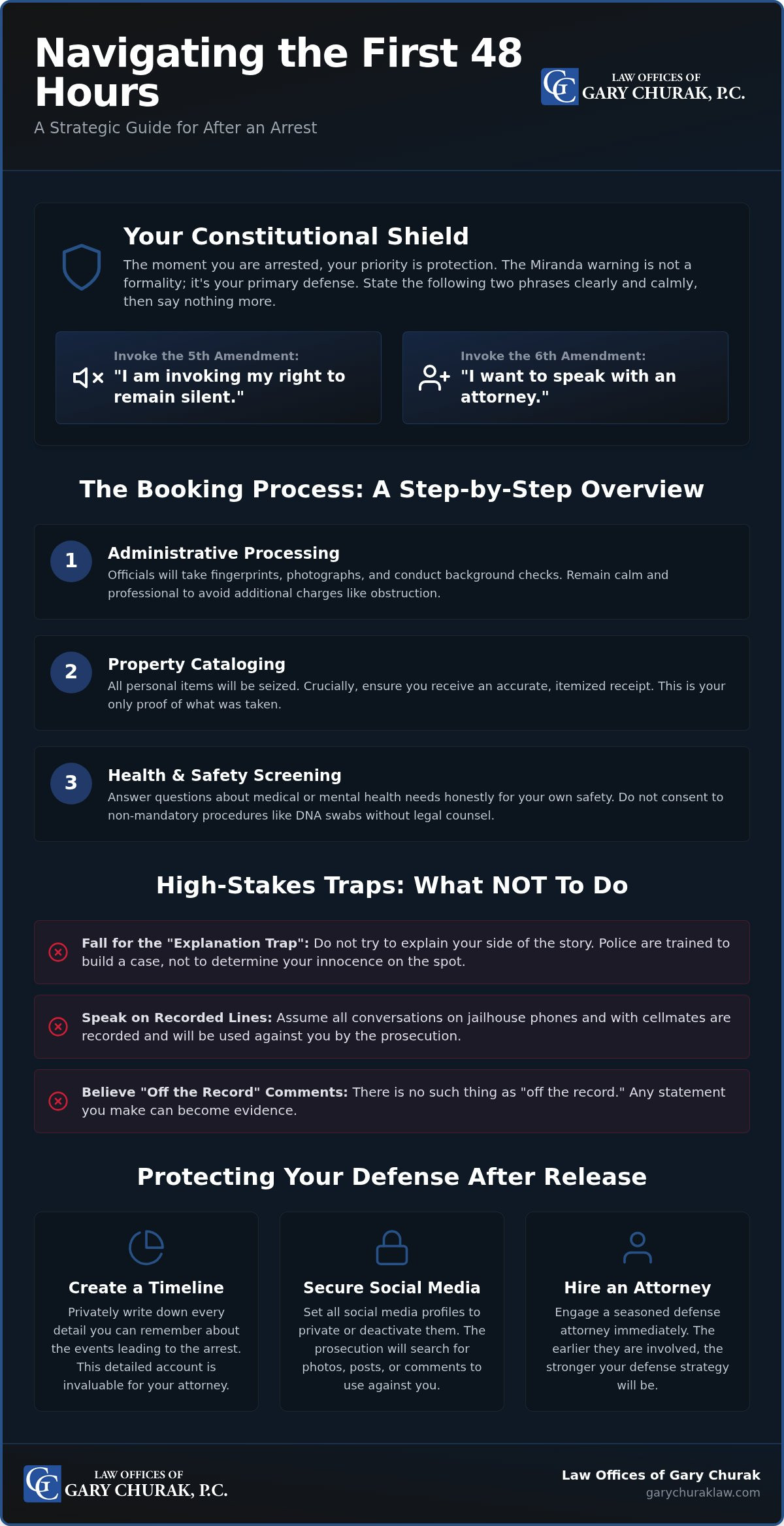
Moments after an arrest, the adrenaline and fear often lead to a dangerous urge to speak. You might feel that explaining your side of the story will clear everything up and resolve the situation quickly. This is the explanation trap. Police officers are trained to build cases, not to act as neutral arbiters of your innocence during an interrogation. They may suggest that telling your side will help you go home sooner or that things will go easier if you cooperate. These are common investigative tactics designed to secure a confession or an incriminating statement. The Miranda warning is your primary shield, not a mere formality. To protect yourself, you must be clear and unwavering. Explicitly state: "I am invoking my right to remain silent and I want to speak with an attorney."
Once you've made this statement, stop talking. Even if you're looking for a San Antonio lawyer for assault charges later, your silence now is what gives that attorney the strongest possible foundation for your defense. Anything you say to cellmates or over jailhouse phones is not privileged. Many defendants mistakenly believe that sharing details with a fellow inmate or discussing the case with family over the phone is safe. In reality, these recordings and statements are frequently used by the prosecution to undermine your case and impeach your testimony later in court.
The Power of the Fifth Amendment
The Fifth Amendment provides the bedrock for the constitutional rights of the accused, ensuring you aren't forced to be a witness against yourself. Silence is never an admission of guilt in a court of law; it's a strategic choice to protect your future. Law enforcement officers often use casual conversation or "off the record" comments to gather evidence without appearing confrontational. A voluntary statement is one given without pressure, while a statement made under duress or through trickery may be suppressed. By remaining silent, you prevent the prosecution from twisting your words or taking them out of context.
The Right to Counsel Under the Sixth Amendment
Your Sixth Amendment right to an attorney begins the moment custodial interrogation starts. You don't have to wait for a formal charge to request legal representation. If the police continue to ask questions after you've requested a lawyer, they're violating your rights. While a public defender is available for those who qualify financially, a private criminal defense attorney often provides a more personalized, thorough case analysis. Hiring a San Antonio lawyer for assault charges ensures you have a dedicated advocate who can scrutinize every piece of evidence from the start. Don't resume any conversation with authorities until your legal counsel is physically present in the room.
Navigating the Booking and Initial Appearance Process
Booking is the formal entry of an arrest into the judicial system. This process marks the transition from police custody to the oversight of the court, initiating a series of administrative steps that can feel overwhelming. First, administrative processing begins. Officers will collect fingerprints, take photographs, and conduct thorough background checks to confirm your identity and legal history. Second, property cataloging occurs. You must ensure you receive an accurate, itemized receipt for all seized items, including cash, jewelry, and electronics. This receipt is your only protection if items are lost or damaged while in custody.
What to Expect During Booking
During booking, you'll undergo health and safety screening. You must answer questions regarding immediate medical needs or mental health concerns, as these ensure your safety within the facility. However, you should remain vigilant. Law enforcement may request DNA samples or other physical evidence. While some states allow for DNA collection upon arrest for certain offenses, you should consult a legal expert before consenting to procedures that aren't strictly mandatory. To better understand the boundaries of police authority, review the ACLU's Know Your Rights guidelines. Maintaining a calm, professional demeanor during this process prevents the addition of secondary charges, such as resisting or obstructing an officer.
Understanding Bail and Bond Conditions
The third step is the initial appearance, often called magistration. This typically occurs within 48 hours of your arrest. During this hearing, a judge formally reads the charges against you and determines the conditions for your release. The fourth step involves setting bail or bond. A cash bond requires the full amount to be paid directly to the court, while a surety bond involves a bondsman who charges a non-refundable fee to guarantee the full amount.
Judges evaluate several factors when setting bail, including the severity of the charge, your ties to the community, and whether you're considered a flight risk. If the judge perceives a threat to community safety, they may impose strict conditions of release. These often include travel restrictions, mandatory check-ins with a pretrial officer, or "no-contact" orders. If the bail amount is unreachable or the conditions are excessively burdensome, a San Antonio lawyer for assault charges can argue for a bond reduction or a modification of release terms to ensure you can return to your life while awaiting trial.
Criteria for Selecting a Strategic Defense Attorney
Choosing the right legal representation is the most consequential decision you'll make following an arrest. It's not enough to simply hire someone who understands the law; you need a battle-tested protector who views your case through a strategic lens. When searching for a San Antonio lawyer for assault charges, prioritize individuals with decades of experience in the specific area relevant to your situation. An attorney who has spent forty years navigating the complexities of the criminal justice system brings a level of wisdom that a general practitioner cannot match. You aren't just looking for a name; you're looking for a track record of resilience and advocacy.
A strategic attorney prioritizes thorough case analysis over the convenience of a quick plea deal. Many high-volume firms operate as "plea mills," seeking the fastest resolution rather than the best outcome. You deserve a defense built on scrutiny and preparedness. This involves evaluating an attorney's trial record to see if they're willing to take a case to court when negotiations fail. A lawyer who isn't afraid of the courtroom has significantly more leverage during the pre-trial phase. To ensure you're fully protected from the start, it helps to review resources like the ACLU's guide on Know Your Rights When Stopped by Police, which reinforces the importance of having professional counsel by your side from the very beginning.
Essential Questions to Ask During a Consultation
The initial meeting is your opportunity to vet the professional who will be guarding your freedom. Ask specific questions: How many cases similar to mine have you handled in the last year? What is your philosophy on aggressive advocacy versus negotiation? You need to know if they'll treat you as a personalized priority or just another case number. To get the most out of this meeting, preparing for a criminal defense consultation with organized documents and a clear timeline is vital. A strategic lawyer will welcome your questions and provide a grounded, steady hand to help you navigate the uncertainty ahead.
The Value of Professional Reputation
An attorney's reputation within the legal community directly impacts your case. Prosecutors are more likely to negotiate fairly with a San Antonio lawyer for assault charges who they know is prepared to fight at trial. This professional standing is built through years of thorough evidence review and a deep understanding of court procedures, whether in state or federal jurisdictions. A battle-tested guide knows when to take a forceful stance and when a pragmatic negotiation will yield a better result. This level of quality and strategy ensures that every decision made is calculated to protect your rights and restore your peace of mind.
Protecting Your Defense: Actions to Take After Release
Securing your release from custody is a significant milestone, but it's only the beginning of a complex legal journey. The actions you take in the hours and days following your release can either fortify your defense or provide the prosecution with unnecessary ammunition. You must act with deliberate precision to protect your future. This starts with absolute silence regarding the details of your case. Avoid the temptation to explain yourself to anyone other than your legal team. Contacting a San Antonio lawyer for assault charges immediately ensures that you have a professional advocate to manage these critical first steps on your behalf.
One of the most vital tasks is to preserve evidence while it remains accessible. Identify and save all relevant text messages, emails, or call logs that provide context to the events leading up to your arrest. If there were witnesses, document their names and contact information. Additionally, you must strictly avoid any contact with alleged victims or co-defendants. Even a well-intentioned message can be misconstrued as witness tampering or harassment, leading to additional charges and the immediate revocation of your bond. Engaging a San Antonio lawyer for assault charges allows you to delegate the scrutiny of evidence to a professional who knows exactly what the court will find relevant.
Digital Hygiene and Social Media Risks
Prosecutors actively monitor social media to find evidence that contradicts your defense strategy. A simple "check-in" at a bar or a photo from a social gathering can be used to portray you as reckless or unremorseful. Even if your accounts are private, private messages can be subpoenaed and used against you in court. You should secure your accounts immediately and refrain from posting entirely. It's equally important to instruct your family and friends not to post about your situation. Their attempts to defend you online often do more harm than good by creating a public record that your lawyer must then work to explain or suppress.
Documenting the Facts for Your Lawyer
Your memory of the events will never be as sharp as it is right now. Create a private, written timeline of everything that occurred, including names, locations, and specific dialogue. Privileged communication with your lawyer is the only safe place for your version of events. This document should remain strictly between you and your counsel. Along with the timeline, compile a list of potential witnesses and describe their relationship to the incident. You should also gather any financial or medical records that might serve as mitigating factors or provide an alibi. If you need immediate guidance on how to manage this information, consult with a battle-tested attorney who can help you build a comprehensive defense strategy from day one.
How Strategic Advocacy Can Change the Outcome of Your Case
Strategic advocacy serves as the definitive line between a life-altering conviction and a restored reputation. A seasoned San Antonio lawyer for assault charges utilizes pre-trial motions to suppress evidence that was gathered through illegal searches or constitutional violations. If the court suppresses key evidence, the prosecution's foundation often crumbles, leading to a dismissal before a trial even begins. This level of scrutiny requires a battle-tested guide who knows how to spot procedural flaws that others might overlook. We focus on dismantling the state's case piece by piece to protect your rights.
A thorough investigation uncovers inconsistencies that a surface-level review would miss. We don't simply accept the police report as the absolute truth. Instead, we scrutinize every statement and piece of physical evidence to find the gaps in the prosecution's story. There is a vast difference between accepting a standard plea bargain and fighting for a total dismissal. Choosing a specialized dwi defense attorney or felony specialist ensures your advocate understands the technical nuances of your specific charge, providing a steady hand through a high-stakes process. This expertise allows for a personalized strategy tailored to your unique situation.
Challenging the Prosecution's Evidence
Procedural errors by law enforcement are more frequent than most realize. Officers might fail to maintain the proper chain of custody or ignore constitutional mandates during an arrest. We utilize expert witnesses to challenge forensic data or technical evidence that appears infallible on the surface. The burden of proof rests entirely on the prosecution. A strategic defense focuses on creating reasonable doubt by exposing every flaw in their narrative, forcing the state to meet the highest legal standards. We project strength and preparedness in every interaction with the court.
Long-Term Goals: Expungement and Record Sealing
Your defense strategy must prioritize your long-term future, not just the immediate crisis. A conviction can have permanent consequences, while deferred adjudication or a dismissal may allow for future record sealing. The Law Offices of Gary Churak fights for outcomes that keep the path to expungement open. We understand that your career and reputation depend on a clean record. With over four decades of experience, we approach every case with the wisdom to know when to negotiate and the strength to take a forceful stance when your freedom is on the line. Our goal is to lead you from a state of uncertainty toward a clear, successful resolution.
Securing Your Future Through Strategic Legal Advocacy
The decisions you make in the hours following an arrest dictate the trajectory of your legal defense. By invoking your right to remain silent and securing your digital footprint, you've already taken the first steps toward protecting your freedom. However, navigating the complexities of the judicial system requires more than just caution; it demands a battle-tested protector. Securing a San Antonio lawyer for assault charges ensures that your rights are aggressively defended from the moment you leave the station.
Gary Churak brings over 40 years of criminal defense experience to your side, offering personalized, aggressive advocacy for every client. You don't have to face these high stakes alone or settle for a one-size-fits-all legal strategy. Taking proactive control now is the best way to move from a state of uncertainty toward a position of strength. Contact the Law Offices of Gary Churak for a free consultation today and receive your free initial case analysis. Your future is worth fighting for, and with the right advocate, you can navigate this challenge with confidence and resilience.
Frequently Asked Questions
What should I do if the police try to question me without a lawyer?
State clearly that you're invoking your right to remain silent and want to speak with an attorney. Don't engage in casual conversation or try to explain your side to the police. Officers use these statements to build a case against you. Once you've requested counsel, all questioning must stop immediately. Wait for your attorney to arrive before saying anything else to ensure your rights are fully protected. This simple act of silence is your most powerful defense.
How long does the booking process typically take after an arrest?
The booking process usually takes between two and six hours, though it can last longer depending on facility volume. This administrative phase involves fingerprinting, photographs, and background checks. Delays often occur during property cataloging or health screenings. While it feels like a long wait, staying calm and cooperative prevents additional charges from being added to your record during this high-stress period. Accurate information during health screenings is vital for your safety while in custody.
Can I be released from jail without having to pay bail?
You can be released on your own recognizance if the judge determines you aren't a flight risk or a danger to the community. This type of bond doesn't require upfront payment but mandates your appearance at all future court dates. Factors like a clean criminal history and strong community ties influence this decision. If this isn't granted, a San Antonio lawyer for assault charges can argue for a bond reduction or modified release terms to ensure your freedom.
What is the difference between a misdemeanor and a felony arrest?
Misdemeanors generally involve less severe offenses punishable by fines or up to one year in local jail. Felony arrests involve serious crimes that carry potential prison sentences of more than one year and much higher fines. Felonies also result in the permanent loss of certain civil rights, such as firearm ownership. Both types of charges require a strategic defense to prevent permanent damage to your professional reputation and personal freedom. Each requires a tailored approach to minimize long-term consequences.
What happens at my first court appearance after being arrested?
Your first appearance, often called magistration, typically occurs within 48 hours of your arrest. The judge formally reads the charges, explains your constitutional rights, and sets the bail amount. You won't present evidence or argue the facts of the case at this stage. Instead, the court focuses on ensuring you understand the legal proceedings and determining the conditions under which you can be released from custody. It's a procedural step that establishes the ground rules for your case.
How can a criminal defense lawyer help if I plan to plead guilty?
A lawyer ensures that any plea agreement is actually in your best interest rather than just a quick resolution for the prosecution. They negotiate for reduced sentencing, lower fines, or alternative programs like deferred adjudication. Even if you plan to plead, your attorney scrutinizes the evidence for procedural errors that could lead to a better deal. Strategic advocacy often results in significantly more lenient outcomes than pleading without professional counsel. They act as your shield against excessive punishment.
Is it possible to get my charges dropped before the first trial date?
Charges are frequently dismissed before trial if your defense team uncovers evidence that undermines the prosecution's case. This often happens through pre-trial motions that suppress illegally obtained evidence or highlight inconsistencies in witness testimony. A San Antonio lawyer for assault charges works to expose these flaws early in the process. If the state realizes they can't meet the burden of proof, they may choose to drop the charges entirely to avoid a loss at trial.
Why is it dangerous to talk about my case with other inmates?
Conversations with other inmates aren't privileged and can be used as evidence against you. Many inmates seek to reduce their own sentences by providing information to prosecutors about their cellmates' cases. Even if you believe you're talking to a friend, those statements can be twisted or taken out of context in court. The only person you should discuss your case with is your legal counsel in a private, protected setting. Maintaining silence is essential for protecting your defense strategy.


