

Can a judge lower bail when the current amount is more than you or your family can afford? A bail reduction hearing gives the defense an opportunity to ask the court to reconsider, but the request should address the court’s concerns with specific, relevant information. Detention can disrupt work, caregiving, and daily responsibilities, but those pressures don’t guarantee a lower bail amount.
It’s understandable to feel uncertain about whether a hearing can be requested, when it might happen, or what information to provide. The process and the judge’s considerations vary by jurisdiction and case, so a general overview can’t predict what will happen in your situation.
This guide explains the general purpose of a bail reduction hearing, what may happen during it, and the kinds of case-specific details or documents that could support a request. It also explains how to prepare by reviewing the current order, identifying the change being sought, and organizing relevant information. Qualified counsel can assess the circumstances and help identify a responsible next step before any procedural action is taken.
Key Takeaways
- A bail reduction hearing may allow a court to reconsider existing bail conditions, but terminology and procedure vary by jurisdiction.
- Before taking procedural steps, check the current order and confirm the applicable filing requirements, hearing format, and timing.
- A request should address the court’s concerns with accurate, relevant information. It doesn’t guarantee a lower amount or release.
- Organize records that support the requested change and clarify any proposed plan for meeting release conditions.
- Qualified counsel can assess the order, local procedure, and case facts to help shape a focused request without promising an outcome.
What Is a Bail Reduction Hearing, and What Can It Change?
A bail reduction hearing is an opportunity for a court to reconsider bail conditions already in place. Depending on the applicable law and the facts of the case, the request may ask the court to lower the amount required for release or consider changing other release terms. The court’s authority and available options differ, so a hearing in one jurisdiction may not follow the same process or use the same name as one elsewhere.
People often use “bail,” “bond,” and “pretrial release” as if they mean the same thing, but terminology varies by jurisdiction and context. For broad background on how the system works in the United States, see Bail in the United States. That overview is not a substitute for checking the rules that apply to a specific court or case.
A request to change bail addresses the terms of release while a criminal case is ongoing. It does not decide whether the accused person is guilty, dismiss a charge, or resolve the underlying case. Those questions are addressed through other parts of the criminal process.
What does a judge decide at a bail reduction hearing?
The court may consider whether the existing bail terms should remain in place or be changed. The exact question before the judge depends on the request, governing law, and circumstances of the case. A bail reduction hearing does not determine guilt or settle the criminal charge. Courts may use different hearing names, procedures, or decision-making standards, so a general description cannot establish what will happen in a particular case.
Can bail be reduced after it has already been set?
A person may be able to ask the court to review bail after it has been set, but whether and how to make that request depends on the applicable law and case circumstances. Filing or presenting a request doesn’t create an automatic right to a lower amount, changed conditions, or release. The court may grant or deny the request, and the possible outcome depends on the case and the court’s authority.
A request for review gives the court an opportunity to reconsider bail; it does not guarantee a reduction or release. Before taking procedural steps, confirm which rules and requirements apply. A criminal defense attorney can review the existing order and case facts, then help assess whether a request may be appropriate. No general explanation can predict the decision in an individual case.
How a Bail Reduction Hearing Generally Works
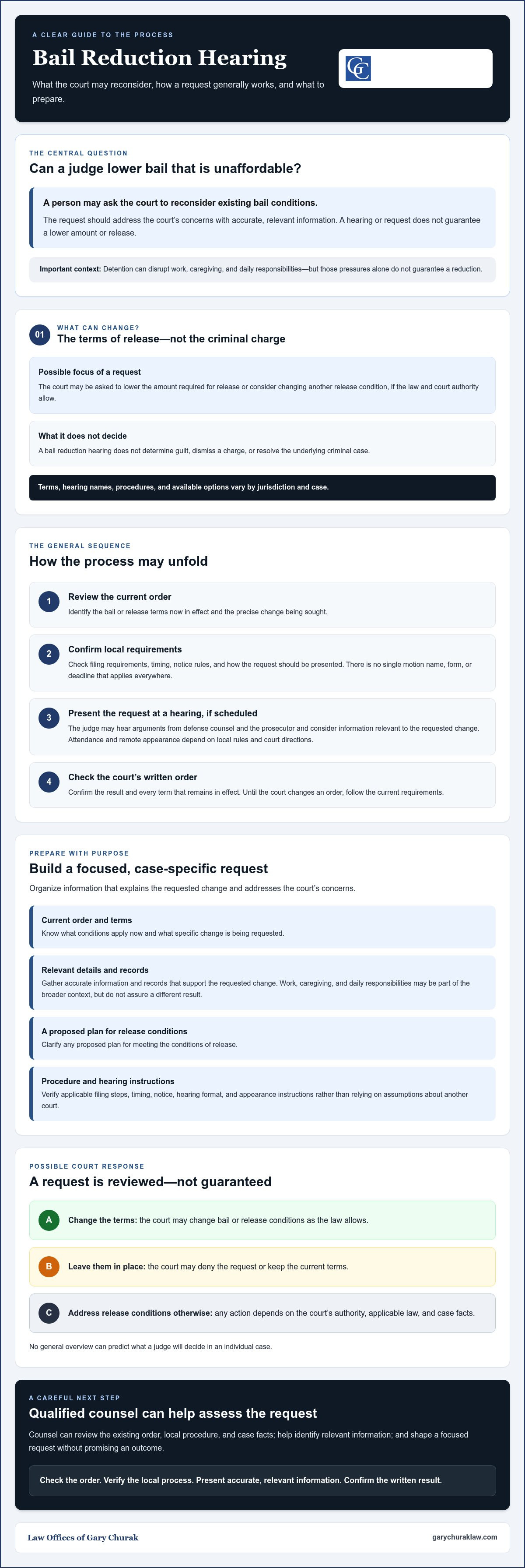
The process generally involves reviewing the existing order, preparing a request, attending a hearing if one is scheduled, and confirming the court’s decision. That outline is a starting point, not a universal procedure. Filing requirements, notice to the other parties, timing, and hearing format depend on the court and applicable law. A law school overview of how bail works in the court system can provide helpful context, but it can’t replace guidance specific to the case.
What happens before the hearing?
Start with the current bail or release order. Note the terms in effect and identify the precise change being requested. For example, the request might concern the amount or another condition, if the court has authority to consider that change. Saying only that the terms are difficult to meet may not explain what alternative is being sought or why the court should consider it.
Next, verify the process before filing anything. Defense counsel can check the court’s requirements, applicable deadlines, and notice rules, then determine how the request should be presented. There isn’t one motion name, form, or deadline that applies everywhere. Depending on the procedure, the prosecutor may have an opportunity to respond. Confirming the steps in advance helps avoid relying on assumptions about how another court handled a similar request.
What happens during and after the hearing?
At the hearing, the judge may hear arguments from defense counsel and the prosecutor and consider information relevant to the requested change. The judge decides what action, if any, is permitted under the applicable law and facts. Whether the person must attend, whether an appearance can be remote, and how the hearing is conducted depend on local rules and the court’s directions. Confirm those instructions rather than assuming how to appear.
After considering the request, the court may change the terms, leave them in place, or otherwise address release conditions as the law allows. Review the written order to confirm the result and the exact terms, including any conditions that remain in effect. Until the court changes an order, follow the current requirements.
- Before: Review the order, define the requested change, and verify filing and notice requirements.
- At the hearing: Follow appearance instructions and be prepared for the court to consider arguments and case-specific information.
- After: Confirm the written decision and understand every current release condition.
Because procedure and authority depend on the case and court, discuss the order and proposed next steps with qualified counsel before acting. Learn more about the firm’s criminal defense representation and ask whether it can advise on the circumstances involved.
What May Influence a Judge’s Decision to Lower Bail?
A request doesn’t guarantee that bail will be lowered. The judge’s decision depends on the governing law, the facts of the case, and the information properly presented. Because standards vary across jurisdictions, no single factor can predict the outcome of a bail reduction hearing.
A focused request connects the change being sought to relevant, supportable facts. Financial hardship may be part of the picture, but relying on hardship alone may not address every concern the court is permitted to consider. Explain the specific circumstances and, where appropriate, provide reliable records rather than broad assurances.
Which circumstances may be relevant to a bail request?
Depending on applicable law, a court may consider a person’s ability to pay alongside other release-related concerns. Examples that may be relevant include community ties, past appearances in court, and the conduct alleged in the case. These are possibilities, not a universal checklist, and no factor is automatically decisive. Courts assess the full circumstances under the law that applies to the case.
For instance, a request might document a financial constraint and explain practical arrangements for attending future court dates. The aim is to give the judge a clear, fact-based basis to evaluate the requested change, not to assume that one favorable detail settles the matter. The court may weigh information differently depending on the case and governing standard.
Can new information support a request to reconsider bail?
Possibly. If circumstances have changed or relevant information wasn’t considered earlier, counsel can assess whether it may support asking the court to revisit the terms. For example, a documented change in employment or living arrangements may be relevant under local law. New information alone doesn’t ensure a different decision.
Distinguish verifiable facts from unsupported assurances. Records may help substantiate a claimed change, while a promise without supporting detail may be less useful. Whether information is legally relevant, how it should be presented, and whether it can support a request depend on the case and local procedure. A criminal defense attorney can review the facts and existing order to assess how a tailored request might address the court’s concerns.
How to Prepare for a Bail Reduction Hearing
Preparation starts with the court’s current instructions, not assumptions about what the hearing will involve. Confirm the hearing date, where and how to appear, and whether the court has issued specific directions. Review every current release condition as well. A request to change those terms doesn’t suspend them, so continue following the existing order unless the court changes it.
What information should you discuss with your lawyer?
Gather the current bail or release order, relevant case paperwork, and a clear account of what has changed or what information the court may not have considered. Ask counsel which records could support the requested change and how they should be shared. Depending on the case, preparation may also include reliable details about residence, employment, caregiving responsibilities, or proposed release arrangements.
Keep materials accurate and organized. Note what each document shows and how it relates to the requested change. Don’t circulate sensitive records or case information without first asking counsel how to protect confidentiality. A lawyer can help distinguish useful supporting material from information that may be irrelevant or require careful handling.
For more on the role counsel may play, read this guide to how a lawyer can help with bail. The right preparation depends on the order, the facts, and the procedure that applies to the case.
What should you avoid before the hearing?
Stay disciplined while the request is pending. Don’t miss court dates or disregard current release conditions. Don’t contact witnesses or discuss case details publicly without first getting advice from counsel. Even well-meant comments can create complications, so get guidance before taking steps that could affect the case or the request.
Be candid with your lawyer and careful in anything presented to the court. Avoid exaggerations, guarantees, or unsupported claims. If a detail can’t be verified, explain that to counsel rather than presenting it as established fact. A focused request built on accurate information is more responsible than promises that can’t be substantiated.
- Confirm the date, appearance instructions, and current conditions.
- Organize the order, case documents, and reliable records relevant to the requested change.
- Ask counsel before sharing sensitive information or taking steps that could affect the case.
- Continue complying with the current order unless the court changes it.
A bail reduction hearing calls for careful, case-specific preparation. If you need help assessing the order and relevant information, contact the firm to discuss your criminal defense matter and confirm whether it can advise on your circumstances.
How Criminal Defense Counsel Can Help With a Bail Reduction Request
A defense lawyer can help turn a request to revisit bail into a focused, case-specific presentation. Counsel may review the existing order and case record, identify information relevant to the requested change, and clarify the procedure that applies in the court handling the case. That preparation can help keep the request accurate and responsive to the issues before the judge.
Representation doesn’t guarantee a lower amount, release, or any particular decision. The court makes that decision under the law and facts that apply. A lawyer’s role is to assess available options, explain potential risks, and advocate for the client within those limits.
What can a defense lawyer do before the hearing?
Counsel can examine the order and relevant case materials, then separate documented facts from assumptions. They may identify what supports the requested change, check applicable procedures, and prepare focused arguments for the court. This includes considering how the request fits with the broader criminal case, rather than treating bail as an isolated issue. For more on counsel’s role, see how a criminal defense attorney protects your future.
Careful review also helps identify questions that need answers before taking action, such as what information can appropriately be submitted and what terms remain in effect. If you’re preparing to speak with an attorney, this guide to preparing for a criminal defense consultation can help you organize the matters you want to discuss.
What should you ask before hiring counsel?
Use an initial conversation to understand whether the lawyer’s experience and proposed services fit your situation. Consider asking:
- What courtroom experience do you have with matters like this?
- How will you communicate updates and explain next steps?
- What fees may apply, and what work is included in the proposed representation?
- Are you authorized to practice in the jurisdiction handling the case?
- What information would you need to assess a possible request?
These questions can help clarify the scope of representation and what practical steps may be available. No lawyer can promise the outcome of a bail reduction hearing, so be cautious of anyone who guarantees a particular result.
If you’d like to discuss your circumstances, contact the firm to ask about criminal defense representation and confirm whether it can assist in the jurisdiction where your case is pending.
Take a Clear, Informed Next Step
A bail reduction hearing gives the court a chance to consider a request, but the outcome depends on applicable law and the specific case. A focused request supported by relevant information is more useful than assumptions or unsupported assurances. Preparation also means confirming the hearing instructions and continuing to follow current release conditions unless the court changes them.
Qualified counsel can review the existing order, assess the facts, and explain the procedural options that may apply. The Law Offices of Gary Churak provides case analysis and courtroom representation, and Attorney Gary Churak has more than four decades of criminal defense experience. No lawyer can promise a lower bail amount, release, or a particular ruling.
If you’re weighing what to do next, discuss the circumstances with counsel and confirm whether the firm can assist in the jurisdiction handling the case. Discuss your situation with the Law Offices of Gary Churak to learn about the next steps for your criminal defense matter.
Frequently Asked Questions
Can I request a bail reduction hearing after bail has been set?
You may be able to ask the court to reconsider bail after it’s been set, but whether and how to make that request depends on applicable law, court procedures, and case circumstances. A request doesn’t guarantee a hearing or a lower amount. Before filing anything, review the current order and consult qualified counsel about the correct procedure, any notice requirements, and what information may support the request.
What happens at a bail reduction hearing?
At a bail reduction hearing, the judge may consider arguments and case-specific information relevant to whether existing bail terms should change. The prosecutor may also have an opportunity to respond, depending on the procedure. The hearing addresses release conditions, not guilt or the outcome of the criminal charge. Hearing names, formats, appearance instructions, and procedures vary, so confirm what the court requires in your case.
What should I bring to a bail reduction hearing?
Ask your lawyer what materials are appropriate and how to provide them. Items to discuss may include the current bail order, relevant case paperwork, and reliable records related to the requested change. Documents about residence, work, caregiving, or a proposed release plan may be relevant if they fit the issues before the court. Follow appearance instructions, and don’t share sensitive case information without counsel’s guidance.
What factors may a judge consider when deciding whether to lower bail?
Depending on applicable law, a judge may consider ability to pay alongside other release-related circumstances. Examples can include community ties, past court appearances, and the conduct alleged in the case. No single factor determines the result in every court. The judge evaluates the circumstances under the governing standard, so a focused request should connect accurate, supportable information to the specific change being requested.
Does a bail reduction hearing guarantee release from jail?
No. A hearing gives the court an opportunity to consider whether bail terms should change, but it doesn’t guarantee a reduction or release. The court may maintain the existing terms or take another action allowed by law. If the court changes the order, review its exact wording and confirm what conditions apply. Continue following the current order unless the court formally changes it.
Can bail be reduced if I cannot afford the current amount?
Inability to afford the current amount may be relevant, but it doesn’t automatically result in lower bail or release. The court may consider financial information alongside other circumstances permitted by law. If you’re asking for a change, discuss how to present your financial situation accurately and whether other relevant information supports the request. A lawyer can assess the case facts and explain what local procedure may allow.
Should I hire a lawyer for a bail reduction hearing?
A lawyer can review the bail order and case record, clarify the procedure that applies, and help prepare focused arguments supported by relevant information. This may be valuable when court rules or the requested change are unclear. Ask about courtroom experience, fees, communication, and the scope of representation, and confirm the lawyer is authorized to practice in the relevant jurisdiction. No lawyer can promise a particular result.
For help reviewing a bail order and assessing possible next steps, contact the Law Offices of Gary Churak to discuss your criminal defense matter.


