

A DWI charge is not a final conviction; it is a technical allegation that can be dismantled through forensic scrutiny and procedural challenges. If you're facing these charges, you likely feel an immediate sense of dread regarding your driving privileges and the potential for a permanent criminal record. It's natural to feel overwhelmed by the technicality of blood tests or the aggressive nature of the prosecution. You need a steady hand to navigate these high stakes and protect your professional reputation from lasting damage.
At the Law Offices of Gary Churak, we understand the anxiety that comes with a sudden legal crisis and the confusion surrounding complex evidence. This article explains how a specialized DWI attorney deconstructs the prosecution’s case to safeguard your rights, your license, and your future. You will discover the strategic methods used to challenge field sobriety tests and identify procedural errors that could lead to minimized fines or avoided jail time. We'll provide a methodical look at the defense process, moving you from a state of uncertainty toward a position of strength and informed advocacy.
Key Takeaways
- Learn why a DWI charge is a technical legal status rather than a final judgment on your character or actions.
- Discover how a skilled attorney dwi deconstructs the prosecution's technical evidence by challenging the validity of field sobriety and breath tests.
- Understand the dual nature of your legal battle, including how to navigate the Administrative License Revocation process to save your driving privileges.
- Identify the essential actions to take in the first 72 hours after an arrest to ensure your rights remain protected during the investigation.
- Explore why aggressive advocacy and 40 years of legal experience provide a strategic advantage over accepting a standard plea deal.
The Legal Anatomy of a DWI Charge
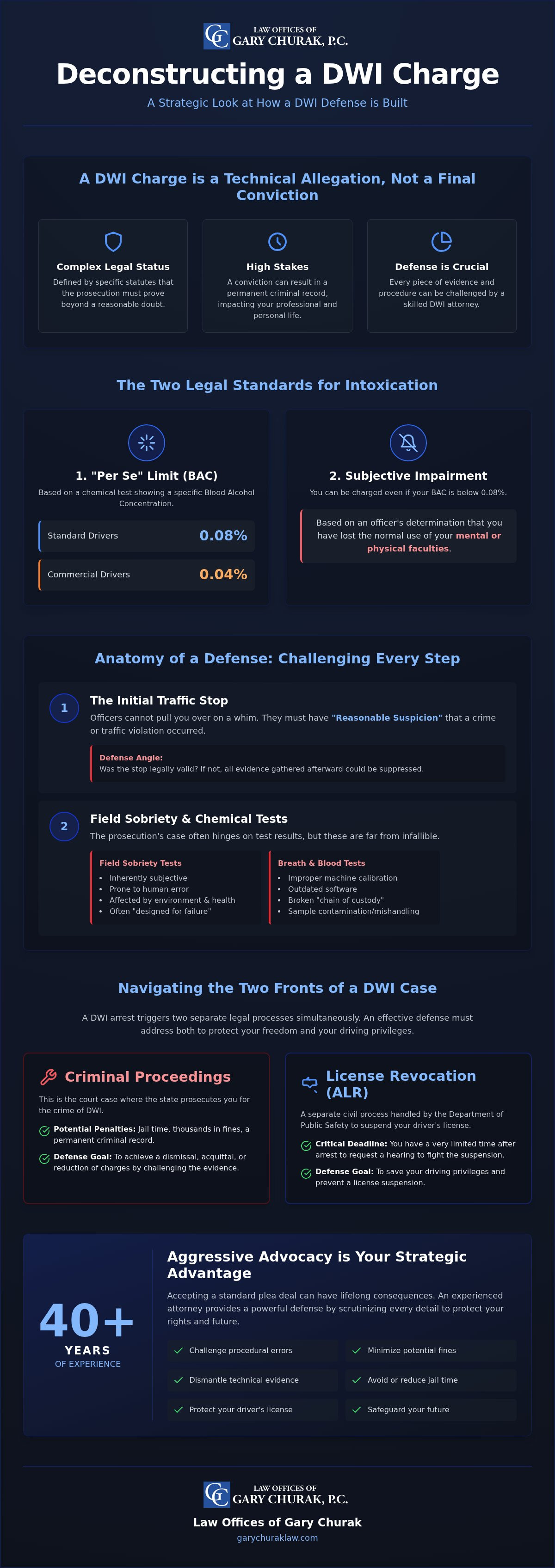
A DWI charge is often misunderstood as a simple accusation of being "drunk" behind the wheel. In reality, it represents a complex technical legal status defined by specific statutes. While many people use the terms interchangeably, Driving Under the Influence (DUI) or Driving While Intoxicated (DWI) involves meeting precise criteria that the state must prove beyond a reasonable doubt. A conviction carries immense weight, resulting in a permanent criminal record that can haunt your professional life and personal reputation for decades. Because the stakes are so high, securing an experienced attorney dwi is the first step in ensuring your side of the story is heard with the gravity it deserves.
The Threshold of Intoxication
The law uses two distinct standards to determine intoxication. The first is the "per se" limit, which relies on a chemical test showing a Blood Alcohol Concentration (BAC) of 0.08% or higher. This figure is based on scientific research indicating that most individuals experience significant impairment in motor coordination and reaction time at this level. For commercial drivers, this threshold drops to 0.04% due to the increased responsibility of operating heavy vehicles. However, the second standard is more subjective: impairment. You can be charged with a DWI even if your BAC is below 0.08% if an officer determines you've lost the normal use of your mental or physical faculties. Most first-time offenses are classified as Class B misdemeanors. However, aggravating factors like having a minor in the car or a prior conviction can quickly escalate the charge to a felony, carrying mandatory jail time and thousands in fines.
Probable Cause and the Initial Stop
Every DWI investigation begins with a traffic stop, and this interaction must comply with the Fourth Amendment. Officers cannot pull you over on a whim; they need "reasonable suspicion" that a crime or traffic violation has occurred. This could be anything from a broken taillight to failing to signal a turn. Once stopped, the officer must then establish "probable cause" before making an arrest. This requires specific, articulable facts that would lead a reasonable person to believe a crime was committed.
Errors at this stage are frequent and often overlooked by those without legal training. An officer might misinterpret a driver's fatigue or a medical condition for intoxication. They might also fail to document the specific behaviors that led to the stop, relying instead on vague generalizations. If the initial stop lacked a legal basis, an attorney dwi can move to suppress the evidence gathered afterward. This scrutiny is essential because procedural mistakes by law enforcement are often the key to a successful defense strategy.
How a DWI Attorney Challenges Technical Evidence
The prosecution relies heavily on the perceived finality of a number. They present breathalyzer results or field test scores as undeniable facts that prove guilt. However, a seasoned attorney dwi knows these results are only as reliable as the procedures used to obtain them. We shift the focus from the outcome to the process itself. By scrutinizing the forensic integrity of the evidence, we can often uncover flaws that invalidate the state's claims. Understanding the legal definition of DUI/DWI reveals that the burden of proof is on the prosecution to show the evidence is accurate and legally obtained. If the process is broken, the result shouldn't stand.
Deconstructing Field Sobriety Tests
Standardized Field Sobriety Tests (SFSTs) are inherently subjective and prone to human error. The Horizontal Gaze Nystagmus (HGN) test, where an officer looks for involuntary eye jerking, has high error rates when administered in suboptimal conditions. Factors like passing headlights, inner ear infections, or even certain medications can mimic signs of intoxication. Similarly, the "Walk and Turn" test often takes place on uneven road shoulders, in high winds, or under poor lighting. These tests are frequently described as "designed for failure" because officers score minor technical slips as signs of impairment, regardless of a person's natural balance, age, or physical health. We look for every instance where the officer deviated from training manuals to challenge the validity of these scores.
Challenging Breathalyzer and Blood Results
Chemical tests are far from infallible. Breathalyzers are complex machines that require strict calibration and maintenance schedules to remain accurate. If a machine hasn't been serviced according to state regulations or if the software is outdated, its readings are legally suspect. Blood evidence presents even more opportunities for procedural failure. We investigate the "chain of custody" to ensure the sample wasn't mishandled, contaminated, or improperly stored in a warm environment. Rising blood alcohol can mean you were legal while driving but over the limit when tested.
Expert witnesses, such as forensic toxicologists and former law enforcement officers, play a vital role in deconstructing these technical claims in court. They provide the scientific weight needed to counter the prosecution’s narrative and explain complex data to a jury. If you're concerned about how technical evidence was handled in your case, seeking a thorough case analysis is the best way to identify potential defense strategies and protect your future.
Navigating Administrative vs. Criminal Consequences
A DWI arrest triggers a complex legal process that operates on two distinct tracks. Most people assume they're only facing a criminal trial, but the reality involves a separate administrative battle regarding your driving privileges. This dual-track system means you're fighting the state’s licensing department and the District Attorney simultaneously. An experienced attorney dwi manages both of these challenges, ensuring that actions taken in one arena don't inadvertently damage your standing in the other. According to NHTSA Drunk Driving Statistics, the impact of these charges extends far beyond the courtroom, affecting thousands of drivers every year through rigorous enforcement and administrative penalties.
Protecting Your Right to Drive
The Administrative License Revocation (ALR) process begins the moment you're arrested. You typically have a strict 15-day window to request a hearing to contest your license suspension. If you miss this deadline, your license is suspended automatically. This hearing is a vital strategic tool. It allows your lawyer to cross-examine the arresting officer under oath before the criminal trial even begins. This often reveals inconsistencies in the officer's testimony or flaws in the evidence. If a suspension is ultimately upheld, we can work to secure an Occupational Driver’s License (ODL). This essential document allows you to continue driving to work, school, and for essential household duties, maintaining your livelihood while the criminal case proceeds.
The Long-Term Impact of a Conviction
The criminal side of a DWI involves potential jail time, significant fines, and probation. However, the "collateral consequences" are often what disrupt lives the most. Research indicates a DWI conviction can lead to a 74% increase in auto insurance premiums, costing you thousands over several years. For professionals, a criminal record can trigger disciplinary actions from state boards or prevent future employment in sectors requiring security clearances. We don't just focus on the immediate trial; we look toward the future. This includes evaluating if your case qualifies for record sealing or expungement once the legal process concludes. Aggressive advocacy aims to minimize these long-term burdens, ensuring that one mistake doesn't define the rest of your life. By attacking both the administrative and criminal fronts, we provide a comprehensive shield for your future.
Critical Steps to Take After a DWI Arrest
The first 72 hours following a DWI arrest often determine the trajectory of your entire case. This period is a window of opportunity to preserve evidence and protect your rights before the state’s momentum becomes difficult to halt. You must treat this time with a sense of urgent, strategic purpose. While the experience is naturally jarring, your priority should shift immediately toward defense preparation and securing an attorney dwi who can intervene before your first court appearance.
Your right to remain silent is your most powerful tool during and after the arrest. Many individuals feel a compulsion to explain their side to officers or vent on social media, but these statements are frequently used to bolster the prosecution's narrative. Silence is not an admission of guilt; it's a calculated legal protection. Simultaneously, you should document every detail of the interaction while your memory is fresh. Record the weather conditions, the specific location of the stop, the officer's exact words, and any physical discomfort you felt during the field tests. These notes provide the raw material your legal team needs to identify procedural errors.
Immediate Actions for Defense
Time is your most limited resource. You must request a formal administrative hearing for your driver's license immediately to prevent an automatic suspension. In many jurisdictions, this deadline is as short as 15 days from the date of arrest. Missing this window can result in an immediate loss of driving privileges, regardless of the eventual outcome of your criminal case. You should also organize every piece of paperwork received from law enforcement, including the notice of suspension and any property receipts. Avoid discussing your case with anyone other than your legal counsel. Privacy is essential for maintaining the integrity of your defense strategy.
Preparing for Your Initial Consultation
When you meet with an attorney dwi, you aren't just looking for a representative; you're looking for a protector. Prepare a list of specific questions regarding their trial experience and their approach to technical evidence. A "thorough case analysis" is the foundation of a successful defense, as it involves a line-by-line review of police reports and chemical test logs to find inconsistencies. Honesty with your lawyer is non-negotiable. Disclosing every detail, even those you find embarrassing, allows your advocate to anticipate the prosecution's moves and build a resilient response. If you're ready to take the first step in protecting your future, you should schedule a personalized consultation to begin your defense.
Why Aggressive Advocacy is Essential in DWI Defense
Many individuals assume that a breathalyzer result or a failed field test makes a conviction inevitable. This assumption often leads them to believe that pleading guilty is the only way to resolve the situation and move on. This is a critical mistake. Pleading guilty should never be your first option because it bypasses the essential forensic scrutiny required for a fair outcome. A specialized attorney dwi understands that the prosecution’s case is often built on technicalities and procedural shortcuts that can be dismantled. We exist to protect you from overzealous prosecution and ensure that your rights aren't ignored in the rush to close a case file. Accepting a plea without a thorough investigation means leaving your future entirely in the hands of the state.
Choosing the right representation is the most significant decision you'll make after an arrest. The Law Offices of Gary Churak provides the aggressive advocacy needed in high-stakes situations where your freedom is on the line. We don't just review files; we build a protective barrier between you and the legal system. Our commitment is to personalized, thorough defense strategies that address the specific nuances of your life, family, and career. We understand that a conviction isn't just a legal mark. It's a lasting threat to your livelihood, your professional standing, and your personal reputation. We fight to ensure that one moment of uncertainty doesn't dictate the rest of your life.
The Value of Experience
Four decades of legal practice provide a perspective that cannot be replicated by less experienced firms. Having over 40 years of experience means we have seen how local court procedures evolve and how different personnel approach DWI cases. This deep-seated knowledge allows us to anticipate moves from the District Attorney and adjust our trial strategy in real time. We offer a personalized consultation for every client because every case has unique vulnerabilities that require a custom approach. This isn't a factory-style defense; it's a strategic, battle-tested method designed for results. We know exactly when to negotiate a favorable deal and when the evidence demands a forceful, uncompromising stance in the courtroom.
Taking the Next Step
You don't have to face this process alone or live in a state of constant anxiety. A seasoned attorney dwi acts as your guide, advisor, and fierce protector throughout both the administrative and criminal battles. We take the burden of the legal process off your shoulders so you can focus on your life and your family. The stakes are high, but a grounded, steady hand can lead you through the uncertainty. Our firm stands ready to scrutinize every detail of your arrest to find the best possible path forward. Protect your future and your freedom; contact the Law Offices of Gary Churak for a consultation today.
Protecting Your Future Through Strategic Defense
A DWI charge is a technical allegation rather than a final verdict on your character. You now understand that challenging forensic evidence and navigating the dual tracks of administrative and criminal law requires a methodical, aggressive approach. By acting quickly within the first 72 hours and securing professional counsel, you move from a state of uncertainty toward a position of strategic strength. This proactive stance is essential for safeguarding your driving privileges and your professional reputation from lasting harm.
Securing a seasoned attorney dwi provides the protective shield you need when facing overzealous prosecution. With over 40 years of criminal defense experience, Gary Churak delivers aggressive advocacy and a personalized strategy for every client. We scrutinize every procedural detail to ensure your rights are upheld throughout the entire legal process. You don't have to navigate this high-stakes situation without a battle-tested guide by your side. Secure aggressive defense for your DWI case; schedule your free consultation with Gary Churak now. You have the power to take control of your situation and move toward a resolution that protects your freedom and your future.
Frequently Asked Questions
Is a DWI a felony or a misdemeanor for a first offense?
A first-offense DWI is typically classified as a Class B misdemeanor in most jurisdictions. However, specific aggravating factors can elevate the charge to a felony immediately. These factors include having a passenger under the age of 15 in the vehicle or causing an accident that results in serious bodily injury to another person. Even as a misdemeanor, a conviction carries significant penalties, including potential jail time and permanent criminal records.
Can I refuse a breathalyzer test, and what are the consequences?
You have the legal right to refuse a breathalyzer test, but doing so triggers immediate administrative penalties under implied consent laws. Refusal usually results in an automatic driver's license suspension, often for a period of 180 days for a first-time encounter. While refusing the test denies the prosecution chemical evidence, law enforcement officers may still seek a search warrant to perform a forced blood draw at a hospital or jail.
How long does a DWI stay on my criminal record?
A DWI conviction remains on your criminal record permanently unless you successfully petition for an expungement or a petition for non-disclosure. These legal remedies are only available in specific circumstances, such as when a case is dismissed or if you meet strict eligibility requirements for first-time offenders. An attorney dwi can review your case history to determine if you qualify for these protections to clear your reputation and future opportunities.
Will I lose my job if I am convicted of a DWI?
Employment consequences depend on your specific job description and the terms of your employment contract. Professionals holding state-issued licenses, such as nurses, pilots, or commercial drivers, face high risks of mandatory license suspension or permanent revocation. Many private employers also have "moral turpitude" clauses that allow for termination upon any criminal conviction. Protecting your career requires a proactive defense aimed at avoiding a final conviction on your record.
What is the difference between a DUI and a DWI?
The primary difference often lies in the age of the driver and the specific legal standard for intoxication. In many states, a DUI (Driving Under the Influence) charge is specifically reserved for minors who have any detectable amount of alcohol in their system. A DWI (Driving While Intoxicated) is generally the more serious charge applied to adults who either meet the legal definition of impairment or exceed the 0.08% blood alcohol concentration limit.
How much does a DWI attorney cost on average?
The cost of legal representation varies significantly based on the complexity of your case and whether it proceeds to a full jury trial. Factors such as the need for forensic expert witnesses, the number of prior offenses, and the technicality of the evidence all influence the final fee structure. Because every situation is unique, a personalized consultation is necessary to provide an accurate assessment of the legal resources required for your specific defense.
Can a DWI charge be dismissed if the officer made a mistake?
A DWI charge can be dismissed if an officer's error violates your constitutional rights or compromises the integrity of the evidence. Common mistakes include stopping a vehicle without reasonable suspicion or failing to follow standardized protocols during field sobriety testing. If an attorney dwi can prove that the initial stop or the subsequent arrest was unlawful, the court may suppress the evidence, which often leads to a full dismissal of the charges.
What is an Occupational Driver’s License and how do I get one?
An Occupational Driver's License is a restricted license that allows you to drive for essential needs, such as work, school, or household duties, while your original license is suspended. To obtain one, you must file a formal petition with the court and demonstrate an "essential need" for driving privileges. You will typically need to provide proof of SR-22 insurance and may be required to install an ignition interlock device as a condition.


