

What if the plea offer that seems safest today carries consequences you haven’t fully considered? Asking “should I take a plea deal” often means weighing a defined offer against the uncertainty of trial while trying to understand what you’d have to admit and what could follow from a conviction.
That uncertainty is real. Accepting a deal may resolve a case on more predictable terms, but it can also mean giving up the right to trial and facing consequences beyond sentencing. Rejecting the offer doesn’t guarantee a better result, either. The decision should turn on the details of your case, not pressure or assumptions about what usually happens.
This guide explains what plea agreements may require, how to compare an offer with the evidence and possible trial outcomes, and which questions to resolve with a defense attorney before deciding. Careful case analysis can clarify the risks and options, but no attorney can guarantee a particular result. The Law Offices of Gary Churak brings more than four decades of criminal defense experience to reviewing evidence, negotiating, and preparing for court.
Key Takeaways
- Break down the agreement’s charge terms, sentencing recommendations, and any factual statements you may be asked to accept.
- When asking “should I take a plea deal,” compare the offer with the evidence and uncertainties of trial, not assumptions about which path is safer.
- Review every material term and consider consequences that may extend beyond the immediate sentence.
- A defense attorney can assess the case, explain your options, and prepare to negotiate or go to trial as circumstances warrant.
Should I Take a Plea Deal? Start by Understanding the Decision
A plea offer can arrive while you’re still trying to understand the charge, assess the evidence, and picture what could happen next. Under pressure, a clear offer can seem like the obvious choice, or any agreement can feel like giving up too much. If you’re asking, “should I take a plea deal,” start by slowing down and examining exactly what the offer requires.
A plea deal is a negotiated resolution in which the defendant agrees to enter a plea under specified terms. Those terms may address the charge, a sentencing recommendation, or other parts of the case. The Plea bargain overview describes common forms and tradeoffs, but a general explanation can’t tell you whether a particular offer fits your case.
An offer isn’t automatically fair or favorable, and its existence doesn’t mean you should avoid trial. Its value depends on what the prosecution would have to prove, how strong and admissible the evidence may be, what the written agreement says, and what risks each path carries. Compare the options based on your case, not fear, pressure, or a promise of a particular outcome.
What does a plea deal ask you to agree to?
The exact agreement controls. It may require you to plead guilty to a specified charge or acknowledge particular facts. Don’t assume a summary captures every term, or that agreeing to negotiate means you have already entered a plea. Negotiation and a formal plea in court are distinct steps. The judge’s role and the agreement’s effect depend on the applicable law, procedure, and terms.
A prosecutor can propose plea terms, but the judge has authority over sentencing, subject to applicable law and the agreement’s terms. A sentencing recommendation is therefore not automatically a guaranteed sentence. Before accepting, understand what you’re being asked to admit and what the agreement says may happen next.
Why is the decision different in every criminal case?
The charge shapes the potential consequences, while the evidence affects how the case may be contested. The offer matters too: agreements can differ in the charge involved, factual admissions, or sentencing terms. Consider those details together rather than treating “plea deal” as one standard outcome.
Your priorities matter as well. You may need to weigh possible effects on work, family responsibilities, or future plans alongside the immediate case. Those concerns don’t dictate a single answer; they help identify which risks deserve close attention.
No universal rule says to accept or reject. A defense attorney can examine the evidence and agreement, explain your options, and help you make a considered choice without guarantees. The goal isn’t to choose the path that sounds safest in the abstract. It’s to understand the specific tradeoff before you decide.
What a Plea Agreement Can Include, and What May Follow
A plea agreement can contain several kinds of terms, and they don’t all do the same thing. A lower charge, a sentencing recommendation, and an agreed statement of facts each affect a different part of the case. Read the terms as a whole: a favorable-sounding change to one part doesn’t necessarily settle what you’ll be asked to admit or what may happen later.
Charge, sentence, and fact terms are not the same
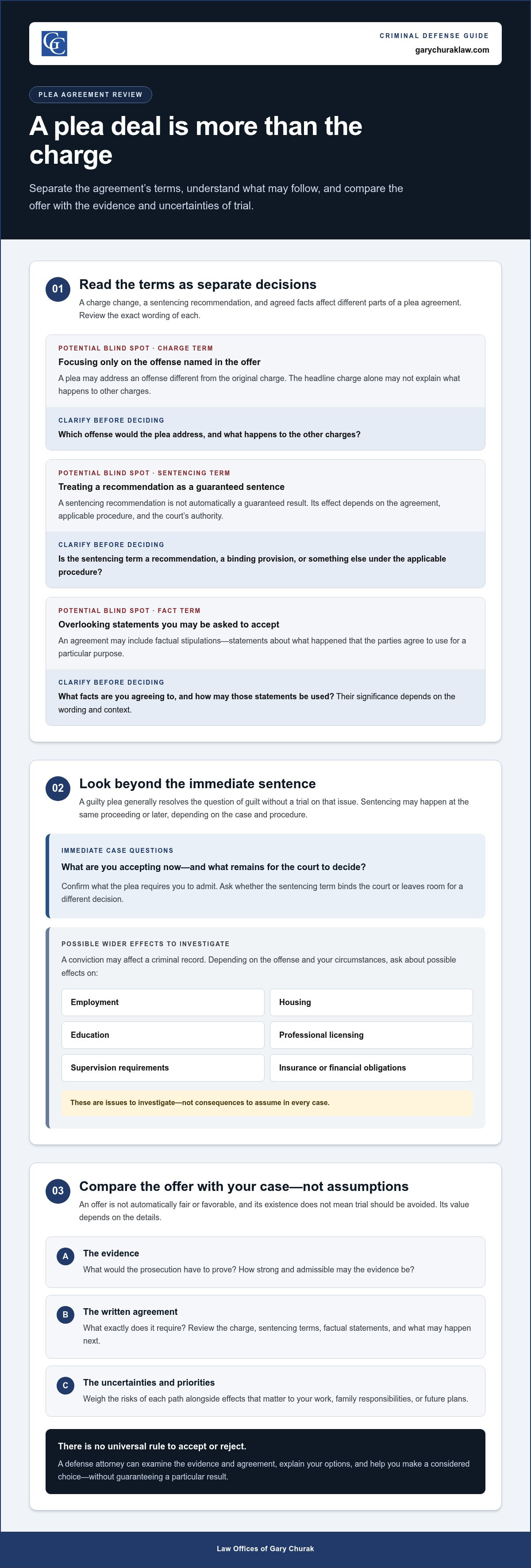
A charge bargain identifies the offense you would plead to, which may differ from the original charge. A sentencing recommendation asks the court to impose a particular sentence or range, but its effect depends on the agreement and the court’s authority under applicable rules. Don’t treat a recommendation as a guaranteed result.
An agreement may also include factual stipulations: statements about what happened that the parties agree to use for a particular purpose. Their significance depends on the wording and context. Before accepting, have counsel explain each statement and whether it could affect sentencing or another part of the case.
- Charge term: Which offense would the plea address, and what happens to the other charges?
- Sentencing term: Is the term a recommendation, a binding provision, or something else under the applicable procedure?
- Fact term: What facts are you agreeing to, and how may those statements be used?
These categories can overlap in one agreement, but they aren’t interchangeable. If you’re asking, “should I take a plea deal,” make sure you understand every material term, not just the headline charge or expected sentence.
What can happen after a guilty plea?
A guilty plea generally resolves the question of guilt without a trial on that issue. Sentencing may follow at the same proceeding or later, depending on the case and procedure. The judge’s authority and the agreement’s effect vary, so counsel should clarify whether a sentencing term binds the court or leaves room for a different decision.
Also consider consequences beyond the immediate sentence. A conviction may affect a criminal record, and the practical impact can depend on the offense and your circumstances. Ask about possible effects on employment, housing, education, professional licensing, supervision requirements, insurance, or financial obligations. These are issues to investigate, not consequences to assume in every case.
Make the review concrete: identify each consequence that could affect your plans, then ask how the proposed plea may relate to it and what uncertainty remains. A detailed review of your criminal case can help you understand the agreement’s language and evaluate the stakes before deciding. Focus on what you’re accepting, not reassurance based on a prediction.
Plea Deal vs. Trial: Weigh the Tradeoffs Without Assuming the Answer
Comparing an offer with a trial means weighing different kinds of uncertainty. A negotiated resolution may set out agreed terms, while a trial tests the prosecution’s case but leaves the verdict and any later sentence uncertain. Neither option is automatically safer. Compare the specifics: what does the offer require, what evidence could be presented, and what consequences could follow each path?
What a negotiated resolution may offer, and what it costs
A negotiated agreement may include a different charge or a sentencing recommendation, and it can make some aspects of the outcome more predictable. But the terms matter. A recommendation may not bind the court, and an agreement doesn’t erase the consequences of a plea or conviction. Consider not only the immediate sentence, but also possible effects on your record and circumstances that matter to your future.
An offer’s value cannot be judged apart from the evidence the prosecution can present and the defense can challenge. Without that review, a seemingly favorable term may be difficult to compare fairly with trial.
Negotiated resolution
- May provide defined terms and reduce uncertainty about some aspects of the case.
- Could involve a negotiated charge or sentencing recommendation, depending on the agreement.
- Requires careful consideration of the plea, any admissions, and potential consequences.
- May mean giving up the opportunity to contest guilt at trial.
Trial
- Allows the defense to challenge the prosecution’s evidence under applicable rules.
- Leaves the verdict uncertain, and an unfavorable result may carry serious consequences.
- Can demand substantial time and emotional attention from the defendant.
- Doesn’t guarantee a better result simply because an offer was rejected.
What to consider before choosing a trial
A trial is a meaningful option when the defense needs to test the prosecution’s case, contest how evidence was obtained or presented, or ask a fact-finder to decide whether guilt has been proven under the governing standard. The strength of that approach depends on the case facts, available evidence, and legal issues. An attorney can assess those factors rather than rely on a general prediction.
Trial also brings uncertainty. The process may take time, require preparation and participation, and create emotional strain. A verdict may be unfavorable, but that possibility doesn’t make trial inherently unwise. Likewise, a plea can involve lasting consequences, so a defined offer isn’t automatically the better choice.
Rejecting an offer does not, by itself, determine what sentence a court may impose later. The eventual outcome depends on what happens in the case and the rules that apply. Potential sentencing exposure should be evaluated with counsel, not treated as a certainty or a threat. If you’re asking, “should I take a plea deal,” compare realistic paths based on the evidence and terms, then weigh them against your priorities without assuming either choice guarantees protection.
How to Evaluate a Plea Offer Before You Decide
A sound decision starts with a structured review, not an informal explanation of what the offer “basically” means. Ask for the proposed terms, understand the evidence behind the case, and work through the alternatives with defense counsel. If you’re asking, “should I take a plea deal,” use these steps to identify what you know, what remains uncertain, and what needs an answer before you enter a plea.
- Get the complete offer. Review the exact charge, the plea you would enter, any factual basis or stipulations, and the language about sentencing. Ask what happens to other charges and whether each provision is a recommendation or has another effect under the applicable procedure. Clarify any deadline and what it means; don’t treat an oral summary as a substitute for understanding the material terms.
- Examine the evidence with counsel. Compare the offer with the discovery, witness accounts, and other evidence in the case. Ask which facts are established, which are allegations, and which remain disputed. Counsel can assess how evidence may be challenged or limited under applicable rules, and whether those issues could affect negotiation or trial. A detail that appears minor may matter if it changes how a key piece of evidence is understood.
- Compare realistic paths. Ask counsel to explain the possible routes if you accept and if you reject the offer, including what is known and what remains uncertain. Discuss potential outcomes based on the actual evidence, not a worst-case assumption or a promise that one option will produce a particular result.
- Identify consequences that matter to you. Consider how the plea and any resulting conviction could affect your record, work, housing, education, licensing, family responsibilities, or other priorities. Which issues apply depends on the charge and your circumstances. Ask counsel to distinguish likely effects from possibilities that require further investigation.
- Resolve questions before deciding. Write down unanswered questions and review them with counsel before any plea is entered. Ask what each term means, whether the offer may change, what deadlines apply, and what facts or legal issues could still affect the case. Take time to understand the advice and confirm that your decision reflects your priorities.
Preparation can make that discussion more focused. Bring the offer, relevant court papers, a timeline of events, and a written list of questions to your meeting. If you need help organizing what to discuss, use a criminal defense consultation to prepare for a case-specific conversation with counsel.
Effective guidance should be clear about both the strengths and limits of the analysis. Ask counsel to explain the reasoning in plain language: what evidence supports the prosecution’s position, what may be challenged, and where uncertainty remains. You should understand the advice before choosing a path. The decision is yours to make, without pressure or guarantees.
To discuss how the offer, evidence, and unanswered questions fit together, speak with a criminal defense attorney about your circumstances.
How a Criminal Defense Attorney Can Help You Decide on a Plea
A plea decision should be grounded in the details of your case, not a general rule about whether defendants should accept offers or fight charges. A criminal defense attorney can review the prosecution’s evidence, examine the agreement’s language, identify legal issues, and explain potential consequences. That analysis helps you understand your options. It doesn’t replace your judgment or guarantee a particular result.
What case-specific defense analysis should clarify
Counsel can separate strong evidence from disputed claims and identify unanswered questions that may affect the case. That may include examining witness accounts, comparing statements with other evidence, and assessing whether legal issues could limit how evidence is used. The point isn’t to assume a challenge will succeed, but to understand how it may shape negotiation or trial preparation.
The agreement itself deserves the same care. Your attorney should explain the charge and plea involved, any factual statements you would accept, the sentencing language, and possible effects relevant to your circumstances. If a term is unclear, ask for a plain-language explanation before deciding. A careful review can show where the proposed terms align with the evidence and where important questions remain.
Strong advocacy keeps options open. Depending on the case, counsel may negotiate for different terms, challenge evidence, or prepare to proceed to trial. These steps aren’t mutually exclusive: informed negotiation can draw on careful evidence review, while trial preparation helps ensure the defense is ready for the next stage if no acceptable resolution is reached. Attorney Gary Churak has over four decades of experience representing people facing criminal charges.
Take the next step without rushing the decision
Bring the written offer, court paperwork, and a list of questions to a legal consultation. Organize any documents or details that may help explain the evidence. Tell your attorney which consequences concern you most, such as effects on work or family responsibilities. That context can help counsel focus the analysis on the issues that matter to your decision.
Ask for a clear comparison of the available paths: what is known, what remains uncertain, and what could change the assessment. You should be able to discuss concerns without being pressured toward a particular choice. The final decision belongs to you after you’ve received case-specific advice and understand the terms and risks as clearly as possible.
If you’re still asking, “should I take a plea deal,” a focused conversation with defense counsel can help you assess the offer against the evidence and your priorities. Discuss your case with the Law Offices of Gary Churak to talk through your circumstances and legal options.
Make Your Next Step a Deliberate One
The question “should I take a plea deal” deserves more than a rushed yes or no. Before you decide, identify what still feels unclear and make sure you understand the choices in front of you. You don’t need certainty about every possible outcome to make a considered decision, but you do need advice grounded in the facts and terms of your case.
Use your next conversation with a defense attorney to speak plainly about your concerns, priorities, and unanswered questions. Attorney Gary Churak can review the evidence, analyze the case, and explain the paths available, whether that means pursuing further negotiations or preparing for court. No one can promise how a case will end, but you can insist on understanding the decision before you make it.
Discuss your case with the Law Offices of Gary Churak and take a measured step toward deciding what is right for your circumstances. You deserve clear guidance as you move forward.
Frequently Asked Questions
Can a judge reject a plea deal?
Yes, a judge may reject a proposed plea agreement in some circumstances, depending on the type of agreement and the rules that apply. A prosecutor and defendant can propose terms, but that doesn’t always mean the court must accept them. If a judge rejects the agreement, what happens next depends on the case and procedure. Ask your attorney what rejection could mean before relying on a proposed resolution.
Can I withdraw a guilty plea after accepting a plea deal?
Sometimes, but withdrawing a guilty plea isn’t automatic. The rules and deadlines depend on the jurisdiction, the stage of the case, and the reasons for seeking withdrawal. A claim that you misunderstood a term or felt pressured needs prompt legal attention, but it doesn’t guarantee the court will allow the plea to be withdrawn. Speak with defense counsel as soon as possible, and don’t assume you can change your decision later.
Does accepting a plea deal mean I will go to jail?
No. A plea doesn’t automatically mean jail, but the possible sentence depends on the charge, agreement, applicable law, and court decision. Some cases may involve non-custodial penalties, while others carry a risk of incarceration. For example, a proposal that includes probation still requires careful review of its conditions and what could happen if they’re violated. Ask counsel to explain the sentence range and possible outcomes for your specific case.
Can I accept a plea deal if I believe I am innocent?
Don’t enter a guilty plea while believing you must give a false account of what happened. Plea rules and available options vary, and some jurisdictions may permit specific pleas that don’t involve an admission of guilt, subject to court approval. Tell your attorney clearly that you believe you’re innocent and ask what options exist in your case. Make sure you understand what you’d have to say in court before entering any plea.
Will a plea deal give me a criminal record?
A guilty plea commonly results in a conviction that may appear on a criminal record, but the exact effect depends on the disposition and applicable law. Some programs or deferred outcomes may be treated differently, and later record relief isn’t automatic. Before agreeing, ask how the specific plea may be recorded, whether it could affect background checks, and whether any future sealing or expungement option could apply. Don’t assume a reduced charge leaves no record.
How long do I have to decide whether to take a plea deal?
There’s no single deadline for every plea offer. The prosecutor may set a response date, and court schedules or case-specific events can affect how long an offer remains open. If you’re asking “should I take a plea deal,” promptly ask your attorney to clarify the deadline and whether an extension can be requested. Use the time to understand the offer and raise concerns, rather than treating silence or delay as acceptance.


