

A single moment of uncertainty can lead to a lifetime of consequences if you don't understand the charges against you. When you're suddenly confronted with a legal summons or an arrest, the sheer volume of the list of crimes in the penal code can feel like an insurmountable wall. You're likely feeling overwhelmed by complex terminology and terrified of how a permanent record might dismantle everything you've worked to build. It's a heavy burden to carry alone; the fear of the unknown is often worse than the reality of the situation.
This guide serves as your definitive resource to help you regain control. We'll examine the legal system together, providing a clear breakdown of crime categories and their potential impact on your future. You'll gain a thorough understanding of the critical differences between felonies and misdemeanors, along with precise definitions for common offenses. By the end of this article, you'll have the clarity needed to move from a state of panic toward a strategic, well-prepared legal defense. We're here to provide the steady hand and professional advocacy required to protect your rights and your reputation.
Key Takeaways
- Distinguish between misdemeanor and felony classifications to accurately gauge the potential severity and long-term impact of your specific charges.
- Identify the legal boundaries between simple and aggravated offenses to understand how the prosecution interprets physical or economic actions.
- Navigate the intricate world of drug and federal jurisdictions where intent and monetary value dictate the intensity of sentencing guidelines.
- Consult this definitive list of crimes to replace legal uncertainty with a clear, strategic map of the challenges you're facing.
- Learn why the first 48 hours after an allegation are critical for building a protective defense and identifying weaknesses in the state's evidence.
Categorizing the Legal Landscape: Misdemeanors vs. Felonies
When you're reviewing a list of crimes presented by a prosecutor, the first thing to identify is the classification of the charge. The legal system separates offenses primarily by the severity of the potential sentence and the nature of the act. While a Crime is defined broadly as a violation of public law, the specific classification dictates whether you face months in a local jail or decades in a state penitentiary. This distinction is the fundamental divide that determines how the state will pursue its case against you.
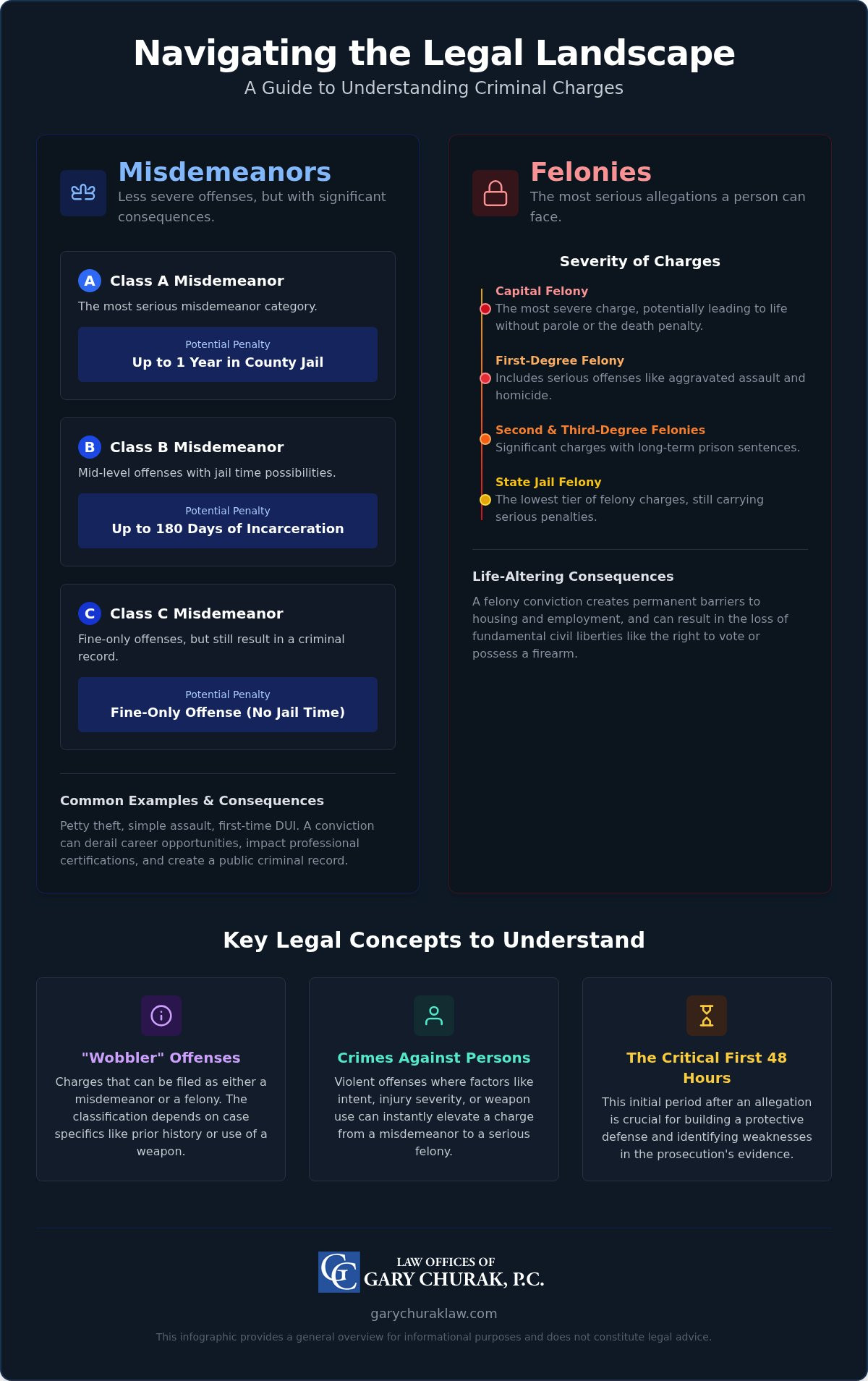
Prosecutors often evaluate what's known as a "wobbler" offense. This is a charge that can be filed as either a misdemeanor or a felony depending on the specific facts of the case, such as the use of a weapon or your prior criminal history. This fluid nature of the law makes aggressive advocacy essential from the moment of your arrest. A conviction does more than just restrict your movement; it can strip away your civil liberties and permanently alter your standing in the community.
Understanding Misdemeanor Classifications
Misdemeanors are generally viewed as less severe than felonies, but they carry a stigma that can derail a career or personal reputation. These charges are typically divided into a hierarchy based on the potential jail time involved:
- Class A Misdemeanors: The most serious tier, often carrying up to one year in county jail.
- Class B Misdemeanors: Mid-level offenses punishable by up to 180 days of incarceration.
- Class C Misdemeanors: Fine-only offenses that don't involve jail time but still result in a criminal record.
Common entries on this list of crimes include petty theft, simple assault, and first-time DUI charges. Even a "minor" conviction can prevent you from securing certain jobs or professional certifications. Because these records are public, seeking an expungement or record sealing is often the only way to truly move forward after the legal process concludes.
The Gravity of Felony Charges
Felonies represent the most serious allegations a person can face. The legal system uses a tiered degree system to determine punishment ranges, moving from state jail felonies up to capital offenses. Capital felonies carry the heaviest weight, including the possibility of life without parole or the death penalty.
Serious offenses like aggravated assault, drug distribution, and homicide fall into the first through third-degree categories. Beyond the threat of prison, the collateral consequences of a felony conviction are life-altering. You may face permanent barriers to quality housing, the loss of your right to possess a firearm, and the revocation of voting rights. When the stakes reach this level, a thorough case analysis is the only way to identify weaknesses in the prosecution's evidence and safeguard your future.
Crimes Against Persons: Violent Offenses and Legal Consequences
Charges involving physical force are among the most scrutinized entries on any list of crimes. When the state alleges you've caused harm or threatened violence, the legal machinery moves quickly to prioritize public safety over your personal liberty. Understanding the Classifications of Crimes in this category is vital. The difference between a simple push and a life-altering felony often hinges on the presence of a weapon, the perceived intent, or the severity of an injury. These factors can elevate a misdemeanor to a first-degree felony in an instant.
A comprehensive list of crimes involving violence also includes offenses that occur within the home. Domestic violence charges add another layer of complexity because they involve family or household members. These cases often result in immediate protective orders that can bar you from your own home before you've even had a day in court. Similarly, sex crime allegations carry a unique social stigma and the threat of lifelong registration requirements. You need a fierce protector who understands how to handle sensitive evidence while challenging the credibility of the accusations. A strategic defense must address both the legal charges and the potential for long-term reputational damage.
Assault and Battery Defense Nuances
The distinction between assault and battery often confuses those facing charges. Assault is the threat of harm; battery is the actual physical contact. Prosecutors must prove you had the specific "intent to cause bodily harm" to secure a conviction. Defense strategies often focus on challenging circumstantial evidence or asserting your rights under self-defense laws. If you've been wrongly accused, an experienced assault and battery defense attorney can help dismantle the prosecution's narrative by highlighting inconsistencies in witness testimony or lack of physical evidence.
Homicide and Manslaughter Classifications
Homicide cases represent the highest possible stakes in the legal system. The primary factor separating murder from manslaughter is "malice aforethought," or the pre-existing intent to kill. Manslaughter typically involves "heat of passion" scenarios or criminal negligence, where the bar for proving recklessness is exceptionally high. Because these charges can result in life sentences, a thorough case analysis is the only way to uncover procedural errors or forensic gaps that could lead to a reduction or dismissal of charges.
Property Crimes and Economic Offenses: From Theft to White-Collar Fraud
Property offenses involve the unauthorized taking or destruction of another person’s assets. While these charges may lack the physical confrontation of violent crimes, the legal system treats them with extreme gravity. The monetary value of the property involved serves as the primary pivot point for your defense. A small difference in valuation is often the only factor that moves your case from a manageable misdemeanor to a severe felony charge on the state's list of crimes. You need a strategist who can challenge these valuations and protect your financial future.
Larceny and theft charges are tiered based on the market value of the items taken. Prosecutors utilize the official FBI crime classifications to distinguish between burglary, which focuses on the unlawful entry into a structure, and robbery, which requires the use of force or fear against a person. Arson and criminal mischief also fall into this category, focusing on the intentional damage to physical assets. These charges often carry heavy restitution requirements. These payments can drain your resources for years. Intent is the central battleground in these cases; proving a lack of criminal purpose can be the key to a dismissal.
White-Collar and Financial Crimes
Financial crimes like embezzlement, money laundering, and sophisticated fraud schemes demand a data-driven defense. These investigations typically involve exhaustive paper trails and thousands of digital records. Because these schemes frequently cross state lines, federal agencies often spearhead the prosecution. The complexity of the evidence requires a steady hand to navigate. We scrutinize every document to identify procedural errors and highlight gaps in the prosecution's logic. A strategic response is the only way to counter the vast resources of federal investigators.
Beyond immediate defense, maintaining a clean record is vital for long-term professional goals. For example, entrepreneurs looking to establish a clean, compliant international presence can work with Intercompany Solutions to set up a Dutch BV company, ensuring they meet all regulatory standards from the start.
Identity Theft and Cybercrimes
The modern list of crimes has expanded to include digital theft and unauthorized access. Identity theft and cybercrimes sit at a complex intersection of state and federal privacy laws. Allegations of online financial misconduct can arise from simple misunderstandings of digital authorization or shared access. Protecting your rights in the digital space requires an advocate who understands technical forensics. We work to dismantle the prosecution's digital narrative and ensure that your side of the story is heard. The stakes are high, but a methodical approach can provide the protection you need.
Drug Offenses and Federal Crimes: Navigating Complex Jurisdictions
Drug allegations carry heavy weight. A standard list of crimes usually ranks these offenses by the substance type and the quantity involved. Possession for personal use is one thing; manufacturing or distribution is another entirely. Prosecutors often rely on "intent to distribute" to increase penalties significantly. They look for specific evidence like digital scales, large amounts of cash, or specific packaging materials. This shift can turn a relatively minor possession charge into a life-altering felony before you even realize the stakes have changed.
Many individuals assume they can only be charged once for a single act. However, the "Dual Sovereignty" doctrine allows both state and federal governments to prosecute you for the same offense without violating the constitutional protection against double jeopardy. If your case moves to federal court, it's often because the alleged crime involves large quantities of substances or crosses state lines. The federal system operates under entirely different rules and carries much harsher penalties. You need a guide who understands how to bridge this gap and provide a strategic response in both venues.
Your best defense often starts with the Fourth Amendment. We scrutinize the details of every search and seizure to ensure law enforcement didn't overstep their authority. If the police lacked probable cause or a valid warrant, the evidence against you might be suppressed. Challenging the legality of the initial stop is a cornerstone of a protective defense. We work to dismantle the prosecution's case by identifying these constitutional violations early in the process.
Federal vs. State Drug Charges
Federal drug charges often trigger mandatory minimum sentences. These are fixed prison terms that judges cannot ignore, regardless of your personal circumstances or prior history. While local law enforcement handles smaller cases, the DEA typically manages complex stings involving organized networks. Navigating these overlapping jurisdictions requires a battle-tested federal crimes defense strategy to identify procedural weaknesses and safeguard your rights.
Commonly Prosecuted Federal Offenses
Beyond drug charges, the federal list of crimes includes racketeering (RICO), tax evasion, and kidnapping. These cases are tried in federal court, where the Federal Rules of Evidence are strictly enforced. Prosecutors in these venues are often more specialized and have access to vast resources. You need an advocate who understands the nuances of federal scrutiny and can stand firm against aggressive prosecution tactics. We provide the assertive representation needed to navigate these high-stakes environments.
From Allegation to Defense: Protecting Your Rights Against Criminal Charges
The first 48 hours following an arrest determine the trajectory of your entire case. This is the critical window where law enforcement attempts to solidify their narrative and secure statements before you've secured legal counsel. You don't have to face this pressure alone. Taking immediate action allows for a proactive defense that can prevent early procedural mistakes from becoming permanent legal obstacles. A grounded, steady hand at the start of the process provides the clarity needed to navigate the high stakes ahead.
A thorough case analysis is the foundation of any successful outcome. We meticulously examine the prosecution's evidence to find discrepancies and constitutional violations. When you're facing a specific charge from the state's list of crimes, we look for the gaps in their logic. This methodical scrutiny often reveals that the state's case is built on shaky ground, providing the leverage needed for a strategic response. Every detail matters when your freedom is on the line, and we leave no stone unturned during our investigation.
Aggressive advocacy isn't just about courtroom performance; it's about persistent negotiation. We push for dismissals or reduced charges by highlighting procedural errors or a lack of tangible evidence. Even if a case proceeds, our goal remains clear: to protect your future and mitigate the damage to your reputation. If the legal battle has already concluded, we provide guidance on expungements and record sealing to help you reclaim your life. Clearing your name is the final step in a narrative of resilience and advocacy.
The Defense Attorney’s Role in Scrutinizing Charges
We start by reviewing every line of the police report to identify Fourth Amendment violations or coerced statements. Challenging the list of crimes cited by the state often involves proving a lack of criminal intent, which is a required element for most convictions. We also utilize forensic experts and private investigators to uncover evidence that law enforcement may have overlooked. This comprehensive preparation ensures we're ready for every possible scenario and can take a forceful stance when necessary.
Preparing for Your Initial Consultation
Your first meeting is the time to build a wall of protection around your case. Bring any paperwork provided during your arrest, including bail documents and the formal charging sheet. Honesty with your counsel is your strongest asset; we can't defend against what we don't know. By providing a clear, unfiltered account of the events, you empower us to build the strongest possible defense. Schedule a free consultation with the Law Offices of Gary Churak to analyze your case.
Secure Your Defense and Reclaim Your Future
Understanding the gravity of the charges against you is the first step toward a successful resolution. Whether you're facing a misdemeanor or a complex federal felony, the classification of the offense dictates the strategy required to protect your rights. Navigating the extensive list of crimes in the legal code requires more than just basic knowledge; it demands a battle-tested advocate who can identify procedural errors and challenge the prosecution's narrative at every turn.
Gary Churak brings over 40 years of courtroom experience to every case, offering deep expertise in both State and Federal criminal courts. We provide a personalized, strategic defense for every client, ensuring that your side of the story is heard and your civil liberties are defended with unwavering commitment. Don't let a single allegation define the rest of your life. Protect your future with aggressive defense. Contact Gary Churak for a case analysis.
You have the power to take control of your situation today. We're here to stand as your fierce protector and guide you through the complexities of the legal process with confidence and care.
Frequently Asked Questions
What is the difference between a felony and a misdemeanor?
Felonies are serious offenses carrying potential prison sentences of more than one year, while misdemeanors involve less severe penalties usually served in county jail for under a year. This distinction often determines your long-term civil rights, such as firearm possession and voting eligibility. Felony convictions remain on your record with heavier social and professional consequences. You need an advocate who understands how to fight these high-stakes classifications.
Can a crime be both a state and a federal offense?
Yes, under the "Dual Sovereignty" doctrine, you can be prosecuted by both state and federal authorities for the same act. This often happens in drug trafficking or weapons cases that cross state lines. Federal charges typically carry mandatory minimum sentences that are much harsher than state penalties. A strategic defense must account for both jurisdictions to protect your future effectively and identify procedural weaknesses in both systems.
What are the most common violent crimes on a criminal record?
Simple assault, aggravated battery, and domestic violence are frequently cited offenses on a criminal record. These charges often stem from physical altercations or threats of force. Because they involve harm to another person, they are viewed with extreme scrutiny by employers and landlords. Identifying weaknesses in the prosecution's evidence is vital to preventing these permanent marks on your history and maintaining your personal reputation.
How does a prosecutor decide which crimes to charge?
Prosecutors evaluate the available evidence, the severity of the alleged act, and your prior criminal history to determine specific charges. They often review a list of crimes to find the highest offense they believe they can prove beyond a reasonable doubt. A strategic defense attorney intervenes early to challenge these choices. We push for reductions or dismissals before the case reaches a point where the damage becomes permanent.
What is the difference between assault and battery?
Assault is the intentional act of putting another person in fear of imminent physical harm, while battery is the actual physical contact or force applied to another person. You can be charged with assault even if you never touched the individual. Battery requires physical touch, though it doesn't always have to result in a severe injury. Both require a forceful, protective defense to avoid long-term consequences and jail time.
Can a criminal charge be removed from my record?
Yes, many individuals can clear their history through expungement or record sealing, depending on the nature of the offense and the case outcome. If your case was dismissed or you completed a diversion program, you may be eligible to have the entry removed. This process effectively hides the charge from public view. It allows you to move forward without the weight of a past mistake dragging down your career.
What are white-collar crimes and are they always felonies?
White-collar crimes involve non-violent, financially motivated offenses such as embezzlement, money laundering, or fraud. While many are charged as felonies due to the high monetary values involved, some smaller financial infractions may be classified as misdemeanors. The complexity of the evidence in these cases often requires a sophisticated defense strategy. We navigate thousands of digital and paper records to find the errors that lead to a dismissal.
What happens if I am charged with a crime I didn’t intend to commit?
Most offenses on the list of crimes require "mens rea," or a specific criminal intent, to secure a conviction. If the act was accidental or lacked the necessary intent, your defense team can argue for a dismissal or a reduction to a lesser charge. Some "strict liability" crimes don't require intent, so having an experienced advocate analyze the specific statutes is essential for your protection and peace of mind.


