

How long can prosecutors wait before filing an assault charge? There’s no single nationwide deadline. The statute of limitations for assault depends on the jurisdiction, how the alleged conduct is classified, and facts that may affect when the legal clock starts or pauses. A long delay doesn’t automatically mean a case is barred, but it makes the timeline important to examine.
It’s understandable to expect one clear deadline or to assume a criminal charge and civil lawsuit follow the same rules. They don’t. Each has its own limitation period, and the law that applies may depend on where the incident occurred and whether the allegation is treated as a misdemeanor or felony. Certain circumstances can also affect the calculation.
This guide explains how to identify the relevant legal system and charge classification, which timing issues may matter, and why an expired deadline may need to be raised rather than assumed. It also covers records to preserve, including incident dates, court papers, and communications. If you’re facing an assault charge, defense counsel can review the dates and procedural history. Attorney Gary Churak has over four decades of experience representing people accused of crimes.
Key Takeaways
- The statute of limitations for assault sets a filing deadline, but the applicable rule depends on the legal system and governing jurisdiction.
- Record the alleged incident date separately from later discovery, reporting, investigation, and filing dates.
- Check deadlines and any start-date or tolling rules against current official legal sources before drawing conclusions.
- For an older allegation, preserve relevant records, document dates, and avoid discussing the matter publicly while seeking legal advice.
- Defense counsel can assess charging documents and procedural history, but an old allegation alone doesn’t establish that prosecution is barred.
What Does the Statute of Limitations for Assault Actually Limit?
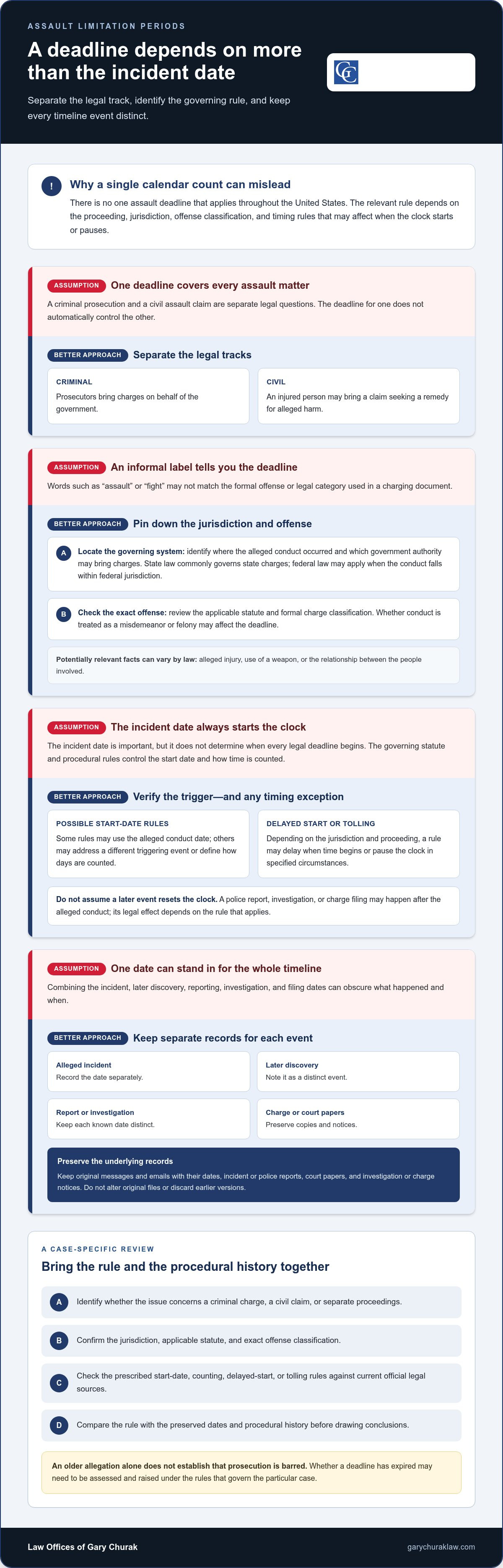
A limitation period restricts how long someone has to begin a legal proceeding. In an assault matter, a deadline may govern a criminal prosecution, a civil lawsuit, or both, but those are separate legal questions. There is no single assault deadline that applies throughout the United States. The rule depends on the law governing the proceeding and the details of the allegation.
The Statute of Limitations concept sets a time boundary, but it doesn’t identify which boundary applies to a particular case. First determine whether the issue involves a criminal charge, a civil claim, or separate proceedings that need separate deadline analysis.
Criminal prosecution and civil assault claims are different
Prosecutors bring criminal charges on behalf of the government. An injured person may bring a civil claim seeking a remedy for alleged harm. The proceedings have different purposes, procedures, and potential consequences, so a deadline for one doesn’t automatically control the other.
For example, a jurisdiction may have a general civil limitation period, while rules for a particular claim and any applicable exceptions require separate review. That civil deadline doesn’t establish the deadline for a criminal assault prosecution. The alleged conduct may raise both civil and criminal questions, each governed by its own law.
Why the jurisdiction and charge classification matter
Start by identifying where the alleged conduct occurred and which government authority may bring charges. State law commonly governs state charges, while federal law may apply when the alleged conduct falls within federal jurisdiction. The location and nature of the allegation help identify which rules to research. A general national summary can’t replace that jurisdiction-specific review.
Assault limitation periods vary by jurisdiction and offense classification. Everyday descriptions such as “assault” or “fight” don’t necessarily match the formal charge or legal category. The governing law and alleged facts determine whether conduct is classified as a misdemeanor or felony, and that classification may affect the deadline. Factors such as the alleged injury, use of a weapon, or relationship between the people involved may be relevant under the law, but their legal effect varies.
That distinction matters even before a formal charge is filed. Someone may hear a broad description of an incident, while a charging document later identifies a specific offense under a particular statute. For deadline analysis, the exact charge and its legal classification matter more than informal labels. Review the jurisdiction, applicable statute, and procedural history together rather than relying on a deadline quoted for a different offense or proceeding.
This approach helps avoid two costly assumptions: that a civil filing period controls a criminal case, or that one jurisdiction’s deadline applies everywhere. A case-specific review can identify which rules need examination before anyone reaches a conclusion about whether a proceeding may go forward.
How Assault Limitation Periods and Their Starting Dates Are Determined
Finding a deadline requires more than counting from a date on a calendar. The governing statute and procedural rules determine when the limitation period begins, how it is calculated, and which event must occur before time runs out. The U.S. Courts Definition of Statute of Limitations offers a concise overview, but federal and state rules differ. A definition alone won’t resolve a specific assault case.
For the statute of limitations for assault, keep criminal and civil timelines separate. A civil claim’s start-date rule can’t automatically be applied to a criminal prosecution. Even within one legal system, the relevant rule may depend on the exact offense and proceeding.
What date starts the clock?
The alleged incident date is an important fact to establish, but it doesn’t determine when every legal deadline begins. Some rules may use the date of the alleged conduct, while others may address a different triggering event or define how days are counted. The rule governing the specific proceeding controls.
Later events can help document the timeline, but don’t assume they reset the clock. A report to police, the start of an investigation, or the filing of a charge may occur well after the alleged conduct. Record each date separately so it isn’t mistaken for the legally prescribed start date.
Preserve records that may help establish what happened and when. Keep original messages and emails with their dates, copies of police or incident reports, court papers, and notices about a charge or investigation. Make a clear timeline of known events, distinguishing what you know firsthand from what remains uncertain. Don’t alter original files or discard earlier versions.
When can tolling or other timing rules matter?
The incident date alone may not resolve every filing-deadline question. Depending on the jurisdiction and proceeding, a statute or rule may delay when time begins or pause the clock in specified circumstances. These are often called delayed-start or tolling provisions. Their requirements and effects differ, so a circumstance that matters in one case may have no effect in another.
For example, laws may address a person’s age, an accused person’s absence from the jurisdiction, or circumstances affecting the discovery of an injury. These are possibilities to investigate, not automatic extensions. The facts must fit the governing rule, which may apply differently to a civil claim than to a criminal charge.
To organize the review, record the alleged incident date, later discovery or reporting dates, and any documented changes in the accused person’s location or case status. Then compare that timeline with the current statute and procedural rules for the specific jurisdiction and offense. An assault-defense attorney can examine those dates and the procedural history as part of a careful assault charge review, without assuming that an old allegation is automatically barred.
How to Research the Assault Deadline in the Relevant Jurisdiction
Use a source-based process instead of borrowing a deadline from an article about another jurisdiction. You can’t verify the statute of limitations for assault until you know which jurisdiction and alleged offense are under review. Record the alleged location, identify whether state or federal authority may be involved, and check current official law for the specific charge. If a key detail is unclear, mark it for legal review rather than filling the gap with an assumption.
A practical checklist for finding the controlling rule
Start with the location and available charging information. Find the current statute for the specific alleged offense, then review related criminal procedure provisions for how a prosecution begins, how time is calculated, and whether exceptions or tolling rules may apply. Confirm the text on an official government or court source, and note its effective date and when you checked it. Treat search-result summaries as leads, not verification.
| Jurisdiction | Alleged offense classification | Governing authority | Verified deadline | Start date, tolling, and source verification |
|---|---|---|---|---|
| State or territory where conduct allegedly occurred | Record the formal charge or mark it unresolved | Current state statute and relevant criminal procedure rules | Enter only after checking official text | Record start-date and tolling language; cite source and date checked |
| Federal jurisdiction, if applicable | Identify the alleged federal offense | Current federal statute and applicable procedure rules | Enter only after checking official text | Record applicable timing provisions; mark unresolved details for legal review |
This comparison format makes gaps visible. Don’t publish a nationwide duration, rank jurisdictions by deadline, or treat a blank cell as proof that no deadline applies. If the official source doesn’t answer when time begins or whether an exception applies, mark that point unresolved for case-specific legal analysis.
Why charge details can change the answer
The facts alleged, including the claimed injury or use of a weapon, may affect how an offense is classified under the governing law. A police report’s initial description isn’t necessarily the final filed charge. Compare the actual charging document with the statute, and distinguish confirmed information from allegations. This aggravated assault guide illustrates why charge classification is a separate issue to examine, not a rule to apply outside its jurisdiction.
Keep a record of the statute citation, official source, classification, deadline language, start-date rule, and any tolling provision you find. If the charge changes or the case involves more than one jurisdiction, revisit the research instead of carrying an earlier conclusion forward. Reviewing the charging documents, dates, and procedural history helps defense counsel assess which limitation rules may apply without promising that an old allegation is barred.
Handling Assault Allegations for Older Incidents
An allegation about an incident from years ago can create immediate uncertainty. But age alone doesn’t decide whether a case may proceed or whether a deadline defense may apply. The statute of limitations for assault depends on the governing jurisdiction, the specific charge, and any timing rules that fit the facts. Treat the timeline seriously, but don’t assume an old allegation is automatically barred or automatically prosecutable.
Take measured steps: preserve what you have, organize the dates, avoid discussing the allegation publicly, and get legal advice before responding to questions about the matter. Don’t delete messages, documents, photographs, or other potentially relevant material, even if you believe it could be misunderstood. A lawyer can assess the context and advise you on how to handle it.
Preserve information without trying to investigate alone
Keep original records in their existing form where possible. That includes communications, photographs, documents, and contact details for people who may have relevant information. Don’t edit files, remove parts of message threads, or try to recreate missing records as if they were originals. If information is unavailable, note that for counsel instead of trying to fill the gaps yourself.
Write a private chronology of what you recall, including dates you know and events you’re unsure about. Mark estimates as estimates. Avoid contacting an accuser or potential witnesses about the allegation without legal advice; an attempted explanation or request for information could create complications or be misunderstood. Keep the chronology and records for counsel to review rather than sharing them publicly or posting about the matter online.
Get a case-specific deadline review
Gather any charging documents, notices, report numbers, and records showing incident or contact dates. Bring them to a consultation and ask counsel to identify the jurisdiction, formal charge classification, governing limitation rule, and any possible start-date or tolling issues. A police report or informal description may not establish the final charge, so the documents and procedural history matter.
Only jurisdiction-specific legal review can assess whether a deadline defense may apply. The analysis depends on the relevant law and case record, not simply on how long ago the alleged incident occurred. Prepare the dates and documents you have, and note the questions that remain unanswered.
Attorney Gary Churak has over four decades of experience, and the Law Offices of Gary Churak handles assault and battery defense. A careful review can assess dates, charging documents, and procedural history without promising a particular outcome. If an older assault allegation has raised concerns, discuss your assault charge with defense counsel and get informed advice about your options.
How Assault Defense Counsel Can Assess a Limitation Issue
A deadline question calls for more than matching an incident date to a general chart. Defense counsel can compare the allegation with the law governing the specific charge, then examine the timeline against relevant filing and start-date rules. That analysis may clarify whether a limitation issue deserves attention, but an older allegation alone doesn’t guarantee dismissal or establish that prosecution is barred.
What a focused case review examines
A careful review starts with the alleged incident dates, charging documents, offense classification, and procedural history. Counsel can compare those records with current statutes and procedural rules from authoritative sources, including provisions addressing when a case begins and whether timing exceptions may apply.
The review should also account for missing or conflicting information. A report may describe an event differently from a later charging document, or records may show that key dates are disputed. Counsel can identify what is established, what needs clarification, and which legal rules apply to the specific proceeding rather than relying on a broad online summary.
A limitation question is only one part of a defense. Counsel can assess whether other issues raised by the allegations or evidence also require attention, and consider how the timing issue fits into the broader case strategy. Because procedural requirements differ, the legal analysis may include whether and how a deadline defense must be raised in the relevant court.
Prepare to discuss an assault allegation
Before a consultation, organize a factual timeline and preserve relevant records in their original form. Bring available charging documents, notices, report numbers, and communications about dates or case status. Separate what you know firsthand from estimates or unanswered questions. This preparation helps counsel focus on records and issues that may affect the assessment.
The Law Offices of Gary Churak represents people facing assault and other criminal charges. Attorney Gary Churak has over four decades of experience, and the firm emphasizes thorough case analysis and courtroom representation. For background on the allegations and evidence involved in these cases, see the assault and battery defense overview.
During the discussion, ask which jurisdiction’s law applies, how the alleged offense is classified, what deadline rule governs, and whether any facts could affect the calculation. A focused review can put those questions in order without promising a particular result. If you’re facing an assault allegation or have concerns about an older incident, discuss your circumstances with the Law Offices of Gary Churak.
Take the Next Step With a Clear Legal Strategy
Uncertainty about an old allegation can make it tempting to rely on a single date or a general online deadline. A more reliable next step is to organize what you know for a focused legal review, then use that assessment to decide how to respond. The statute of limitations for assault is only one part of the case; the full record and applicable law shape whether it presents a viable issue.
You don’t need to arrive with every answer. A candid account of what’s known, what’s disputed, and which records are missing gives counsel a practical starting point. Keep relevant material intact, and avoid making statements about the allegation without legal advice. A focused review can clarify the procedural posture and identify which issues deserve attention, without assuming a particular result.
The Law Offices of Gary Churak represents people facing assault charges through case analysis and courtroom representation. For a careful review of your circumstances, discuss your assault case with the Law Offices of Gary Churak.
Frequently Asked Questions
Is there one statute of limitations for assault throughout the United States?
No. The deadline depends on the law governing the case, and criminal charges and civil claims can have different time limits. A state prosecution and a federal prosecution, for example, may be governed by different statutes. Before relying on a deadline found online, identify where the alleged conduct occurred and which authority could bring the charge. A rule from another jurisdiction may not apply to your circumstances.
How long after an alleged assault can criminal charges be filed?
There’s no universal number of years. The applicable period depends on the jurisdiction, specific offense, and any timing provisions that affect the calculation. A federal charge may follow a different limitations rule from a state charge, and an offense’s classification can matter. To assess the deadline, counsel needs the charging statute and relevant dates, not just a general description of the alleged incident.
Can an assault charge be filed years after the alleged incident?
Yes, it may be possible, depending on the governing deadline and any applicable timing rules. An older allegation isn’t automatically too late, but the passage of time alone also doesn’t establish that a charge can proceed. A later filing may raise questions about the offense’s classification or whether a specific rule affects the clock. A lawyer can assess the actual charge and case record.
What happens if the statute of limitations for assault has expired?
An expired deadline may provide a defense, but it doesn’t necessarily trigger automatic dismissal. The applicable law and court procedures determine how the issue must be raised and decided. Preserve documents showing relevant dates, including charging papers and notices, and don’t assume a case is over based on a calendar calculation. Defense counsel can compare the record with the governing rule and address the issue through the proper process.
Does the statute of limitations apply to civil assault claims too?
Yes, civil assault claims generally have limitation periods, but those deadlines are separate from criminal prosecution rules. An injured person brings a civil lawsuit, while the government pursues criminal charges. The time limit for one proceeding doesn’t automatically decide the other. If both are possible, identify which claim is being considered and research the law for that proceeding in the relevant jurisdiction.
Can the deadline be paused or extended in an assault case?
Possibly. Some jurisdictions have tolling or delayed-start rules that can change how a deadline is calculated, but their conditions and effects vary. A person’s age, a defendant’s absence, or other circumstances may be relevant under particular laws, but none should be treated as an automatic extension. Identify the exact rule and determine whether the facts satisfy it. Civil and criminal cases may have different provisions.
Does reporting an alleged assault start the statute of limitations?
Usually, reporting an incident doesn’t itself start or restart the clock. The legally relevant starting point is set by the statute and procedural rules for the particular case, and it may not match the date someone contacted police. Keep the incident date, report date, and any later investigative or court dates separate in your records. Counsel can determine which date matters under the controlling law.
Should I speak with a defense attorney about an old assault allegation?
Yes, especially if you’ve received a police call, subpoena, charging document, or other official notice. Bring any paperwork and a timeline of what you know, and preserve related messages or records. Don’t contact an accuser or potential witness about the allegation without legal advice. A defense attorney can assess the applicable law, formal charge, and procedural history before you decide how to respond.


