

What if one missed court date creates a problem beyond the case already on your calendar? The consequences of failure to appear in court can include a warrant, added penalties, or further complications, but none is automatic in every case. The outcome depends on the type of matter, the court, and the rules in that jurisdiction. A missed traffic date may be handled differently from a criminal hearing, while a civil case can move forward without you.
An emergency or a notice you never received may help explain why you were absent, but don’t assume the situation will resolve itself or that the worst outcome is inevitable. First identify the case and the appearance you missed, then check what the court has recorded. This article explains what may happen in criminal, traffic, and civil matters, why consequences vary, and what records to gather. In a criminal case, counsel can review the missed appearance alongside the underlying charge and help you understand possible next steps.
Key Takeaways
- The consequences of failure to appear in court depend on the case type, the court’s instructions, and the jurisdiction’s rules.
- A missed date may lead to a warrant or changes to release conditions, but neither outcome is automatic in every case.
- Criminal, traffic, and civil cases can move forward differently, so identify the type of case before assessing what may happen next.
- Gather your court papers, check the current case status, and preserve any notices or records that explain your absence.
- In a criminal case, counsel can review the missed appearance alongside the underlying charge and help assess a case-specific response.
What Failure to Appear in Court Means, and Why the Case Type Matters
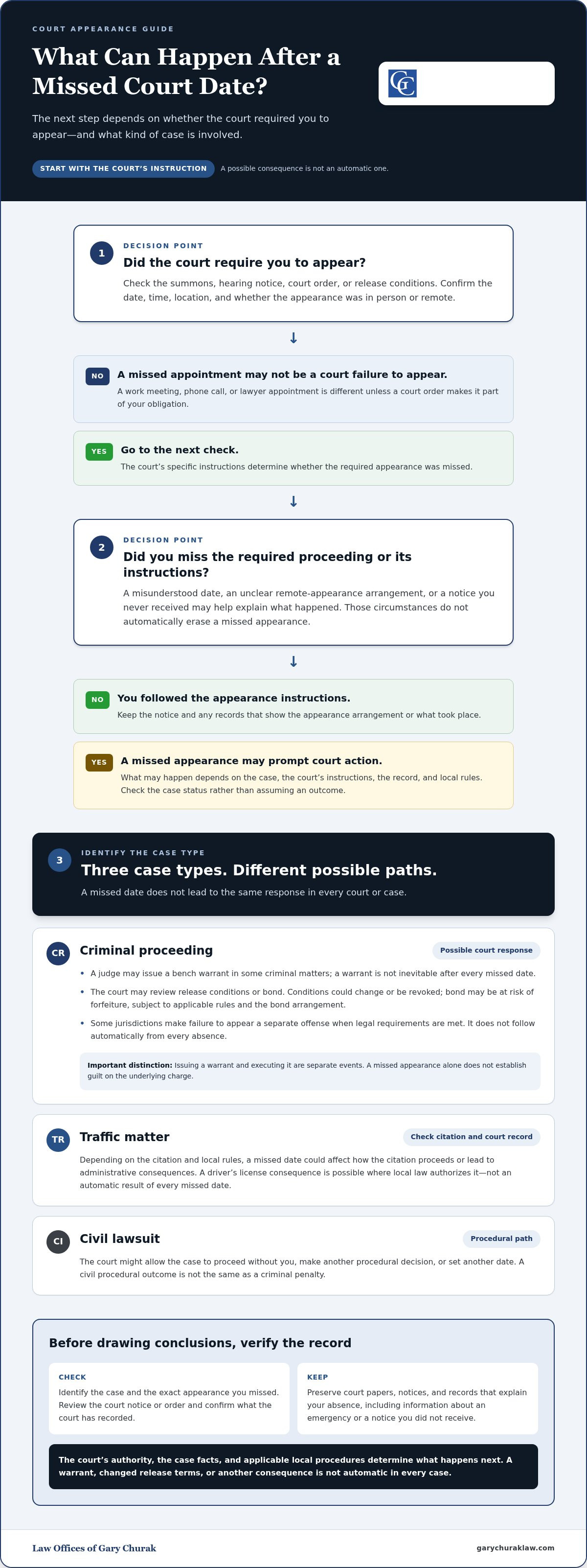
A failure to appear generally means missing a court appearance that you were required to attend. It doesn’t mean every missed appointment, phone call, or meeting with a lawyer counts as a court violation. The key questions are whether the court required you to appear, what its instructions said, and whether you missed the required proceeding.
A summons, an order setting a hearing, or conditions imposed when someone is released from custody can create different obligations. The general term Failure to Appear (FTA) covers a range of situations, but it doesn’t determine what a particular court will do. Notice rules, procedures, and possible responses vary by jurisdiction and case.
When does missing a court date count as failure to appear?
Start with the specific court notice or order. Check the date, time, location, and whether the appearance had to be in person or could take place remotely. If the court required you to attend and you didn’t follow the instructions, it may record a missed appearance. A work meeting or lawyer appointment is different unless a court order makes it part of your obligation.
Sometimes the instructions or notice are unclear. You might have misunderstood a date, believed a remote appearance had been arranged, or never received a notice. Those circumstances don’t automatically erase a missed appearance, but they may help explain what happened. Courts follow jurisdiction-specific requirements for notice and service, so review the record and applicable procedure before drawing conclusions about whether notice was valid.
Why the type of case changes the legal picture
The case category shapes both your obligation and the court’s potential response. A missed appearance in a criminal proceeding can raise concerns about compliance with release conditions. The court may review those conditions or consider other measures under local law. That process is separate from deciding whether you committed the underlying offense. Missing court alone doesn’t establish guilt on that charge.
Traffic cases often involve a citation or scheduled hearing. Depending on local rules and the specific matter, a missed date could affect how the citation proceeds or lead to additional consequences. A civil lawsuit follows a different track: a court might make a procedural decision, such as allowing the case to proceed without you. That isn’t the same as a criminal penalty.
- Criminal: Review the hearing notice and any release terms. Consequences may affect the pending case or release conditions.
- Traffic: Check the citation and court record for the response required and any next steps.
- Civil: Find out whether the court made a decision or set another date in your absence.
That’s why the consequences of failure to appear in court aren’t identical across cases or courts. Identify the proceeding and the exact instruction first. Then assess the missed appearance in context, rather than assuming a warrant, a new charge, or a particular ruling has already followed.
What Can Happen After You Miss Court, and What Is Not Automatic?
A missed appearance can prompt the court to take action, but the response depends on the proceeding, local rules, and the record in your case. A judge may issue a bench warrant in some criminal matters. A court may also review release conditions or bond, while a traffic case could lead to administrative consequences where local law allows them. Don’t assume any of these outcomes from the missed date alone.
A possible consequence is not an automatic consequence: the court’s authority, the case facts, and applicable local procedures determine what happens next. Checking the case status is more reliable than guessing whether an order has been entered.
Can a missed court date lead to a warrant or arrest?
In some criminal proceedings, a judge may issue a bench warrant after a person fails to appear as required. Whether a warrant is authorized or appropriate can depend on the charge, the circumstances of the absence, prior court orders, and jurisdiction-specific procedure. A warrant is not inevitable after every missed date, and different courts may respond differently to similar situations.
Issuing a warrant and executing it are separate events. A warrant authorizes law enforcement to take action under its terms, but it doesn’t tell you exactly when or how that action will occur. Don’t assume that no immediate contact means no warrant exists, or that a missed appearance means arrest is certain. Confirm the current case status through reliable channels.
Could the original case, bond, or license be affected?
If you were released subject to conditions, the court may review whether those terms should remain in place. Depending on the law and the judge’s decision, conditions could change or be revoked. Bond may also be at risk, including possible forfeiture, subject to applicable rules and the specific bond arrangement. These are potential consequences, not predictions about what a particular court will decide.
The pending case may involve additional procedural steps, and some jurisdictions make failure to appear a separate offense when legal requirements are met. Whether a separate charge applies depends on the governing law and facts, including the circumstances surrounding the missed appearance. It does not follow automatically from every absence.
Traffic consequences also vary. Depending on the jurisdiction and type of citation, a missed date may affect the citation or lead to a driver’s license consequence if local law authorizes one. In civil litigation, a court may make a procedural ruling, such as allowing a case to proceed or entering a default judgment when applicable requirements are satisfied. Neither result should be presumed without checking the docket and relevant rules.
For a criminal matter, counsel can review the court record, release terms, and circumstances of the missed date alongside the underlying case. The Law Offices of Gary Churak provides criminal defense representation and case analysis. A consultation can help clarify the case status and assess possible responses, but it cannot guarantee that a warrant, charge, or other consequence will be avoided.
How Consequences Differ Across Criminal, Traffic, and Civil Cases
The same missed date can raise very different issues depending on what kind of case is before the court. A criminal hearing may involve release terms; a traffic matter may affect how a citation is handled; and a civil hearing may determine whether a claim proceeds. The table outlines possible responses, not guaranteed outcomes. Local law, the hearing notice, and the court’s decision all matter.
| Case type | Possible court response | Key jurisdictional caveat |
|---|---|---|
| Criminal | A judge may consider a warrant, review release conditions, or address a separate failure-to-appear allegation where applicable. | Authority and procedure depend on local law, the case, and the circumstances of the absence. |
| Traffic | The court may take steps affecting the citation; license consequences may also be possible. | Rules vary by jurisdiction and by the type of citation or offense. |
| Civil | The court may proceed without an absent party or make another procedural ruling, potentially affecting a claim or defense. | The available ruling depends on court rules, case posture, and notice requirements. |
Criminal cases: warrants, release terms, and the underlying charge
A missed criminal appearance can create a separate concern about compliance with a court order or release terms. The judge may consider how to handle the absence, and some jurisdictions allow a separate failure-to-appear charge under specific circumstances. But missing court does not itself prove the original criminal charge. The prosecution must still establish that charge through the applicable legal process.
Pretrial release and probation also involve distinct obligations. A missed hearing while on release may prompt review of release conditions. If the person is on probation, missing a required appearance or violating a separate probation condition may trigger a different process. The terms of the order and governing law determine what issues are before the court.
Traffic and civil cases: different risks, different procedures
Traffic matters can range from a citation with a required response to a more serious offense handled in court. The citation and court notice help identify what appearance or action was required; local rules determine the possible effect of missing it. Don’t assume every traffic matter carries the same license risk or court response.
In a civil lawsuit, an absent party may lose an opportunity to present evidence or arguments at a hearing. Depending on the procedural rules and circumstances, the court might proceed, dismiss a claim, or enter a default judgment. These are civil procedural outcomes, not criminal punishment, and they aren’t automatic in every case.
Case type matters more than any universal penalty list: the same absence can raise a criminal compliance issue, affect a traffic citation, or change the course of a civil claim. To understand the consequences of failure to appear in court, identify the case category and review the specific order and current court record.
Missing a Court Date: A Practical Response Plan
Act methodically. The consequences of failure to appear in court can depend on what the court has already done, so don’t rely on assumptions about a new date, dismissal, or warrant status. Assemble the paperwork, identify the case, and verify its current status. If it’s a criminal case or you were released under conditions, get legal advice before deciding how to respond or appear.
- Gather your court papers. Collect the summons, hearing notices, citation, release paperwork, and any orders that describe when and how you had to appear. Note the case number, court, missed date, and contact details shown on the documents.
- Identify the court and case type. Determine whether the matter is criminal, traffic, or civil, and which court is handling it. This helps you identify the right record to check and the instructions that may apply.
- Check the current case status. Use official court information, such as the court’s case lookup or records office, to find out whether a new hearing, order, warrant, or other action appears in the record. Updates may take time to appear, so an online result may not settle every question.
- Preserve records explaining the absence. Keep the original notice and any documentation relevant to what happened, such as emergency or illness records, proof of a notice issue, or other records that help establish the circumstances. Save copies and note when and how you received court communications.
- Get advice before choosing your response. If you find a warrant, release order, or uncertainty about the missed hearing, don’t make assumptions about whether to appear or how to address it. A lawyer can assess the procedural posture and help you consider the next step.
How to confirm the case status and preserve useful records
Keep your documents together and verify that the case number and hearing date match the matter you’re checking. Official records can help establish what the court has entered, but allow for possible update delays and follow up through the court’s published administrative channels if information is incomplete. Keep notes of your inquiries, including the dates and information provided.
Preserve the explanation for the absence without altering or discarding records. If illness, an emergency, confusion about the notice, or another circumstance contributed, save relevant documentation and communications. These materials may help counsel assess the facts, though they don’t guarantee a particular court response.
Why a considered response is safer than ignoring the missed date
Waiting without checking can leave important questions unresolved, including whether the court changed release terms or set another proceeding. Counsel can review the notice, case history, and any release conditions before recommending a response. If release or bond is involved, learn how a lawyer can help with bail and why those terms deserve careful attention.
For help reviewing a missed appearance alongside a criminal case, learn about criminal defense representation. A case-specific review can help you move forward with clearer information, without assuming that any outcome is automatic.
How Criminal Defense Counsel Can Help Address a Missed Appearance
A missed appearance can raise questions about both court procedure and the underlying criminal case. Defense counsel can review the notice, case history, current status, and any release terms to understand what the court required and what has happened since. That focused review helps replace guesswork with a case-specific assessment.
The circumstances matter, too. A notice that arrived late, an emergency, or confusion about an appearance instruction may be relevant to evaluating the situation. No single fact guarantees a particular result. The governing jurisdiction, court record, and details of the case shape what options may be available.
What an attorney can assess before recommending next steps
Counsel can examine the court order and procedural history alongside available case-status information. In a criminal matter, that may include whether a warrant appears in the record, whether release terms are still in effect, and whether the court has scheduled another proceeding. An attorney can also review documentation explaining the absence and assess how it may relate to applicable procedures.
That analysis should account for the original charge, not just the missed date. The response to a procedural issue may affect how the case proceeds, so counsel can consider both together while keeping their legal questions distinct. Learn more about the role of a criminal defense attorney in protecting a client’s position throughout a case.
Legal advocacy is case-specific. Counsel may evaluate the record, communicate the relevant circumstances through appropriate legal channels, and prepare to address the court’s concerns. No attorney can promise that a warrant, separate charge, or penalty will be avoided. The goal is to understand the risks and make informed decisions based on the actual case.
Preparing for a focused legal consultation
Bring the documents and details that allow counsel to assess the situation efficiently. Helpful materials include:
- The summons, hearing notice, citation, or court order
- The case number and any available court-status information
- Release paperwork, bond documents, or other conditions imposed by the court
- Records or communications that help explain why the appearance was missed
- A clear timeline of the scheduled appearance and events afterward
Be candid about what you knew, when you learned of the missed date, and any steps you have taken since. If you don’t have every document, share what you do have. Advice depends on the jurisdiction, the court’s orders, and the facts, so a careful review is more useful than assuming the same response applies in every case.
The Law Offices of Gary Churak provides criminal defense representation and case analysis, informed by Attorney Gary Churak’s over four decades of experience. To discuss your situation and possible next steps, request a consultation.
Take the Next Step With a Clear Plan
The consequences of failure to appear in court can feel overwhelming when key facts are still uncertain. You don’t have to resolve every question at once. Focus on getting a case-specific understanding of where things stand and what choices are available before taking action.
If the matter is criminal, a defense attorney can consider the missed appearance in the context of the underlying case and help you assess a considered response. No outcome is guaranteed, but informed decisions are stronger than assumptions or further delay.
Request a consultation with the Law Offices of Gary Churak to discuss your situation and possible next steps. A steady, informed approach can help you move forward with greater clarity.
Frequently Asked Questions
Can you be arrested for missing a court date?
Yes, arrest is possible if a judge issues a warrant, but missing a date doesn’t automatically mean you’ll be arrested. The court’s response can depend on the type of case, the applicable rules, and the circumstances. Check the case record or consult a lawyer to determine whether a warrant has been issued. Don’t rely on the absence of police contact as proof that no warrant exists.
Does failure to appear automatically mean you are guilty?
No. Missing court doesn’t, by itself, establish guilt on the underlying criminal charge. The prosecution must still prove that charge under the applicable legal standard. However, a missed appearance can create a separate procedural issue, and the court may address it independently. Keep any court orders and release paperwork available so you can distinguish what the court is addressing from the allegations in the original case.
Can a court issue a warrant if you did not receive notice?
A warrant may still be considered if the court record shows a required appearance was missed, but notice rules and procedures differ by jurisdiction. If you didn’t receive notice, preserve relevant evidence, such as returned mail, address-change records, or communications about the hearing. Those details may matter when a lawyer evaluates what happened and whether the notice or service complied with applicable requirements.
What should you do if you missed court because of an emergency?
Gather records that show the emergency and its timing, such as hospital paperwork, travel disruption notices, or messages notifying others that you couldn’t attend. Then get case-specific legal advice promptly about how to raise the issue and what the court record shows. Don’t assume the emergency automatically excuses the absence. Clear documentation can help explain the circumstances, but the court’s response depends on applicable law and the facts.
Can you get a warrant recalled after missing a court date?
Possibly. Depending on the jurisdiction and case, a lawyer may ask the court to recall or quash a warrant or seek a hearing to address the missed appearance. The court decides whether to grant that request, and the process can vary. First establish whether a warrant was actually issued and identify any conditions or deadlines attached to the case. Don’t assume it has been withdrawn until that status is verified.
Does failure to appear affect bail or release conditions?
It can. A court may review release terms after a missed appearance, and bond may be subject to forfeiture under applicable rules and the bond arrangement. The actual effect depends on the order, procedural history, and judicial decision. Review your release paperwork carefully, including any instructions about court attendance, and have a lawyer assess how the missed date could affect both release status and the pending criminal matter.
Can missing a civil court date lead to a default judgment?
Yes, a court may enter a default judgment in some civil cases if a party doesn’t respond or appear and the required procedural conditions are met. It isn’t automatic in every case. The result may depend on the claim, the court’s rules, and whether proper notice was given. If you learn a judgment may have been entered, promptly obtain the case record and legal advice about any available response or deadlines.


