

Could a disputed traffic stop, an unreliable test, or another weakness in the evidence affect the charge you face? If you’re asking, “can a DUI be reduced to a lesser charge,” the answer depends on the facts of your case and the law that applies. A reduction may be possible, but it is never automatic or guaranteed.
It’s understandable to feel uncertain, especially when online information blends rules from different jurisdictions. Some use the term DUI, while others use DWI. A negotiated resolution may involve a different charge, such as reckless driving, if that option is available under the applicable law. The potential options and consequences depend on the case, so someone else’s outcome may not predict yours.
This article explains what a reduced charge means, how negotiations may work, and which details can matter, including the stop, test results, other evidence, prior record, and jurisdiction. It also outlines practical questions to raise with a defense attorney. A careful review can clarify your options without promising a particular result. The Law Offices of Gary Churak provides DUI/DWI defense and offers a free initial consultation to discuss your case.
Key Takeaways
- Whether a DUI can be reduced to a lesser charge depends on local law, the evidence, and the circumstances of the case. No outcome is guaranteed.
- A careful review of the stop, officer observations, and testing records can help identify issues to discuss with a defense attorney.
- A reduction, dismissal, and conviction are different outcomes. A reduced charge may still carry consequences under the applicable law or agreement.
- Preserve your paperwork, note important dates, and organize available records before seeking legal advice. Don’t assume an online example applies to your case.
- The Law Offices of Gary Churak provides DUI/DWI defense and detailed case analysis. Attorney Gary Churak brings more than four decades of experience.
Can a DUI Be Reduced to a Lesser Charge? Start With What 'Reduced' Means
Sometimes. Whether can a DUI be reduced to a lesser charge applies to your case depends on local law, the evidence, and the circumstances. A reduction generally means resolving the original allegation with a different offense, potentially one considered less serious, where the law and prosecutor permit that outcome. It isn’t a standard option in every jurisdiction, and no particular result is guaranteed.
A reduction changes the charge or the way the case is resolved. It doesn’t necessarily erase the incident or mean the court found the accused innocent. The new offense may have its own legal elements, record implications, and other consequences. Those details depend on the jurisdiction and the specific agreement, so the word “lesser” alone doesn’t explain what the result would mean in practice.
What does a DUI reduction mean in a criminal case?
A negotiated resolution may involve a plea bargain, in which the parties agree to resolve the case on specified terms, subject to the applicable court process. The person may agree to plead to a different offense. That differs from a judge or jury finding the person not guilty after considering the case.
A reduction also differs from a dismissal, which ends the prosecution of the charge, and from a changed sentence after conviction. A sentence can be adjusted without changing the offense of conviction. The distinction matters because each outcome can affect a person’s record and other legal interests differently.
Why can’t one state’s DUI answer apply everywhere?
States define impaired-driving offenses differently, use different charge names, and follow jurisdiction-specific court procedures. Prosecutors’ negotiation practices and the options available in a particular case can also vary. An alternative charge discussed in one jurisdiction may not exist, or may work differently, in another.
A possible DUI reduction depends on the law and facts governing that case. Treat online examples as illustrations, not predictions. Check which jurisdiction filed the charge and what offense appears in the paperwork before relying on information about another place.
The terminology can add to the confusion. Some places use “DUI,” others use “DWI,” and some distinguish between the terms in their laws. The label doesn’t establish that two cases have the same legal elements, penalties, or resolution options. Even within one jurisdiction, facts such as the specific allegation and procedural posture can matter.
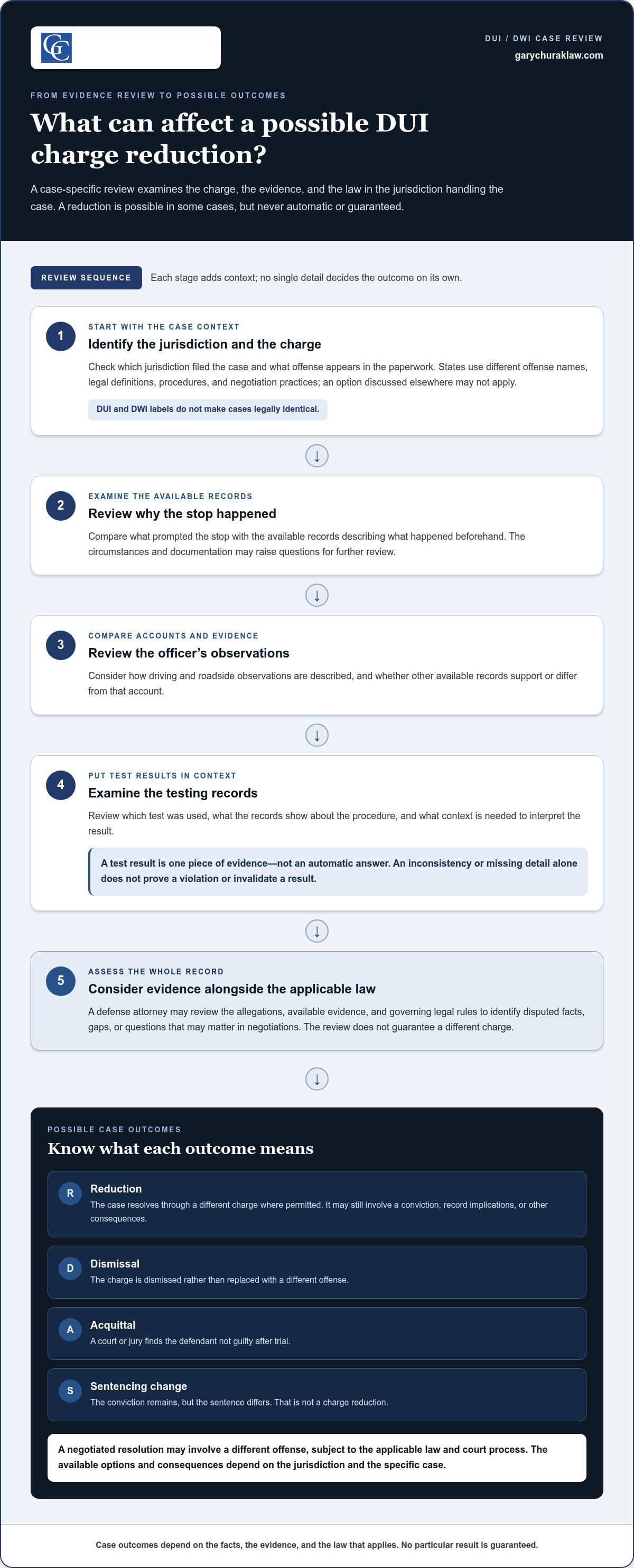
Keep these outcomes separate as you evaluate your options:
- Reduction: The case resolves through a different charge where permitted. The result may still include a conviction or other consequences.
- Dismissal: The charge is dismissed, rather than replaced with a different offense.
- Acquittal: A court or jury finds the defendant not guilty after trial.
- Sentencing change: The conviction remains, but the sentence differs. That is not a charge reduction.
Understanding these distinctions gives you a clearer starting point for evaluating claims about a “reduced DUI.” The next step is to assess the actual evidence and legal options in the jurisdiction handling the case.
How Evidence and Case Review Can Affect a Possible DUI Reduction
A possible reduction should be assessed against the actual record, not assumptions about what “usually happens.” Before discussing options, a defense attorney reviews the allegations, the available evidence, and the legal rules that apply in the jurisdiction. That review can help identify disputed facts, gaps, or questions that may matter in negotiations. It doesn’t establish that evidence is invalid or guarantee a different charge.
If you’re wondering whether can a DUI be reduced to a lesser charge applies to your situation, the answer can’t be determined from the charge label alone. A careful analysis considers how each part of the evidence fits together and what the prosecution may be able to prove. For broader context on the defense process, see this DWI defense strategy guide.
Which parts of the evidence may deserve careful review?
Review begins with the available records and the circumstances behind them. An attorney may examine the reason for the stop, the officer’s account of the driving and roadside observations, and records related to any chemical testing. Each category raises different questions, and which ones matter depends on the evidence and applicable law.
- Stop circumstances: What prompted the stop, and what do the available records say about what happened beforehand?
- Officer observations: How are the observations described, and do other available records support or differ from that account?
- Testing records: What test was used, what do the records show about the procedure, and what context is needed to interpret the result?
A test result is one piece of evidence, not an automatic answer to every legal or factual question. Its meaning must be considered in context. An apparent inconsistency or missing detail also doesn’t, by itself, prove a violation or invalidate a result. A fact-specific legal review is needed before drawing conclusions.
How do case circumstances shape possible negotiations?
The allegations, available evidence, and governing law all shape how a case may be evaluated. Circumstances such as alleged injury, property damage, or other events surrounding the incident may affect the assessment as well. Their significance depends on the facts and applicable rules, so the same detail may matter differently from one case to another.
The facts and evidence in a specific case help define the range of resolutions that may be considered. For example, an attorney may compare the account in the charging documents with available testing records and other evidence, then assess how any issue relates to the legal elements of the charge. That process helps frame a grounded negotiation, not a promised result.
Detailed case analysis can bring structure to an uncertain situation. The Law Offices of Gary Churak reviews DUI/DWI cases and can discuss your circumstances during a free initial consultation.
DUI Reduction, Dismissal, or Conviction: How the Outcomes Differ
Understanding can a DUI be reduced to a lesser charge requires separating the charge itself from how the case ends and what happens afterward. A reduction may replace the original allegation with another charge, but it doesn’t necessarily mean the case disappears or that there are no further consequences. A dismissal, by contrast, ends the charge. A conviction is a finding or formal outcome of guilt under the applicable process.
How is a reduced charge different from a dismissed DUI?
With a reduction, the case may resolve through a different charge, potentially after negotiations and subject to the required court process. A dismissal means the charge is dismissed rather than exchanged for another offense. Neither label alone tells the whole story: the legal effect depends on the final disposition and the law that applies. A reduced charge may still result in a conviction or other consequences.
How does a plea or conviction differ from a charge reduction?
A plea is a formal response to a charge or part of an agreement to resolve a case. It isn’t automatically a reduction. A person may plead to the original DUI charge, a different offense, or another disposition permitted by law. If a conviction results, sentencing follows according to applicable rules. The charge outcome and the sentence are related, but they’re separate parts of the case.
| Outcome | Basic meaning | Jurisdiction-dependent considerations |
|---|---|---|
| Reduction | The case resolves through a different charge instead of the original DUI allegation. | The available charge, plea terms, record effects, and other consequences depend on local law and the final disposition. |
| Dismissal | The DUI charge is dismissed rather than replaced by another charge. | The effect of dismissal and any related proceedings depend on the governing law and case history. |
| Conviction | The case ends with a formal finding or plea-based outcome of guilt. | The offense of conviction and sentencing rules determine potential consequences. Penalties aren’t uniform across jurisdictions. |
Keep the sentence separate from the charge. A reduction may change the offense used to resolve the criminal case, while sentencing determines the consequences associated with that disposition. A sentence change alone doesn’t necessarily change the conviction. License-related consequences or other proceedings may also be handled separately from the criminal charge, depending on local law and the facts.
These distinctions matter when reviewing a proposed resolution. Ask what charge would appear in the final disposition, whether a plea or conviction is involved, what sentencing terms may apply, and whether separate license or administrative issues remain. The answers are jurisdiction-specific, so an online example can’t establish what will happen in another case. No reduction, dismissal, or other outcome is assured. A careful review of the individual circumstances is needed to assess the available options.
What to Do If You Want to Explore a Lesser DUI Charge
If you’re asking whether a reduction might be possible, prepare for a case-specific legal discussion rather than relying on a generic answer. The goal is to give your attorney a clear picture of the charge, the available records, and any dates or requirements that may need attention. An online example or negotiated outcome from another jurisdiction can’t establish what options apply to your case.
A practical preparation sequence can help you use that discussion well:
- Preserve your paperwork. Keep charging documents, notices, test-related paperwork, and court communications together. Retain them in their original form.
- Note important dates. Record dates shown on official notices and upcoming court appearances. Ask which deadlines or obligations apply to your situation.
- Organize available records. Collect relevant materials you already have, including documents that may help explain the timeline or circumstances.
- Seek legal advice. Have an attorney assess the allegations, evidence, and rules in the jurisdiction handling the case before making assumptions about possible resolutions.
What information should you organize before discussing your case?
Start with the documents you received and any records related to testing or court communications. Write a factual timeline while your recollection is clear, noting where you were, what happened, and when key events occurred as best you can. Separate what you personally remember from what a document states. Keep the timeline neutral. Your attorney can help assess how each detail may matter.
Don’t alter or discard records, and avoid posting evidence or detailed accounts publicly. If you’re unsure whether a record is relevant, preserve it and raise it during the discussion. Preparation doesn’t require you to decide which facts help or hurt your case.
What questions can help clarify your legal options?
Focused questions can help turn uncertainty into a clearer plan. You can ask which jurisdiction’s rules govern the charge, what outcomes may legally be considered, and how the evidence will be reviewed. The criminal defense consultation guide can also help you organize your thoughts before speaking with counsel.
- Which law and court procedures apply to my charge?
- What records or evidence are available, and what still needs review?
- Are there unresolved factual or legal questions that could affect the options?
- What deadlines, court dates, or other obligations should I address now?
Ask for a clear explanation of what is known, what remains uncertain, and what the next step is. A careful assessment can identify issues to discuss without promising a particular outcome. The Law Offices of Gary Churak provides DUI/DWI defense and detailed case analysis. Schedule a free initial consultation to discuss your circumstances and questions.
Discuss Your DUI Charge With the Law Offices of Gary Churak
A DUI charge can leave you facing difficult questions and uncertainty about what comes next. The Law Offices of Gary Churak provides DUI/DWI defense and detailed case analysis to help you understand the allegations, the available information, and the legal options that may apply. Attorney Gary Churak brings more than four decades of experience to criminal defense representation.
A case-focused discussion is especially useful when online examples seem to point in different directions. The law, evidence, and circumstances of your case matter more than someone else’s outcome. If you’re asking, “can a DUI be reduced to a lesser charge,” an attorney can review the specifics and explain what may be considered, without treating a reduction as certain.
What can a case-focused legal discussion clarify?
An initial consultation gives you an opportunity to explain what happened, share the documents you have, and raise questions about the charge. The firm can review the allegations and available information, identify issues that may need closer examination, and discuss potential next steps. A careful analysis is meant to clarify your position and options, not promise a particular result.
You can also discuss which rules govern your case and what uncertainties remain. For example, a document or test record may need to be considered alongside the circumstances described in the allegations. The value of that review lies in connecting the details to the applicable law, rather than assuming one fact decides the outcome.
Gary Churak and the firm provide personal legal support from start to finish. You can discuss your concerns directly as the case progresses and receive guidance grounded in the circumstances of your matter. No two cases are identical, and no responsible review can guarantee a reduction, dismissal, or other outcome.
How can you take the next step?
Bring the paperwork and questions you’ve organized, including court communications, notices, and any available testing records. If you don’t have every document, you can still explain what you know and identify what you’re waiting to receive. A clear account of important events can help the attorney understand your concerns and determine what information may be relevant.
The firm offers a free initial consultation and 24/7 availability. Use the conversation to ask what legal rules apply, how the available evidence may be assessed, and what immediate dates or obligations require attention. You don’t need to arrive with a conclusion about whether a lesser charge is possible. The purpose is to understand the case and discuss options with care.
Take a practical first step: request a free initial consultation with the Law Offices of Gary Churak to discuss your DUI charge.
Take the Next Step With a Clear Plan
The question “can a DUI be reduced to a lesser charge” can’t be answered responsibly without examining the facts and the law that applies to your case. You don’t need to predict the outcome before seeking advice. A focused discussion can help you identify what needs review, understand your immediate priorities, and approach the next decisions with greater clarity.
Attorney Gary Churak brings more than four decades of experience to DUI/DWI defense. The firm offers a free initial consultation, personal legal support, and 24/7 availability. A consultation can help you discuss your circumstances and questions, but no specific result is guaranteed.
Start with a conversation about your case and the options that may apply. Request a free initial consultation with the Law Offices of Gary Churak, and take your next step with informed support.
Frequently Asked Questions
Can a DUI be reduced to reckless driving?
Sometimes, but a reckless-driving resolution depends on the jurisdiction, the charge, the evidence, and whether prosecutors may agree to that outcome. The label and legal consequences of reckless driving also vary, so an example from another place may not apply. Before evaluating an offer, find out what offense the proposed plea would involve and what the final court record would show.
What factors can affect whether a DUI charge is reduced?
Factors can include the circumstances of the stop, officer observations, testing records, the specific allegations, and the rules governing the case. Prior history or circumstances such as an alleged injury may also affect how the matter is evaluated. No single detail decides the result by itself. An attorney can assess how the available information fits together and whether it raises issues relevant to negotiations.
Can a DUI be dismissed instead of reduced?
Yes, a DUI charge may be dismissed in some cases, but dismissal is different from resolving the case through another charge. Whether dismissal is legally or practically possible depends on the record, applicable law, and how the case proceeds. Confirm what the court disposition actually says, since a dismissal, a plea to another offense, and a decision not to proceed can have different legal effects.
Is a DUI reduction available in every state?
No. States differ in their DUI or DWI statutes, charge terminology, court procedures, and approaches to negotiations. Some jurisdictions may allow a particular alternative charge, while others may not use that option or may impose different conditions. Start by identifying where the case was filed and which law applies. General online guidance can help you frame questions, but it can’t establish your eligibility.
Will a reduced DUI charge remove all consequences?
No, a reduction doesn’t automatically eliminate every consequence. The new offense may still result in a conviction, and the agreement or local law may carry additional effects. License matters may also be handled separately from the criminal case. Before accepting a proposed resolution, ask what the final record will reflect, what terms apply, and whether any separate administrative issue remains to be addressed.
How long does it take to negotiate a DUI charge reduction?
There’s no standard timeline for negotiating a DUI charge. The pace can depend on the court process, the amount of evidence to review, and whether additional records or test results are needed. In drug-related DWI cases, blood-test results may add two to three months. Ask what procedural dates apply to your case and what developments could affect the expected timeline.
Should I speak with a lawyer before accepting a DUI plea offer?
Yes. Before accepting an offer, have a lawyer explain the charge, the plea terms, and the potential consequences under the law that applies to your case. Ask whether the offer changes the offense or only addresses sentencing, and whether it affects any separate license matter. Don’t rely on another person’s experience to assess your options. Make sure you understand the terms before deciding how to respond.


