

A public response meant to correct the record can create new problems for your defense. When an accusation starts circulating, it’s natural to want to explain your side to an employer, friends, reporters, or everyone online. But protecting your reputation during a criminal case calls for discipline, not a public campaign to win the argument.
It’s reasonable to take the potential fallout seriously. Posts, interviews, and even well-intended conversations can draw more attention to the case or complicate sensitive decisions. At the same time, staying silent with everyone isn’t always practical. The challenge is knowing what to address, what to leave alone, and when to get legal guidance before responding.
This guide explains how to limit avoidable exposure, communicate carefully with people who matter, and approach online content without assuming every search result can be erased. It also explains why reputation decisions should be coordinated with your defense strategy from the outset. With thoughtful case analysis and a clear plan, you can respond where appropriate while keeping the focus on your legal position and important relationships.
Key Takeaways
- Protecting your reputation during a criminal case starts with limiting avoidable exposure while preserving your legal options and credibility.
- Before responding to questions or attention, pause, preserve relevant information, consult defense counsel, and coordinate any necessary communication.
- Choose deliberately between a public statement, a brief holding response, or no public comment. Explaining everything publicly may create new risks.
- Set clear boundaries for work and personal conversations, review privacy settings, and document relevant interactions without deleting or altering potentially important content.
- Defense counsel can assess communication risks and align reputation decisions with case priorities, without promising a particular outcome.
Why Protecting Your Reputation During a Criminal Case Starts Early
An accusation can disrupt work, strain relationships, and prompt questions long before a court reaches any decision. That pressure is real, but an allegation is not a finding of guilt. Protecting your reputation during a criminal case means reducing avoidable exposure while preserving your legal options and credibility. It does not mean controlling what everyone thinks or trying to win the case in public.
The words used to describe a case matter. An allegation is a claim that something happened. A charge is a formal accusation brought through the legal process. A court finding is a determination made by a court. These terms describe different stages and should not be treated as interchangeable. Careful language helps separate established facts from assumptions, especially when people ask for an explanation.
Reputation protection is the deliberate effort to limit unnecessary public exposure while safeguarding your legal choices and personal credibility. It can involve practical reputation management strategies, but during a criminal case, those choices should be weighed against the needs of your defense.
How reputational harm can develop before a case is resolved
Information travels unevenly. A coworker may hear a rumor before seeing a news story. Someone searching online may find a public record while close friends know only what you have chosen to share. Workplace questions can arrive before you fully understand what is being alleged. Each audience may receive a different version, and speculation can fill gaps when confirmed information is limited.
An investigation may remain private at first, but circumstances vary. Don’t assume that nobody knows, or that every claim circulating is verified. Before reacting, separate what you know directly from what you have heard, and avoid repeating unconfirmed details as fact. Early, individualized legal analysis can help you understand the case and consider how sensitive communications fit with your defense priorities.
Which parts of your reputation may be affected
The effects can reach beyond public attention. An employer may ask about an absence or a report. Professional contacts may reassess a relationship based on incomplete information. Family members and friends may feel pressure to take sides, while discussion can affect your standing in a community beyond its original audience. These are distinct concerns, and a response suited to one setting may be unwise in another.
Online information can add another layer. A news report, public post, or record may appear in search results and resurface long after the initial discussion fades. That visibility does not mean that everyone can access the same information or that it will remain available indefinitely. Search results and record access depend on the information involved and the rules that apply. Don’t assume that a dismissed case automatically removes related online material or ends every reputational concern.
How to Coordinate Communications During a Criminal Case
Protecting your reputation during a criminal case requires more than choosing the right words. It means deciding who needs information, what they need to know, and whether a conversation could affect your defense. A response suitable for an employer may not be suitable for an investigator, reporter, friend, or online audience. A coordinated approach is better than improvised explanations because it reduces the chance that different accounts create confusion or complicate case decisions.
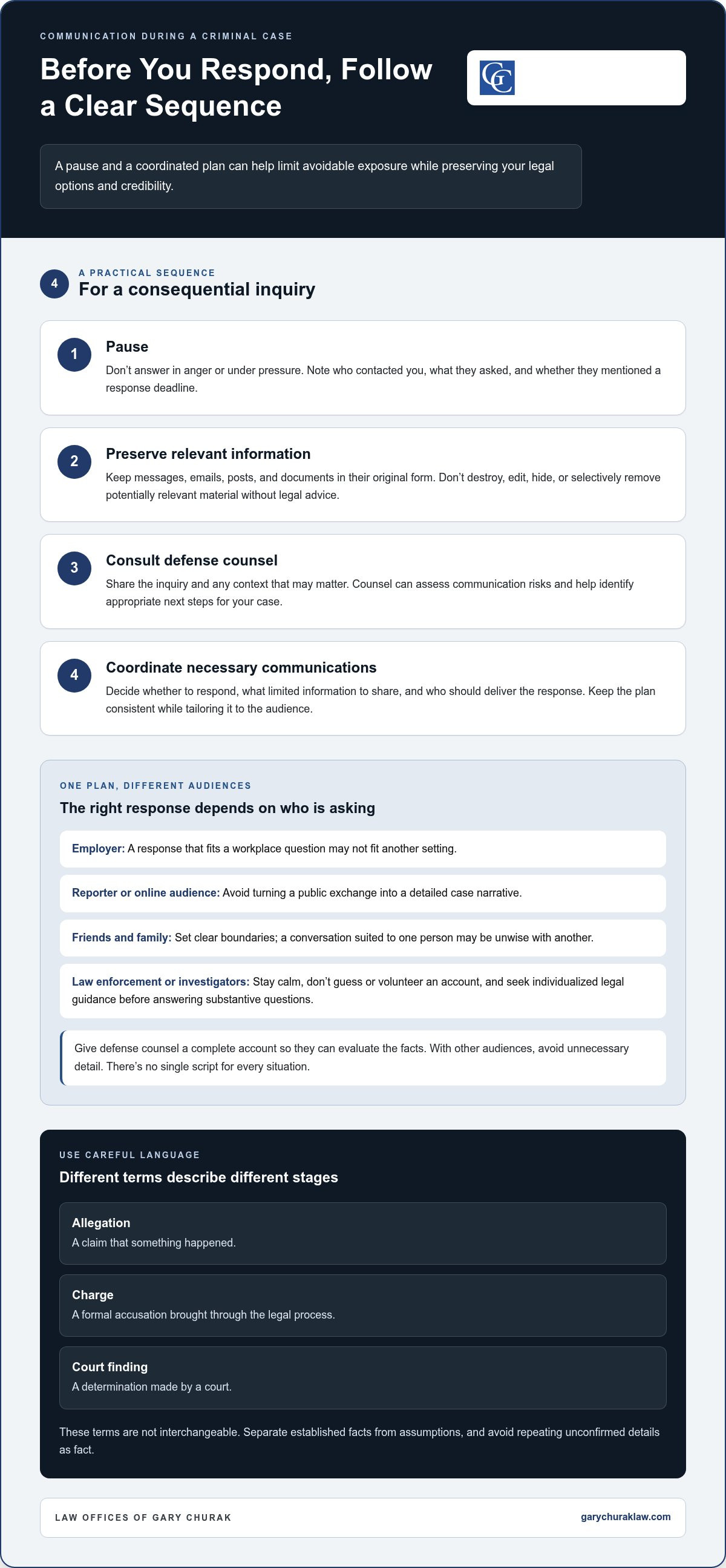
Use this sequence before responding to a consequential inquiry:
- Pause. Don’t answer in anger or under pressure. Note who contacted you, what they asked, and whether they mentioned a response deadline.
- Preserve relevant information. Keep messages, emails, posts, and documents in their original form. Don’t destroy, edit, hide, or selectively remove potentially relevant material without legal advice.
- Consult defense counsel. Share the inquiry and any context that may matter. Counsel can assess communication risks and help identify appropriate next steps for your case.
- Coordinate necessary communications. Decide whether to respond, what limited information to share, and who should deliver the response. Keep the plan consistent while tailoring it to the audience.
Your conversations with defense counsel serve a different purpose from discussions with an employer, friends, reporters, or followers. Give counsel a complete account so they can evaluate the facts. With other audiences, avoid turning a private exchange into a detailed case narrative. Communication choices depend on the case, the person asking, and applicable law. There’s no single script for every situation.
What to do when law enforcement or investigators contact you
Stay calm. Don’t guess, argue, or volunteer an account to fill a silence. You can ask who is contacting you and what the inquiry concerns, then seek individualized legal guidance before answering substantive questions. If you’re unsure how to respond in the moment, say that you want to consult counsel. An attorney can assess the circumstances and advise you on appropriate communication and next steps.
What to say when an employer or reporter asks questions
A short, neutral response can protect your privacy without discussing alleged facts. For example: “I’m addressing a legal matter and can’t discuss details. I’ll share any information that’s appropriate when I’m able.” An employer may need practical information about scheduling or workplace arrangements, while a reporter may be seeking a public comment. You can acknowledge the inquiry and say you’ll respond later, or refer it to counsel rather than answering immediately. Don’t promise that a conversation will remain confidential.
Keep a simple record of significant inquiries: the date, who contacted you, the questions asked, and what you said. This helps you and your lawyer assess whether follow-up is needed. For individualized case analysis and guidance on sensitive communications, consider speaking with criminal defense counsel before responding.
Public Statement or Silence? Choosing a Reputation Strategy Carefully
Pressure to explain yourself can feel immediate, especially when people are already discussing the accusation. But a full public account isn’t necessarily the fastest way to clear your name. A statement may be incomplete, misunderstood, or difficult to revise later. Silence, by contrast, doesn’t prove guilt, and speaking publicly can’t guarantee favorable coverage. The aim of protecting your reputation during a criminal case is to choose a response for a clear purpose, not to react to every rumor or demand for comment.
Consider what each option is meant to accomplish and what it may leave unresolved:
- Public statement: May communicate a considered position to a broad audience. It can also invite follow-up questions, draw more attention to the case, or present details without the full context.
- Brief holding response: Can acknowledge an inquiry while giving you time to seek advice or consider next steps. It won’t answer every question, and the wording still needs care.
- No public comment: Avoids adding a public account while the case is being assessed. Others may continue to speculate, but choosing not to comment is not an admission or proof of guilt.
Keep three goals separate. A criminal defense strategy addresses the case and your legal options. Public messaging addresses what, if anything, should be said to a wider audience. Personal reassurance is about speaking privately with trusted people who may support you. One approach cannot automatically serve all three purposes. Counsel should guide case-sensitive decisions, while any personal or public response should stay within the boundaries of that strategy.
When a public response may create additional risk
A public account made before you understand all relevant information can omit important context or be quoted selectively. It may also differ from later evidence or statements, even if your original intent was simply to correct misinformation. Anger, fear, and pressure can lead to words you wouldn’t choose after reflection. A public comment doesn’t automatically cause legal harm, but its consequences depend on the circumstances, so pause before speaking.
How to assess whether a limited response is appropriate
Start with the audience and purpose. Does an employer need practical information about scheduling, or is a reporter asking for details about the allegations? A brief workplace message may address logistics without becoming a public defense of the case. Consider whether counsel should deliver or review a response, and share only what serves a clear need. Privacy, defamation, employment, and court rules can vary by jurisdiction and circumstance.
Before approving any statement, ask: Who needs this information? What do they need to know now? Could the same purpose be met with fewer details or a private conversation? If the answer is unclear, waiting for individualized legal guidance is often more prudent than publishing an explanation under pressure. A measured response may not control public reaction, but it can help keep communications deliberate and aligned with your defense.
A Practical Reputation Protection Plan for Work, Relationships, and Online Activity
A steady plan can help you manage everyday responsibilities without turning each conversation into a discussion of the case. Protecting your reputation during a criminal case does not mean trying to erase every mention or persuade everyone to take your side. Focus on measured actions, protect relevant information, and get legal guidance before making decisions that could affect your defense.
Protecting your digital footprint without making matters worse
Pause case-related posts, comments, and replies while counsel assesses the circumstances. Avoid indirect posts, jokes, arguments, or attempts to correct someone else’s account online. Review your privacy settings to understand who can see your profile and content, but don’t treat a private account as a guarantee that material will stay private.
Preserve relevant messages, emails, photographs, and posts in their original form. Don’t delete, edit, or rearrange material to change how it may appear. Ask counsel how to handle anything you’re concerned about. Removing a search result isn’t guaranteed, and whether removal is possible may require separate legal analysis. Don’t assume a post or record will simply disappear with time.
Managing conversations at work and with people you trust
Choose a small circle of trusted people for personal support instead of sharing case details widely. Keep your language brief and consistent, such as, “I’m dealing with a legal matter and can’t discuss the details.” At work, prepare a neutral message focused on practical needs, such as scheduling or an absence. Consider your workplace obligations and get legal advice before discussing case facts or making commitments.
Don’t confront an accuser, witness, or person sharing allegations without counsel’s guidance. Even a well-intended request to talk or correct a post can intensify conflict or create further misunderstandings. Record significant inquiries, including who contacted you, when, and what was discussed. Refer case-specific questions to your lawyer rather than debating them with coworkers, friends, or online audiences.
A checklist for what to do now and what to discuss with counsel
- Take now: Pause case-related online activity, review privacy settings, preserve potentially relevant material, and identify trusted support.
- Take now: Prepare a neutral workplace response that addresses practical matters without disclosing sensitive facts.
- Discuss with counsel: Whether any content should be addressed, how to respond to specific inquiries, and what records or messages may be relevant.
- Discuss with counsel: Before contacting anyone involved in the allegations or seeking changes to online search results.
Use this plan as a starting point, not a substitute for advice tailored to your circumstances. For guidance on coordinating reputation concerns with your defense strategy, discuss your case with criminal defense counsel.
How Criminal Defense Counsel Can Help Protect Your Reputation
Reputation concerns and defense decisions are connected, but they aren’t the same problem. Counsel can review the facts, identify communication risks, and help you decide whether a response serves your legal objectives. That guidance matters when you’re weighing a workplace explanation, a request for comment, or a step to address online information. Protecting your reputation during a criminal case is not a promise that public opinion can be controlled. It’s a reason to make case-sensitive decisions with a clear understanding of their possible consequences.
Thorough case analysis gives counsel a basis to distinguish what is known from what remains uncertain and to prioritize immediate concerns. Advocacy focuses on the legal process, while communication choices are assessed in light of the defense. The Law Offices of Gary Churak provides criminal defense representation for a range of matters, including DUI/DWI, drug offenses, assault, domestic violence, sex crimes, federal crimes, and juvenile offenses. The firm also assists with expungements and record sealing. Attorney Gary Churak brings more than four decades of experience to criminal defense representation, but no attorney can guarantee dismissal, acquittal, secrecy, or reputation recovery.
What to prepare for an initial defense consultation
Gather any notices, court documents, and communications related to the matter. A private timeline can help organize relevant events, including when you learned of an inquiry or received questions from work or others. Bring a short list of concerns, such as public attention, workplace issues, or contact from investigators. Keep sensitive documents and consultation details off social media, and share case information through an appropriate private channel.
Use the meeting to explain both the legal situation and the practical pressure around it. Be candid about communications already sent or posts already made, even if you regret them. Complete information helps counsel assess what may matter and offer advice tailored to your circumstances.
Turning reputation concerns into a coordinated defense plan
After reviewing the situation, counsel can help sort urgent legal questions from communications that can wait. Together, you can identify who should respond to inquiries, what information is appropriate to share, and which conversations should be referred to counsel. If public-facing communication raises a distinct concern, counsel can assess whether involving a separate communications professional is appropriate for your case.
A coordinated plan can also be revisited as circumstances change. A new workplace question, media inquiry, or development in the case may call for a different response. Don’t assume that a plan for one audience automatically fits another. Ask counsel how to handle new requests before providing details or taking steps that could affect the defense.
Prompt, case-specific advice can clarify your next steps and help you approach reputation concerns with care. Schedule a personalized consultation with the Law Offices of Gary Churak to discuss your criminal defense concerns and communication decisions.
Take the Next Step With a Clear Plan
You don’t have to resolve every reputational concern at once. A useful next step is to understand which decisions need attention now and which can wait until the facts are clearer. Protecting your reputation during a criminal case is a process of making deliberate choices, not trying to control every reaction or answer every question immediately.
Personalized legal guidance can help you assess your circumstances and consider how communication decisions fit your defense priorities. Attorney Gary Churak brings more than four decades of criminal defense experience, supported by thorough case analysis and individualized consultation. No attorney can promise how a case or public response will unfold, but you can move forward with a more informed strategy.
Take the first step toward clarity. Schedule a personalized criminal defense consultation to discuss your situation and identify appropriate next steps. With thoughtful advice and a steady plan, you can face what comes next with greater confidence.
Frequently Asked Questions
Can an employer fire you because of a criminal charge?
Possibly, but a criminal charge doesn’t create one universal rule for every workplace. The answer can depend on applicable law, your employment arrangement, the role, and the circumstances of the case. For example, an employer may have different concerns about a position involving specific duties than about an unrelated role. Review workplace policies and any requests carefully, and get advice before deciding what case details to disclose.
Should I delete social-media posts after being charged?
Don’t delete or edit posts that could relate to the case without first getting legal advice. A post that seems harmless may matter because of its timing or context, and changing it can create additional questions. Preserve the original material and tell your lawyer about posts you’re concerned about, including comments or messages connected to them. You can pause new case-related activity while counsel advises you on appropriate next steps.
Can a criminal case appear in online search results before a conviction?
Yes. Search results may show public court information, an arrest report, or news coverage before a case reaches a final outcome. A search result isn’t proof of guilt, and it may not explain the current status of the case. If you find outdated information, record where it appears and when you found it. Don’t assume that later developments will automatically update every page or search result.
What should I do if a reporter contacts me about my case?
You can acknowledge the request without answering questions about the allegations. Ask who the reporter represents, what topic they want to discuss, and when they need a response, then consult your lawyer before deciding what to say. Don’t assume a conversation is off the record simply because someone describes it that way. If you don’t want to comment, a brief refusal is clearer than an improvised explanation.
Can I ask someone to remove a post about my criminal case?
Yes, you can ask the person who posted it or the platform to remove content, but a request doesn’t guarantee removal. Save the post’s location and relevant details before taking action, and avoid confronting the poster if that could escalate the dispute. U.S. law doesn’t provide a general federal right to erase accurate news coverage. Whether another legal or platform-based option applies depends on the content and circumstances.
Will my reputation recover after a criminal case ends?
No one can promise how quickly or fully a reputation will recover. The effects can depend on the case’s outcome, how widely information circulated, and whether online pages or records continue to appear. As part of protecting your reputation during a criminal case, ask counsel what steps may be appropriate after the matter ends, including whether record-sealing or expungement options apply. Focus on accurate, measured communication rather than expecting an immediate reset.


